What Is DTF Printing? A Detailed Guide to Answer Your Questions
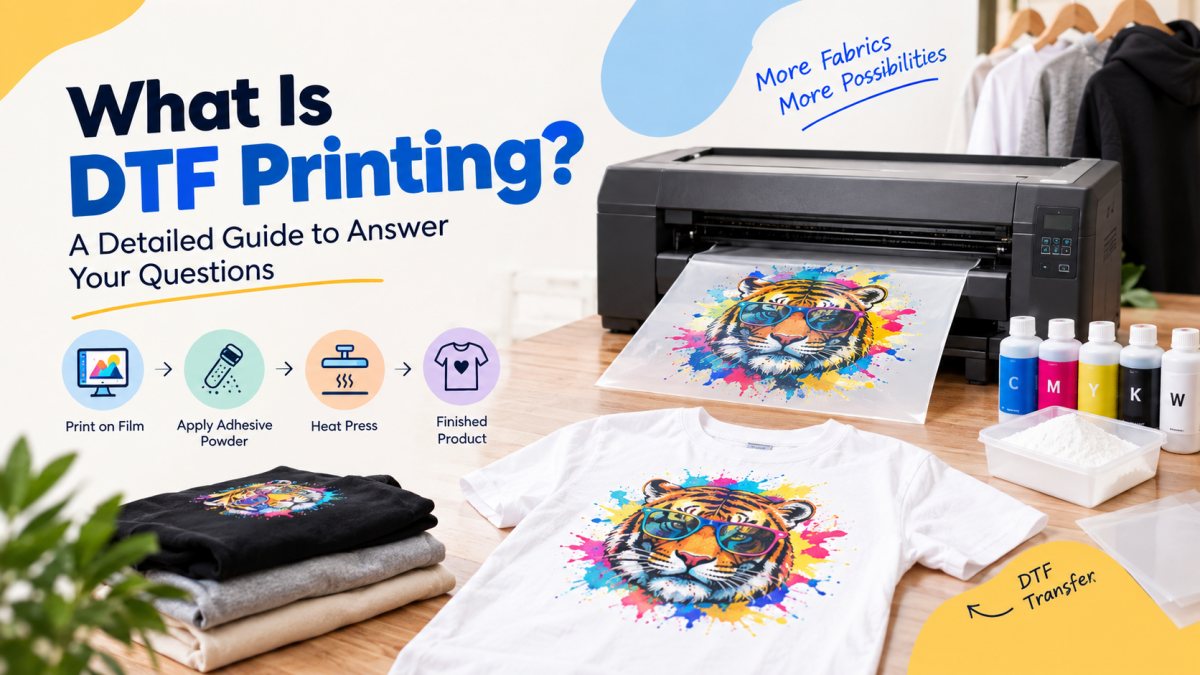
If you have been looking into custom apparel or print-on-demand, you have probably come across the term DTF printing. Short for Direct-to-Film printing, DTF is a transfer-based printing method that can produce detailed, full-color designs on a wide range of fabrics. Unlike methods that print directly onto a garment, DTF printing creates the design on a special film first and then transfers it to the fabric with heat and pressure. But how exactly does it work, and is it a good option for a custom apparel business? This guide breaks down the process, benefits, limitations, and how DTF compares with other popular printing methods.
What does DTF mean in print-on-demand?
DTF stands for Direct-to-Film, a printing process where artwork is printed onto a special PET film before being transferred onto fabric. Instead of printing directly onto a T-shirt or hoodie, the design is prepared as a transfer and applied to the garment with a heat press.
In DTF print on demand, this process works particularly well for producing small quantities and highly detailed designs without the setup traditionally associated with screen printing. DTF transfers can be used on many common apparel fabrics, including cotton, polyester, and blends, depending on the specific transfer and application requirements.
How does DTF printing work?
DTF printing may sound complicated at first, but the basic idea is fairly straightforward. Your artwork is first printed onto a coated film with specialized inks. An adhesive powder is then applied to the wet print and cured. Finally, the prepared transfer is heat-pressed onto the fabric.
Step 1: Preparing the film
The first step in direct-to-film printing is preparing your artwork and printing it onto a special transfer film. DTF printers typically use CMYK inks together with white ink to create colorful designs that can also work on dark-colored garments.
The artwork is printed onto the film in a mirrored orientation so that it appears correctly when transferred to the garment. While the ink is still wet, a hot-melt adhesive powder is applied over the printed area. Any excess powder is removed, and the adhesive is then cured using controlled heat. This creates a ready-to-apply DTF transfer.
Step 2: Heat-pressing the design onto the fabric
Once the transfer has been prepared, it is positioned on the garment with the printed side facing the fabric. A heat press applies controlled heat and pressure, allowing the adhesive layer to bond the printed design to the textile.
Unlike DTG printing, the fabric does not need to receive the artwork directly from the printer. This transfer-based process is one reason DTF printing can be used across a broader range of textile applications.
Step 3: Peeling the transfer film and post-pressing the fabric
After pressing, the carrier film is peeled away according to the instructions for that particular DTF transfer. Some transfers are designed for hot peeling, while others require cooling first.
A second press may also be used to further set the design. The exact temperature, pressure, and pressing time vary by printer, film, adhesive, and fabric, so following the supplier's application instructions is important for consistent results.
Pros of DTF printing
DTF printing has become popular in custom apparel because it combines digital full-color printing with a relatively flexible transfer process. For print-on-demand sellers, several characteristics make it worth considering.
Wide fabric compatibility
One of the biggest advantages of DTF printing is its compatibility with different textiles. DTF transfers can be applied to cotton, polyester, blends, and other suitable fabrics, making them useful for products beyond basic cotton T-shirts.
This flexibility is especially helpful for businesses that want to sell different types of custom apparel without maintaining a separate printing process for every fabric.
High-quality results
DTF can reproduce colorful artwork, fine details, gradients, logos, illustrations, and photographic-style graphics. White ink also allows designs to maintain opacity on darker garments.
For custom apparel sellers, this makes DTF suitable for designs that would be difficult to reproduce with simpler decoration methods.
Quick setup
Compared with screen printing, DTF does not require creating and registering separate screens for each color. Once the artwork is prepared and the transfer workflow is ready, a design can move into production without the same physical setup process.
This can make DTF practical for short runs and personalized orders.
Wash-durable print quality
A properly produced and cured DTF print can provide good wash durability. However, durability depends on the ink, adhesive, curing process, fabric, application settings, and garment care.
For that reason, it is better to think of DTF as a durable printing method when the transfer is properly produced and applied rather than assuming every DTF print will perform identically. Following recommended washing instructions can also help maintain print quality over time.
Low cost per item
DTF can be cost-efficient for small orders because the same digital artwork can be used without the screen setup associated with traditional screen printing. This is particularly useful for print-on-demand businesses, where products may be produced one at a time rather than in large batches.
It is worth noting that low cost does not automatically mean DTF is the cheapest method for every order size. Screen printing can become more economical for large quantities of the same simple design, while DTF can be more convenient for short runs, multiple colors, personalization, and detailed graphics.
For POD sellers, the ability to produce individual pieces without holding inventory can be just as important as the printing cost itself.
Cons of DTF printing
Although DTF offers plenty of flexibility, it is not perfect for every product or design. Two common considerations are the feel of the print and the ongoing need for specialized consumables.
Texture on large solid areas
Because the design is transferred as a printed layer onto the fabric, large solid areas can create a more noticeable feel on the garment. A small logo or detailed graphic may feel relatively light, but a large design covering much of a shirt can feel heavier.
This is worth considering when choosing DTF for products where a soft, highly breathable print is a priority. In some cases, DTG may provide a different hand feel because the ink is printed directly into the fabric.
Consumable materials
DTF printing requires more than just a printer and ink. The workflow also depends on transfer film and hot-melt adhesive powder, along with equipment for curing and heat pressing.
For businesses producing transfers in-house, these materials add to ongoing operating costs. The powder curing stage also requires an appropriate workspace and handling process, particularly for commercial production.
How does DTF compare to other printing methods?
DTF, DTG, sublimation, and screen printing all have different strengths. The right method depends on the fabric, artwork, order quantity, desired finish, and production workflow.
DTF vs DTG printing
The biggest difference between DTF and DTG printing is where the design is printed. DTG, or Direct-to-Garment printing, prints the artwork directly onto the fabric, while DTF prints it onto a transfer film first and then applies it to the garment.
DTG is often associated with a softer, more integrated print feel because the ink is deposited directly onto the textile. However, DTG commonly requires fabric-specific preparation, particularly when using white ink or printing on certain materials.
DTF does not require direct printing onto the garment and can work with a wider variety of fabrics. It is therefore useful when a seller wants to offer designs on cotton, polyester, blends, and other compatible textiles through one transfer-based workflow.
For print-on-demand sellers, the choice between DTF and DTG often comes down to fabric selection, desired texture, product range, and the production capabilities of the supplier.
Read Also:DTG VS. DTF : Choose The Right Printing Method for Your POD Business
DTF vs sublimation printing
DTF and sublimation are both popular for colorful apparel designs, but they work in very different ways.
Sublimation printing uses heat to turn dye into a gas that bonds with suitable polyester fibers. It is especially effective for white or light-colored polyester products and can create a print that is integrated into the fabric rather than sitting as a separate layer on top.
DTF uses a printed film and adhesive powder, which means it is not limited to the same polyester-focused workflow. It can also use white ink, making it suitable for dark fabrics.
This difference matters for print-on-demand catalogs. If your products are mostly light-colored polyester items, sublimation can be a natural fit. If you want to print colorful designs on cotton, polyester, blends, and darker garments, DTF can offer more flexibility.
DTF vs screen printing
Screen printing pushes ink through a prepared mesh screen onto the garment. Each color generally requires its own screen, so setup becomes more involved as the artwork becomes more complex.
DTF is digitally driven and can reproduce detailed full-color artwork without creating separate screens for each color. That makes it useful for smaller orders, personalized designs, and artwork containing gradients or many colors.
Screen printing can still make strong economic sense for large production runs, particularly when the same simple design is being printed in high quantities. DTF is often more flexible when order quantities are smaller or designs change frequently.
Read Also: Screen Printing vs DTG vs Sublimation: Which Print Method Is Right for Your Etsy Business?
How to prepare a print file for DTF printing
Preparing the artwork correctly can make a noticeable difference in the final DTF print. A good starting point is a high-resolution file with a transparent background, especially when the design needs to be placed directly on a colored garment.
PNG files are commonly used for DTF artwork because they can preserve transparency around the design. Your artwork should be created at a sufficiently high resolution for the final print size. A common working target for raster artwork is 300 DPI, although the exact requirements can vary by supplier and product.
Pay close attention to the edges of your artwork. Very soft edges, excessive transparency, and subtle drop shadows may not reproduce as expected in DTF transfers. Crisp shapes and clearly defined edges generally produce more predictable results.
Color management also matters. Using an appropriate RGB workflow, such as sRGB, can help maintain more consistent color expectations between your design software and the final output.
Text should be checked carefully before exporting. If you are sending editable artwork to a print provider, converting fonts to outlines can prevent font substitution or formatting problems. Your design should also match the intended print dimensions so that important details do not become too small when the artwork is resized.
Some DTF software automatically mirrors the artwork during production, while other workflows may require the file to be mirrored before printing. Always check the requirements of your specific printer or supplier before submitting the final file.
For POD sellers, another practical approach is to create a clean master file and save versions optimized for different products. A graphic that looks great on a T-shirt may need to be resized or repositioned when used on a hoodie, tote bag, or other product.
Is DTF printing right for your custom apparel business?
DTF printing can be a practical choice for businesses selling customized apparel, especially when products involve detailed full-color designs, multiple fabric types, small quantities, or personalized orders.
It can also fit naturally into a print-on-demand model because designs can be produced without traditional screen setup or large production runs. However, the best printing method depends on the products you sell and the type of artwork you offer. Comparing fabric compatibility, print feel, production cost, durability, and minimum order requirements can help you choose a method that fits your catalog.
FAQs
What does DTF stand for?
DTF stands for Direct-to-Film. The artwork is printed onto a special film, coated with adhesive powder, cured, and then transferred onto fabric using heat and pressure.
Is DTF printing good for print on demand?
Yes. DTF printing can work well for print-on-demand because it supports detailed full-color artwork and small production quantities. Sellers can produce individual customized garments without the screen setup associated with traditional screen printing.
What fabrics can be used with DTF printing?
DTF transfers can be applied to many common fabrics, including cotton, polyester, and blends. The exact compatibility depends on the transfer materials and application settings, so always check the supplier's recommendations for specialty fabrics.
Is DTF printing better than DTG?
DTF and DTG are designed for different workflows. DTG prints directly onto the garment and can provide a soft print feel, while DTF uses a transfer film and can work across a broader range of fabrics. The right choice depends on your products, artwork, and production requirements.
Does DTF printing last after washing?
A properly produced and applied DTF transfer can provide good wash durability. However, results vary depending on the ink, adhesive, curing, fabric, and application process. Following the garment manufacturer's care instructions can help maintain print quality.
What file format is best for DTF printing?
Transparent PNG files are commonly used for DTF artwork. High-resolution files with clean edges and properly prepared colors are recommended. Always check your print provider's specific file requirements before submitting artwork.
Can DTF printing be used on dark shirts?
Yes. DTF printing can use white ink beneath the design, which allows colorful artwork to be transferred onto dark-colored garments. This is one of the reasons DTF is widely used for custom apparel.