Screen Printing vs DTG vs Sublimation: Which Print Method Is Right for Your Etsy Business?
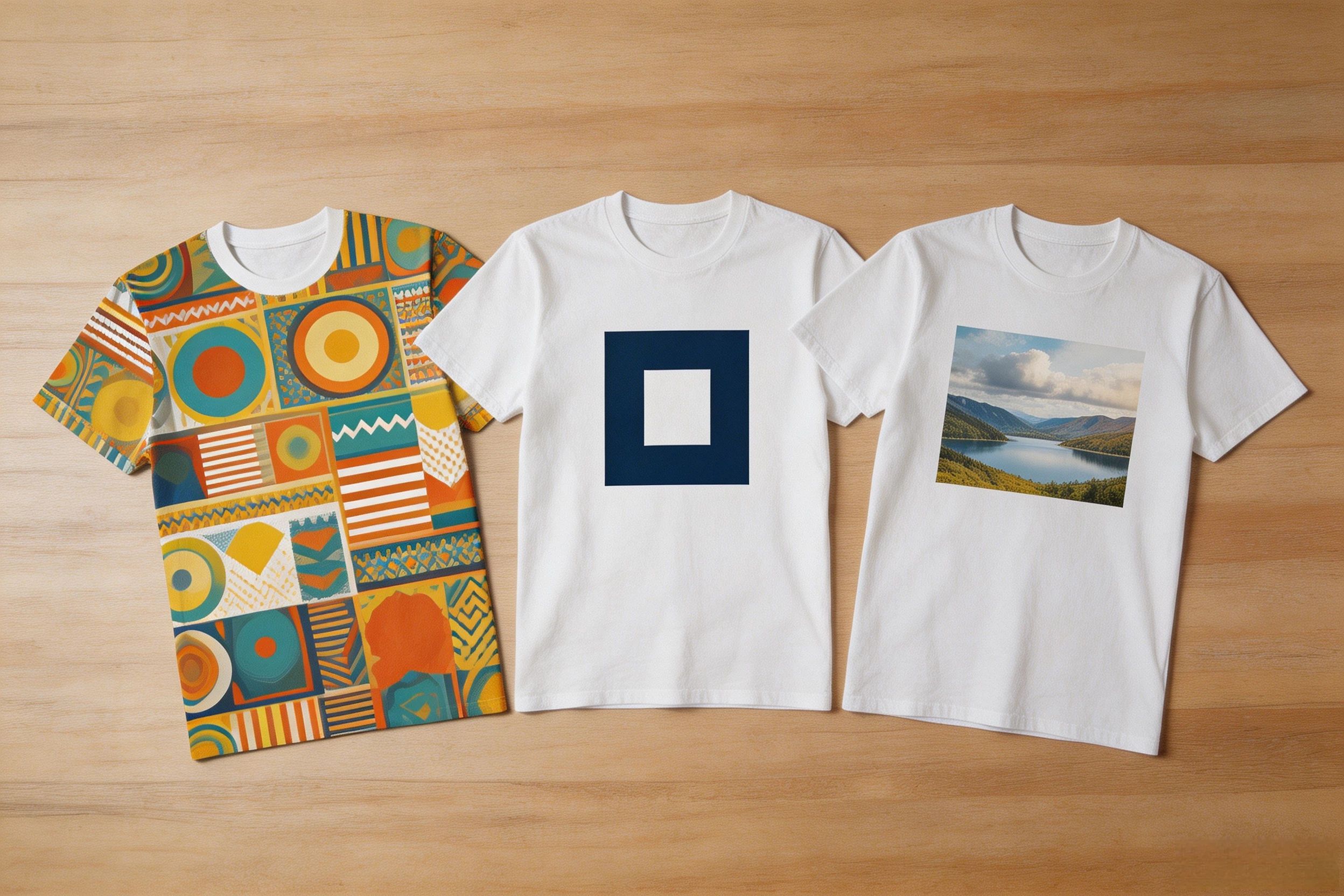
You’ve got a killer t‑shirt design idea. Your Etsy shop is ready to go. But now you’re staring at a bunch of printing options and wondering: which one do I actually pick?
Screen printing? DTG? Sublimation? All‑over print?
It’s confusing. And picking the wrong one can eat your profits, ruin your product quality, or leave you with unsellable inventory.
Here’s the good news: once you understand how each method works, the choice becomes obvious. This guide breaks down screen printing vs DTG vs sublimation (all‑over print) so you can pick the right fit for your Etsy business — without the overwhelm.
Let’s dive in.
What Are the Three Main Printing Methods?
Before we compare them head‑to‑head, let’s quickly cover what each method actually is.
All‑Over Print (AOP) – Sublimation Printing
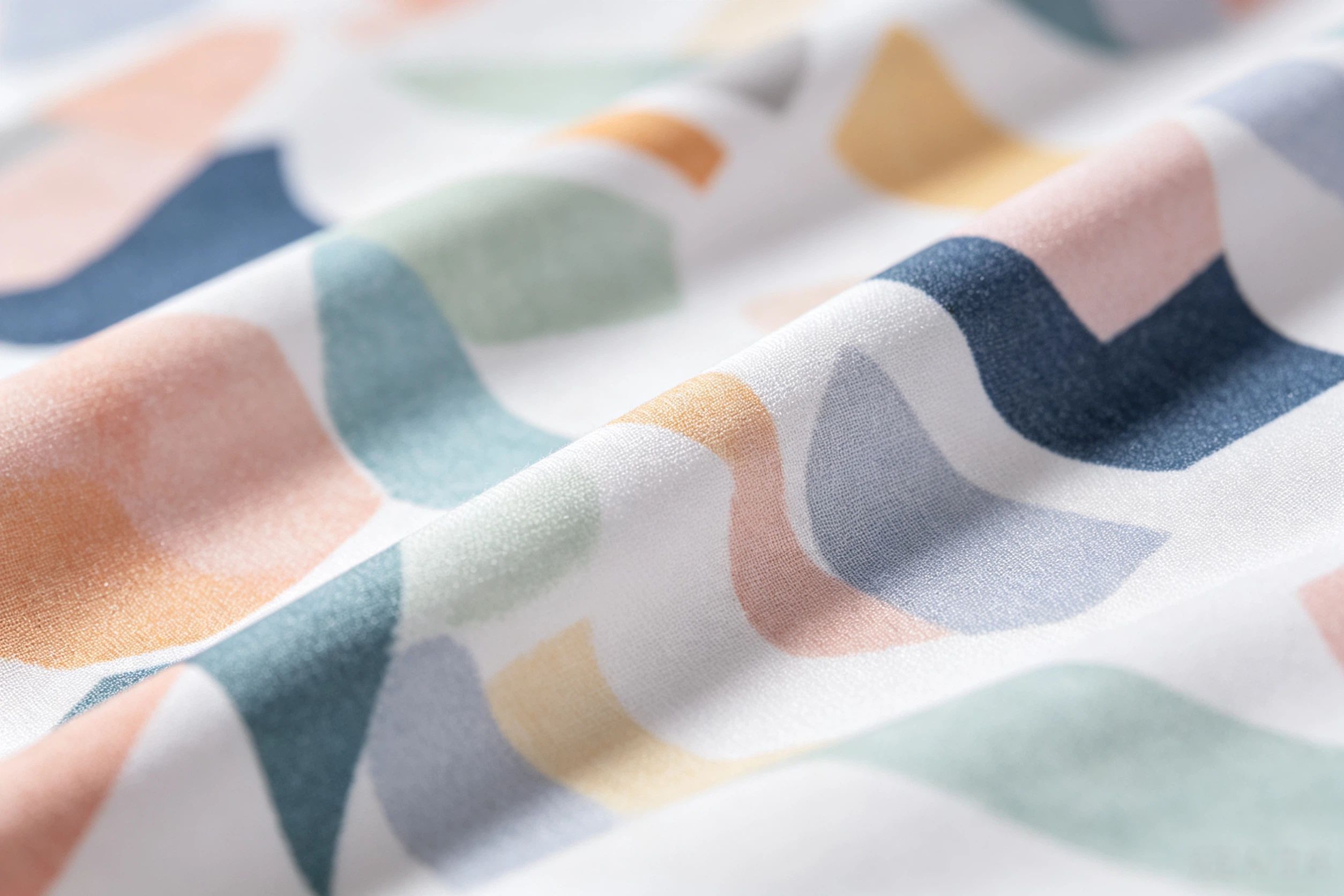
All‑over print (often called sublimation printing) uses heat to turn dye into a gas that bonds directly with polyester fibers. The result? A print that becomes part of the fabric rather than sitting on top of it.
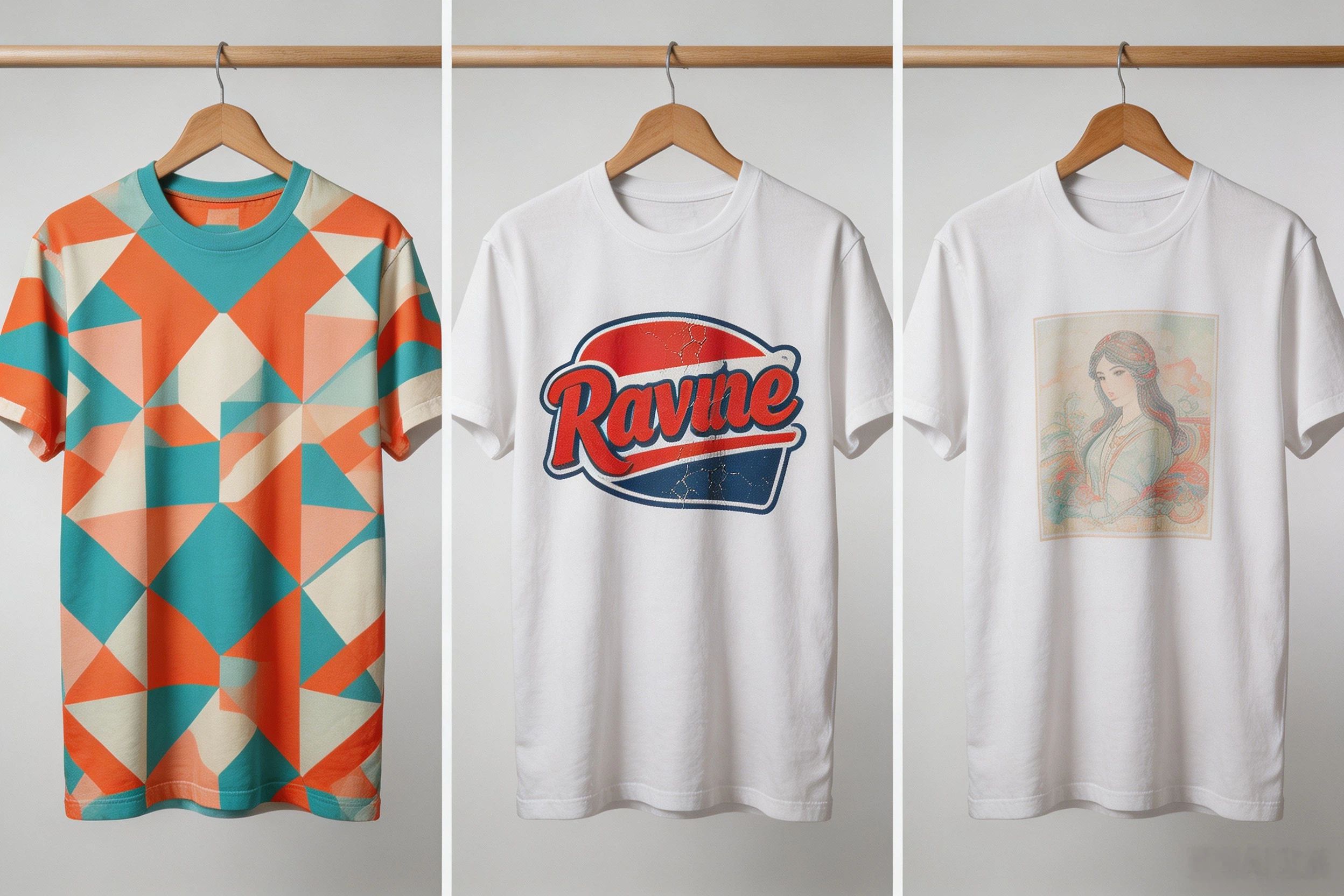
What it looks like: The design covers the entire garment — from collar to hem, sleeve to sleeve, edge to edge. No blank spots, no borders.
Best for: Full‑color designs, photographs, gradients, and patterns that need to wrap around the whole product.
Fabric requirement: Polyester or poly‑blends with at least 65% polyester content.
Screen Printing
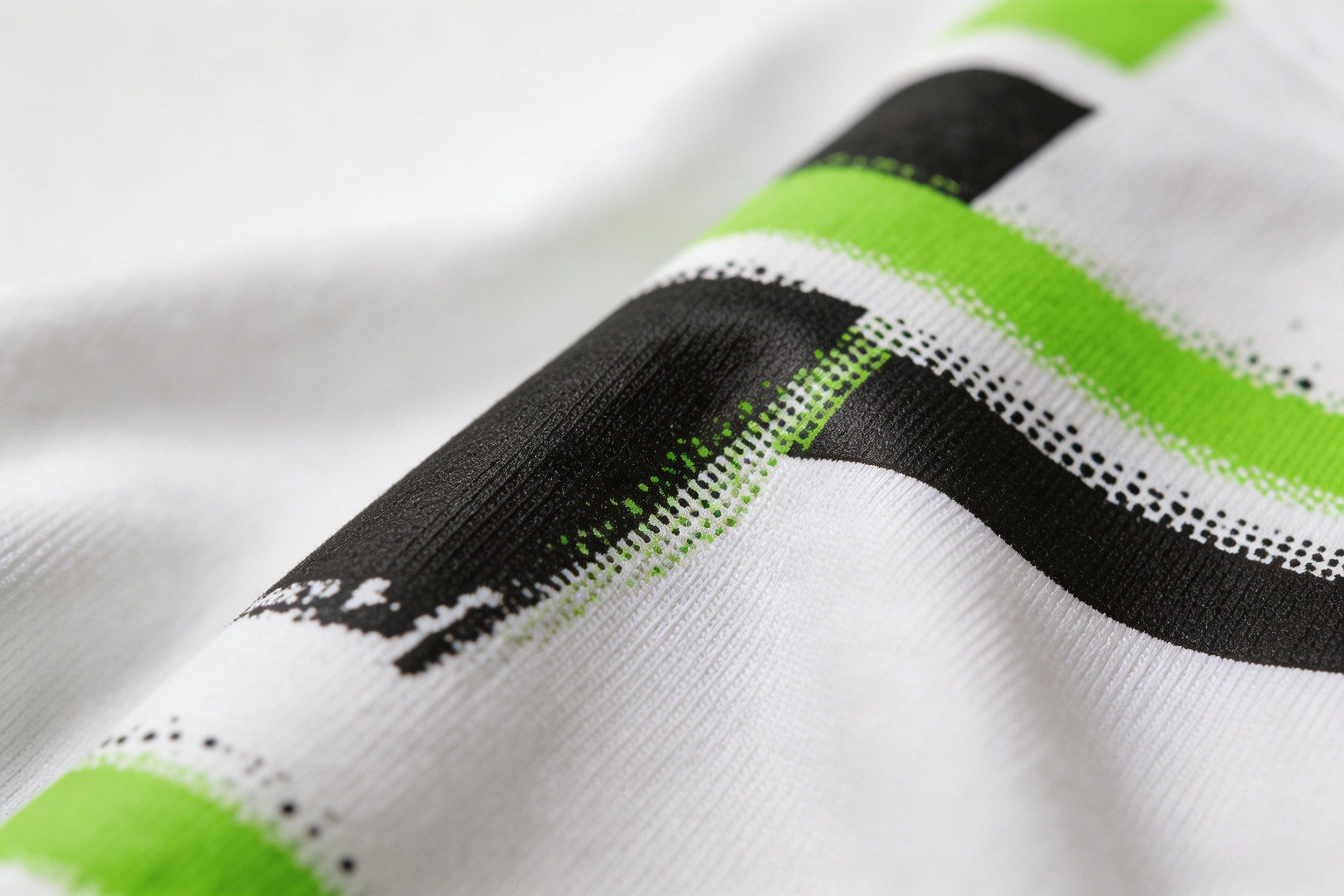
Screen printing pushes thick ink through a mesh stencil onto the fabric, one color at a time. Each color in your design needs its own screen.
What it looks like: Bold, vibrant colors with a slightly raised texture. The ink sits on top of the fabric.
Best for: Simple designs with 1‑4 colors, bulk orders, team uniforms, and merchandise.
Fabric requirement: Works on most fabrics, but cotton is the most common.
DTG (Direct‑to‑Garment)
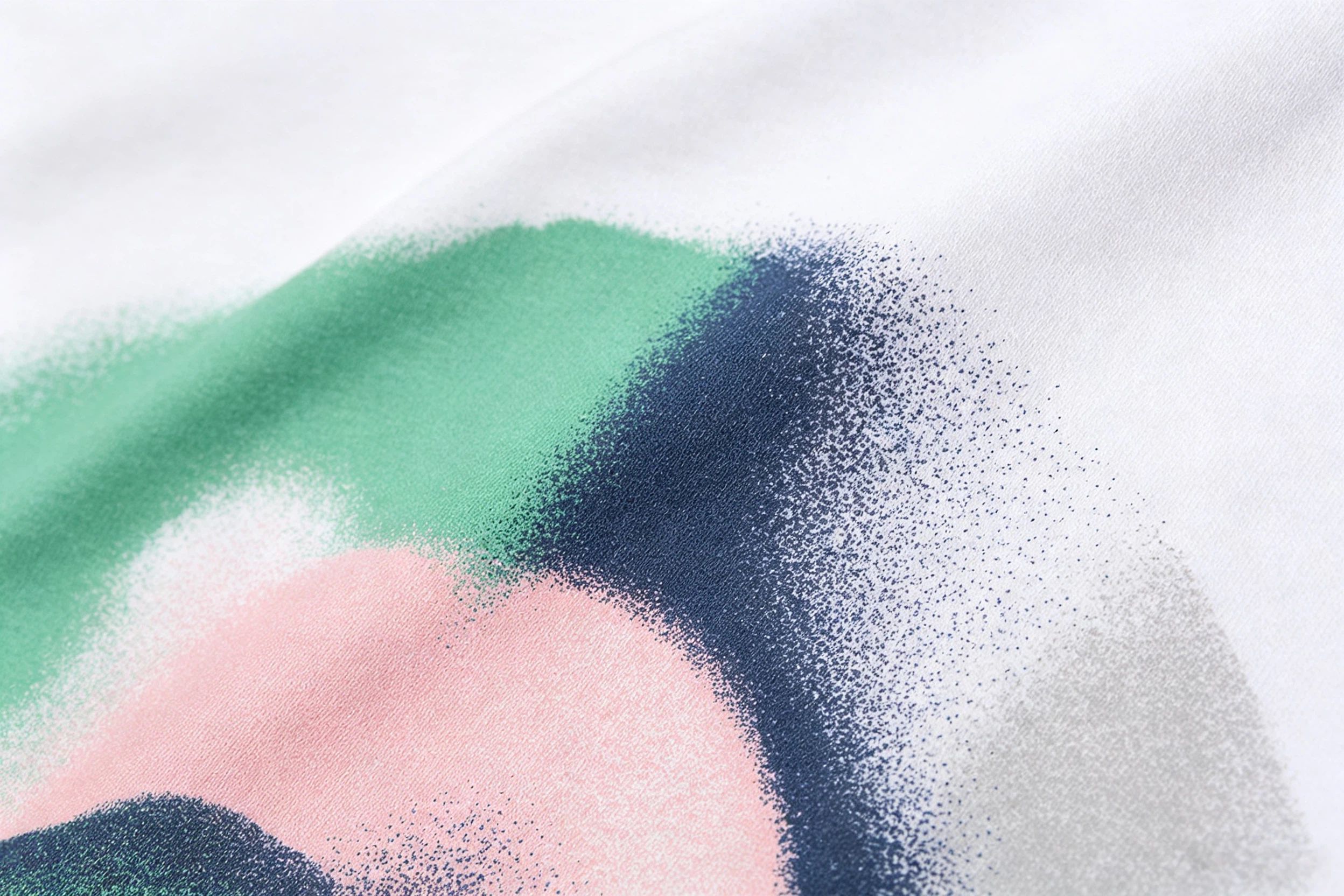
DTG is basically a modified inkjet printer for shirts. It sprays water‑based ink directly onto the fabric, creating a soft print that feels almost like part of the shirt.
What it looks like: Soft, matte prints with no texture. You can barely feel it when you touch it.
Best for: Full‑color designs, photographs, detailed artwork, and small batches.
Fabric requirement: 100% cotton or high‑cotton blends (50%+ cotton).
Screen Printing vs DTG vs Sublimation: The Complete Comparison
Here’s where the rubber meets the road. Let’s compare these three methods across the factors that actually matter for your Etsy business.
| Factor | All‑Over Print (Sublimation) | Screen Printing | DTG |
| Pattern Coverage | Full garment, edge to edge | Limited to a defined area | Limited to a defined area |
| Fabric Requirement | Polyester (65%+ poly) | Works on most fabrics | Cotton or high‑cotton blends |
| Print Feel | No texture — dye becomes part of the fiber | Slightly raised, plasticky feel | Soft, matte, barely noticeable |
| Durability | Permanent — never cracks, peels, or fades | Good — can crack over time on stretch fabric | Good — can fade after 50‑75 washes |
| Color Limits | Unlimited, full color | Limited by number of screens (costs add up) | Unlimited, full color |
| Setup Cost | None | $15‑$30+ per color per design | None |
| Minimum Order | 1 piece (1 piece = bulk price) | Usually 24‑50+ pieces | 1 piece |
| Best Use Case | All‑over designs, polyester apparel, activewear | Bulk orders, simple logos, team gear | Small batches, photo‑quality art, cotton tees |
Cost Structure Breakdown
Money talks. Here’s how the costs actually work for each method.
All‑Over Print (Sublimation) Costs
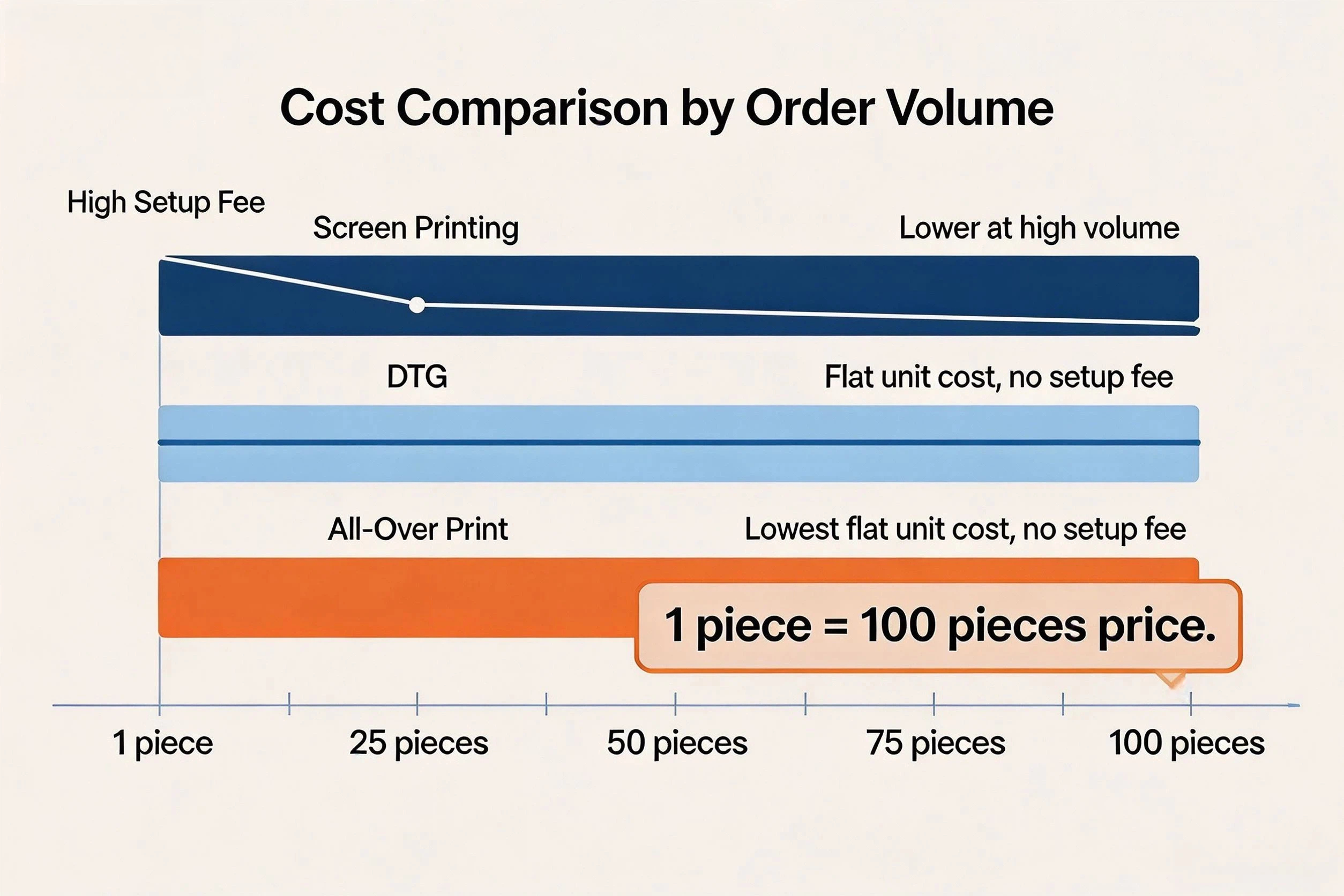
With all‑over print, there are no setup fees and no per‑color charges. A design with 20 colors costs the same as a design with 2 colors.
Here’s the key thing for Etsy sellers: 1 piece costs the same per unit as 100 pieces. There’s no minimum order quantity, and there’s no volume discount ladder. You can order one sample to test your design, and the unit price is exactly the same as if you ordered a hundred.
What you pay for:
- The garment itself
- The sublimation printing
- Shipping
No hidden costs. No setup fees. No screen fees. No color upcharges.
Screen Printing Costs
Screen printing has a completely different cost structure.
Setup fees: $15‑$30 per color, per design. A 4‑color design means $60‑$140 in setup fees before a single shirt is printed.
Per‑unit cost: Starts higher but drops sharply as you order more. At 500 shirts, you might pay $4‑$6 per shirt. At 12 shirts, you could pay double that or more.
The catch: Screen printing only makes financial sense above about 50 units with a simple design (1‑4 colors). Below that, the setup fees kill your margins.
DTG Costs
DTG sits in the middle.
Setup fees: None.
Per‑unit cost: Runs about $5‑$20 per shirt for most small‑business orders. The price barely moves whether you order 5 shirts or 50.
The catch: DTG never gets dramatically cheaper in bulk the way screen printing does. And dark shirts cost more because they need a white ink underbase.
Which Method Should You Choose for Your Etsy Shop?
Here’s the practical advice you came for.
Choose All‑Over Print (Sublimation) If…
- You want edge‑to‑edge designs that cover the whole garment
- You’re selling polyester apparel (activewear, jerseys, performance wear)
- You want unlimited colors with no extra cost
- You’re testing designs and want to order 1 piece at a time without paying a premium
- You want zero setup fees and no minimum orders
- You want prints that never crack, peel, or fade
- You’re looking for differentiation in a saturated market
All‑over print is the best choice for Etsy sellers who want to stand out with unique, full‑coverage designs. The custom t‑shirt market is expected to reach $9.82 billion by 2030, with Etsy being a major driver of that growth. Standing out matters more than ever.
Choose Screen Printing If…
- You’re ordering 50+ units of the same design
- Your design uses 1‑4 solid colors
- You want the lowest possible per‑unit cost at volume
- You’re selling to teams, businesses, or large groups
- You need extreme durability for heavy use
Screen printing is the king of bulk. But for most Etsy sellers just starting out, the setup fees and minimum orders make it impractical.
Choose DTG If…
- You’re printing on cotton garments
- You have photo‑quality, full‑color artwork
- You’re ordering small batches (under 50 pieces)
- You want a soft, barely‑noticeable print feel
- You don’t want to deal with setup fees or minimums
DTG is a solid choice for cotton tees with detailed artwork. The trade‑off is durability — DTG prints can fade after 50‑75 washes.
5 Questions to Ask Yourself Before Choosing
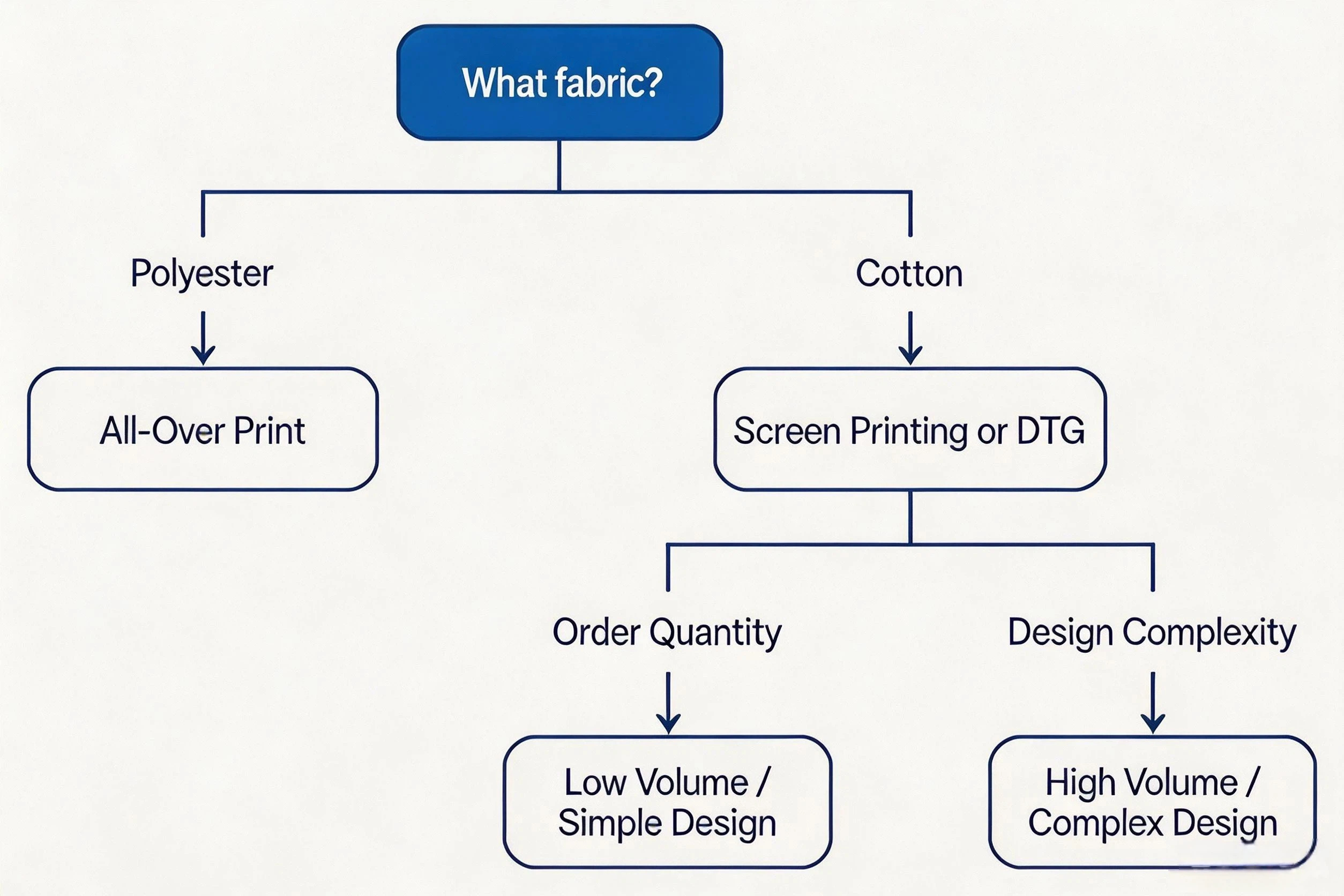
Still not sure? Run through these five questions. Your answers will point you to the right method.
1. What fabric are you printing on?
- Polyester or poly‑blend → All‑over print
- Cotton → DTG or screen printing
- Mixed fabrics → DTG (or DTF, if you’re considering that option)
2. How many pieces are you ordering?
- 1‑24 pieces → All‑over print or DTG
- 25‑50 pieces → DTG or small‑batch screen printing
- 50+ pieces → Screen printing starts making sense
3. Does your design cover the whole garment?
- Yes → All‑over print (it’s the only method that does edge‑to‑edge)
- No → DTG or screen printing
4. How many colors are in your design?
- 1‑4 solid colors → Screen printing could work
- Unlimited colors, gradients, photos → All‑over print or DTG
5. What’s your budget for testing?
- Limited → All‑over print (order 1 piece at bulk price) or DTG (no setup fees)
- Higher → Screen printing (but only if you’re ordering in volume)
Why All‑Over Print Is the Zero‑Risk Choice for Etsy Sellers
Here’s the reality: most Etsy sellers start small. You don’t know which designs will sell. You don’t want to sink money into inventory that might not move.
All‑over print solves this problem.
No minimum order quantity. Order one piece to test your design. The per‑unit price is exactly the same as ordering 100.
No setup fees. No screens to burn. No per‑color charges. What you see is what you pay.
No inventory risk. Print on demand means you only produce what you sell. No dead stock. No storage fees.
Full creative freedom. Edge‑to‑edge designs. Unlimited colors. Photographs, gradients, patterns — anything goes.
And the market is growing. The global print‑on‑demand market is projected to grow from $13.1 billion in 2026 to $57.5 billion by 2033. Etsy sellers using POD make up an estimated 35% of Etsy’s active shop base. The opportunity is real.
Frequently Asked Questions
Can all‑over print be done on cotton?
No. Sublimation (all‑over print) requires polyester or poly‑blends with at least 65% polyester content. The dye bonds with polyester fibers at a molecular level. Cotton doesn’t have the right molecular structure for the dye to bond, so the print won’t be permanent.
How long does all‑over print last?
Permanently. The dye becomes part of the fabric itself, so it never cracks, peels, or fades. The print will only fade when the fabric itself degrades.
Is screen printing or DTG better for small Etsy orders?
For orders under 24 pieces, DTG or all‑over print are usually better. Screen printing carries setup fees ($15‑$30 per color) that make small orders expensive. DTG has no setup fees and a flat per‑shirt cost. All‑over print has no setup fees and no minimums.
Can I get a sample before placing a bulk order?
Yes — and you absolutely should. With all‑over print, you can order a single sample at the exact same per‑unit price as a bulk order. Test the design, check the colors, feel the fabric, and confirm the fit before you commit to larger quantities.
Which printing method is most durable?
All‑over print (sublimation) is the most durable. The dye becomes part of the fiber, so it physically cannot crack, peel, or wash out. Screen printing is also very durable when properly cured, but the ink can crack over time on stretch fabrics. DTG is the least durable of the three, with prints potentially fading after 50‑75 washes.
What’s the difference between all‑over print and sublimation?
They’re the same thing. All‑over print (AOP) describes the result — a design that covers the entire garment. Sublimation describes the process — using heat to turn dye into gas that bonds with polyester fibers. Most people use the terms interchangeably.
Can I print photographs with all‑over print?
Yes. All‑over print handles photographs, gradients, and complex artwork exceptionally well because there are no color limits. The dye sublimation process reproduces fine details and smooth color transitions better than screen printing or DTG.
Ready to Start Your All‑Over Print Journey?
You now know the difference between screen printing, DTG, and all‑over print. You understand the costs, the trade‑offs, and which method fits your Etsy business.
Here’s the bottom line: if you want edge‑to‑edge designs, unlimited colors, zero setup fees, and the ability to test with a single piece at bulk pricing, all‑over print is your answer.
Peaprint’s all‑over print products are available with no minimum order quantity — 1 piece costs the same per unit as 100 pieces. Zero risk testing. Zero inventory risk. Zero setup fees.