How to Avoid the Most Expensive Print-on-Demand Mistakes

Print-on-Demand looks incredibly simple from the outside. Upload a design, connect a supplier, and wait for the money to roll in.
But the reality is different. A single oversight can tank a store's rating, trigger a wave of refunds, or even get an Etsy shop suspended.
Every year, new sellers run into the exact same print on demand mistakes. The good news is that almost all of them are entirely avoidable.
Here is the definitive guide on pod mistakes to avoid—broken down by product selection, design, pricing, operations, and compliance.
1. Product Selection Mistakes
Mistake #1: Only Looking at Search Volume
Opening a keyword tool, seeing a phrase with 50,000 searches, and immediately building a product around it is a trap.
The Risk: Entering a hyper-competitive market with low buying intent.
The Fix: Always look at CTR (Click-Through Rate) and Competition. A keyword with 5,000 searches and a 150% CTR is far more profitable than a 50,000-search keyword dominated by big brands.
Mistake #2: Choosing Red-Ocean Categories
Trying to sell a basic white graphic tee means competing with millions of other sellers.
The Risk: It triggers a race to the bottom price war.
The Fix: Choose high-perceived-value print on demand products. AOP (All-Over Print) hoodies, premium tote bags, and personalized items have fewer competitors and allow for premium pricing.
Mistake #3: Ignoring Seasonal Windows
Launching a Halloween design on October 25th means the boat has been missed.
The Risk: Etsy’s algorithm needs time to index a listing and gain momentum.
The Fix: Upload seasonal designs at least 6 to 8 weeks before the holiday hits.
2. Design Mistakes
Mistake #4: Low Resolution
Pulling a low-quality image from Google or Facebook and uploading it to a 12-inch print area.
The Risk: The buyer receives a blurry, pixelated print and immediately requests a refund.
The Fix: Always use 300 DPI (Dots Per Inch) source files.
Mistake #5: Forgetting Bleed (White Edges)
If a design ends exactly at the cut line, the manufacturing process will likely leave a tiny white edge after the fabric is cut.
The Risk: It looks like a manufacturing defect and lowers perceived quality.
The Fix: Extend the background design at least 0.5 to 1 inch beyond the cut line (Bleed area).
Mistake #6: Placing Key Elements on Seams
For AOP apparel, placing a face, text, or logo right on the side seam or the zipper line.
The Risk: The core visual gets sliced in half during the Cut & Sew process.
The Fix: Always keep vital elements within the Safe Zone. Use free design templates to see exactly where the seams fall.

3. Pricing Mistakes
Mistake #7: Only Counting the Base Cost
Seeing a hoodie cost $8, and selling it for $20 thinking the profit is $12.
The Risk: You are ignoring shipping, Etsy transaction fees (6.5%), payment processing (3%), and ad spend. It might actually be a loss.
The Fix: Calculate the Total Cost (Product + Shipping + Fees + Ads) before setting a price. Knowing the real math is how to see if is print on demand profitable for a specific product.
Mistake #8: Frequent Discounting
Constantly running 40% off sales to get a quick boost.
The Risk: It trains buyers to wait for a sale, and destroys the perceived premium value of the brand.
The Fix: Focus on value-based pricing. Offer bundles instead of slashing prices.

4. Operational Mistakes
Mistake #9: Skipping Sample Testing
Trusting the digital mockup and going straight to running ads.
The Risk: You won't know if the fabric is itchy, the colors are dull, or the sizing runs small until customers tell you via a 1-star review.
The Fix: Always order a sample first. At Peaprint, 1 piece can be ordered at the same unit price as 100, making testing risk-free.
Mistake #10: Not Setting Processing Times
Leaving the default processing time on an Etsy listing.
The Risk: Missing holiday deadlines leads to Etsy flags for late shipments.
The Fix: Check the supplier's actual production time (Peaprint’s is 2-5 business days) and set Etsy processing times accordingly, plus a shipping buffer.
Mistake #11: No Tracking Info & Slow Customer Service
Failing to upload tracking numbers or ignoring buyer messages.
The Risk: Etsy heavily penalizes shops with poor communication metrics. Unanswered messages lead to bad reviews.
The Fix: Use a supplier with automated tracking sync and dedicate time to customer support.
5. Compliance Mistakes
Mistake #12: Using Unauthorized IP
Using Disney, Nike, Taylor Swift, or video game characters.
The Risk: Immediate listing removal, copyright strikes, or a permanent account ban.
The Fix: Only use original artwork or designs with a commercial license.
Mistake #13: Not Disclosing POD Partners
Etsy has strict rules about who is making the products.
The Risk: It violates transparency policies and can lead to shop suspensions.
The Fix: In the listing descriptions or shop policies, clearly state that products are made to order by a print-on-demand partner.
6. How Peaprint Helps You Avoid These Mistakes
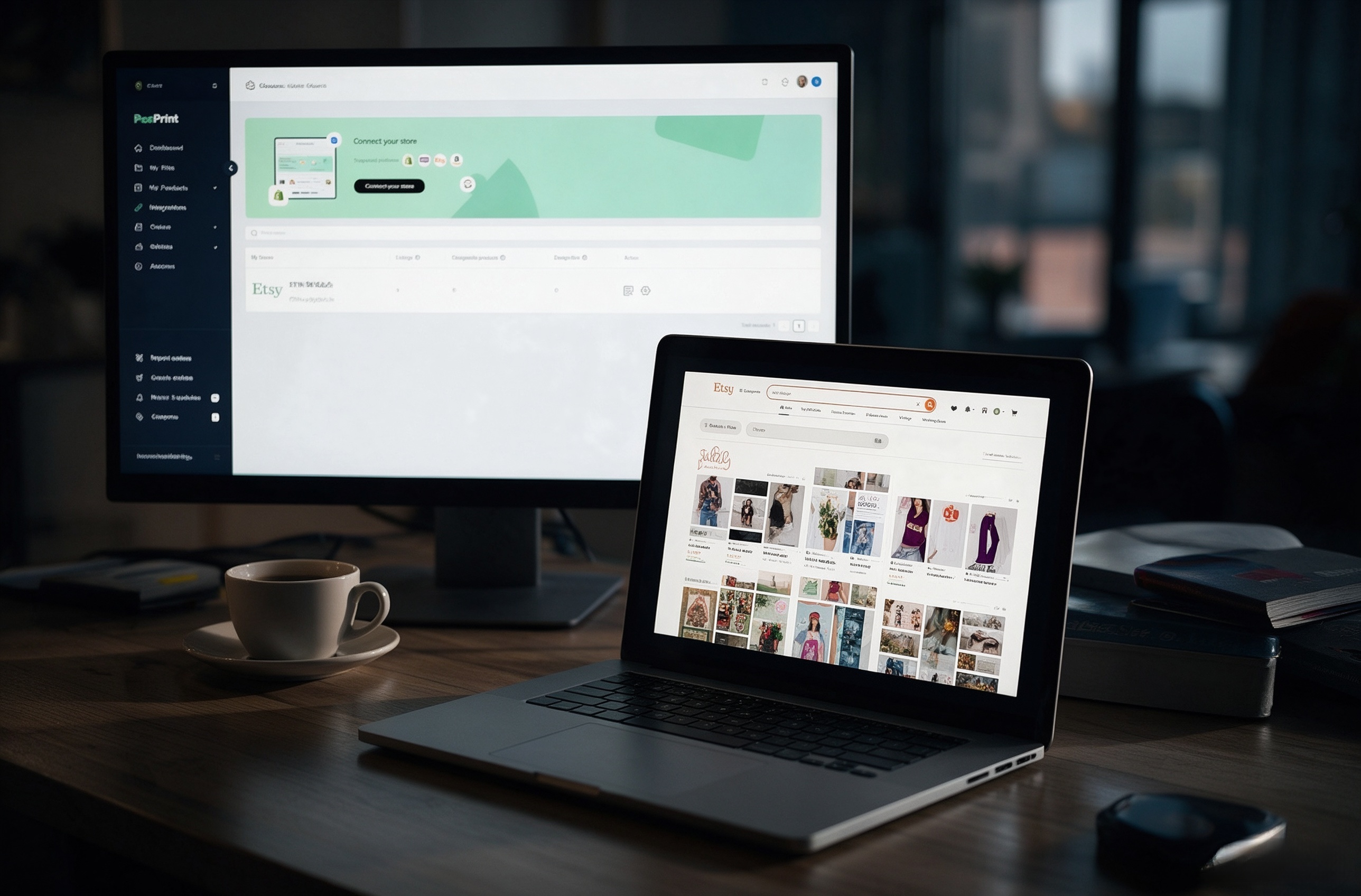
Peaprint was built specifically to eliminate the painful etsy pod errors that hold sellers back.
- Zero-Cost Testing: With 1-piece minimums and flat unit pricing (1 piece costs the exact same per unit as 100), samples can be ordered to test quality without buying bulk inventory.
- Free Design Templates: Avoid bleeding and seam errors with downloadable templates for every product.
- Global Production Network: Stable, automated fulfillment means processing times are reliable, and tracking information syncs back to Etsy automatically.
- Professional Support: The team is here to help troubleshoot design files and fulfillment so sellers can focus on marketing.
Build a Store That Lasts
Learning how to start a print on demand business is easy. Building one that survives its first Q4 is the hard part. Success belongs to the sellers who pay attention to the details, avoid the obvious traps, and use the right tools.
Use this checklist to audit a store today before running any ads.
Start a POD business with Peaprint. 1 piece is enough, and 1 piece costs the same per unit as 100. Test designs, scale with confidence, and avoid the mistakes that hold other sellers back.