How to Test Holiday POD Design Trends Before Black Friday
When Q4 trend reports drop, it’s easy to get excited.
You might see that "Merrymaxxing" is trending on TikTok, or that retro Christmas characters are having a moment, and the immediate instinct is to go all in. It's tempting to upload 50 designs across 10 products and hope for the best.
However, without a structured approach, it becomes difficult to know which design actually drove sales and which ones missed the mark.
Here’s the key about holiday pod design trends 2026: a trend is an aesthetic signal, not a guaranteed sales strategy.
Instead of just copying the trend, the most effective approach is to run controlled tests. By taking the same design, putting it on different carriers or color bases, and observing the data, you can clearly see what your audience actually responds to.
Today, I’m going to share four design directions worth testing, and how to structure your A/B tests so you can make data-driven decisions.
Let’s dive in.
The Four Directions to Test
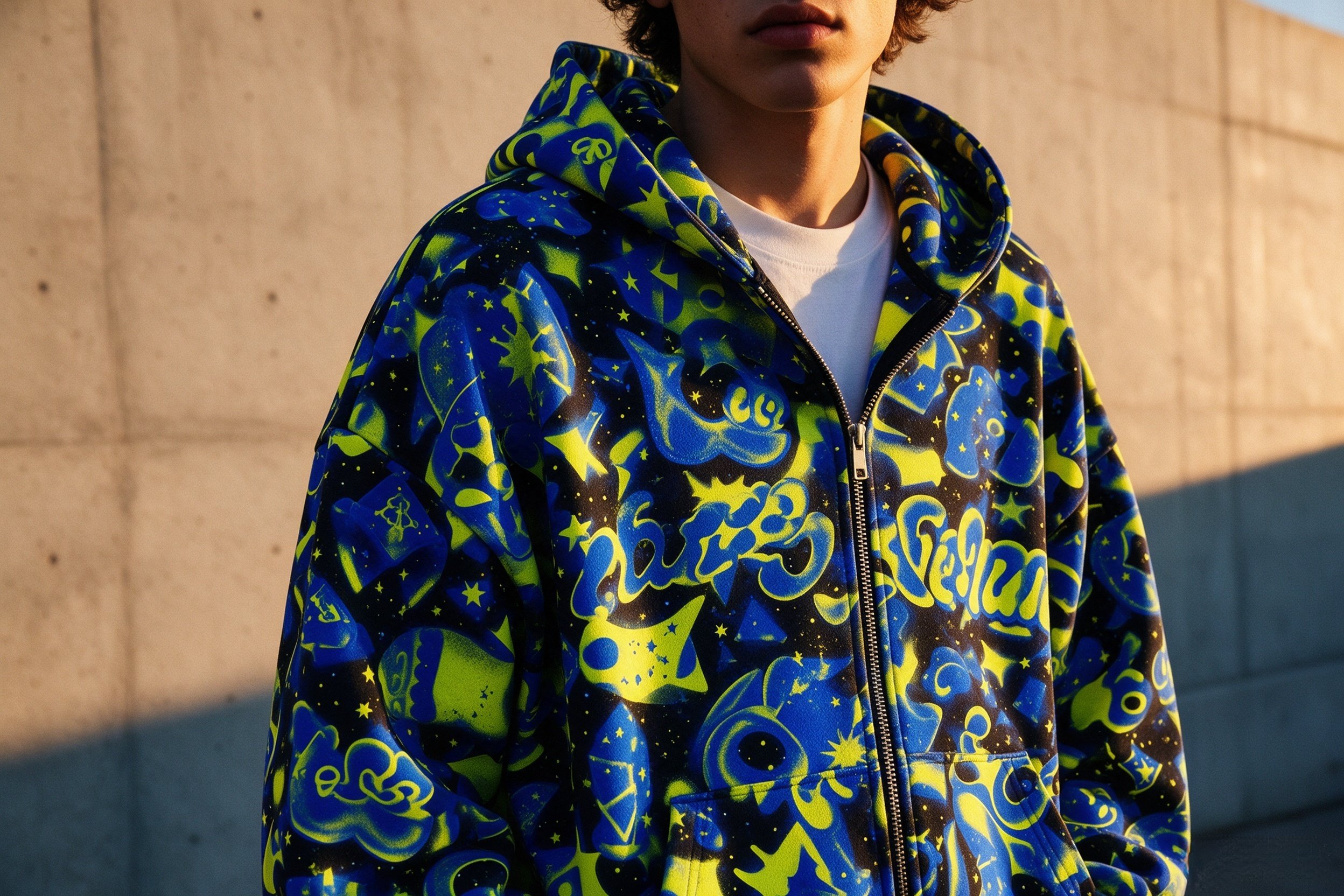
1. Playful Decoration and Bold Color (The "Merrymaxxing" Trend)
The Signal: Etsy identifies Merrymaxxing as a seasonal trend, with whimsy item searches and ornament favorites up.
The Test: High-contrast blue and yellow, playful text, holiday subjects. Carriers include AOP tees, hoodies, totes, and posters.
Keep in mind: Flat prints must not be described as rhinestones, embroidery, or dimensional decoration. If it's a flat print, it's best to describe it accurately.
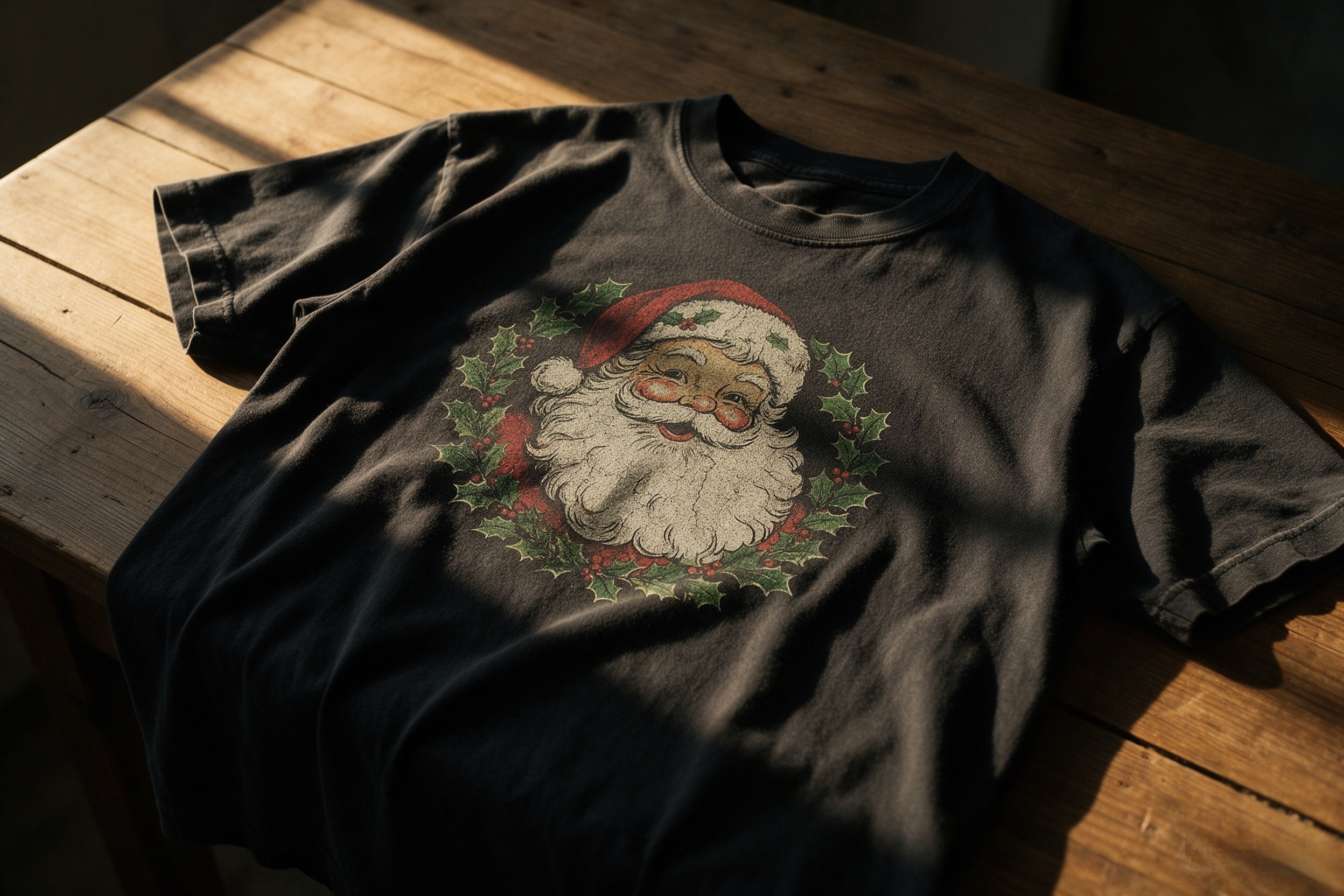
2. Retro Christmas Characters
The Signal: Vintage illustrations with botanical elements are performing well on DTG tees.
The Test: Use original illustrations and do a limited run. Test the exact same design on different shirt colors (e.g., a vintage black tee vs. a natural white tee).
3. Pastel Repeat Names
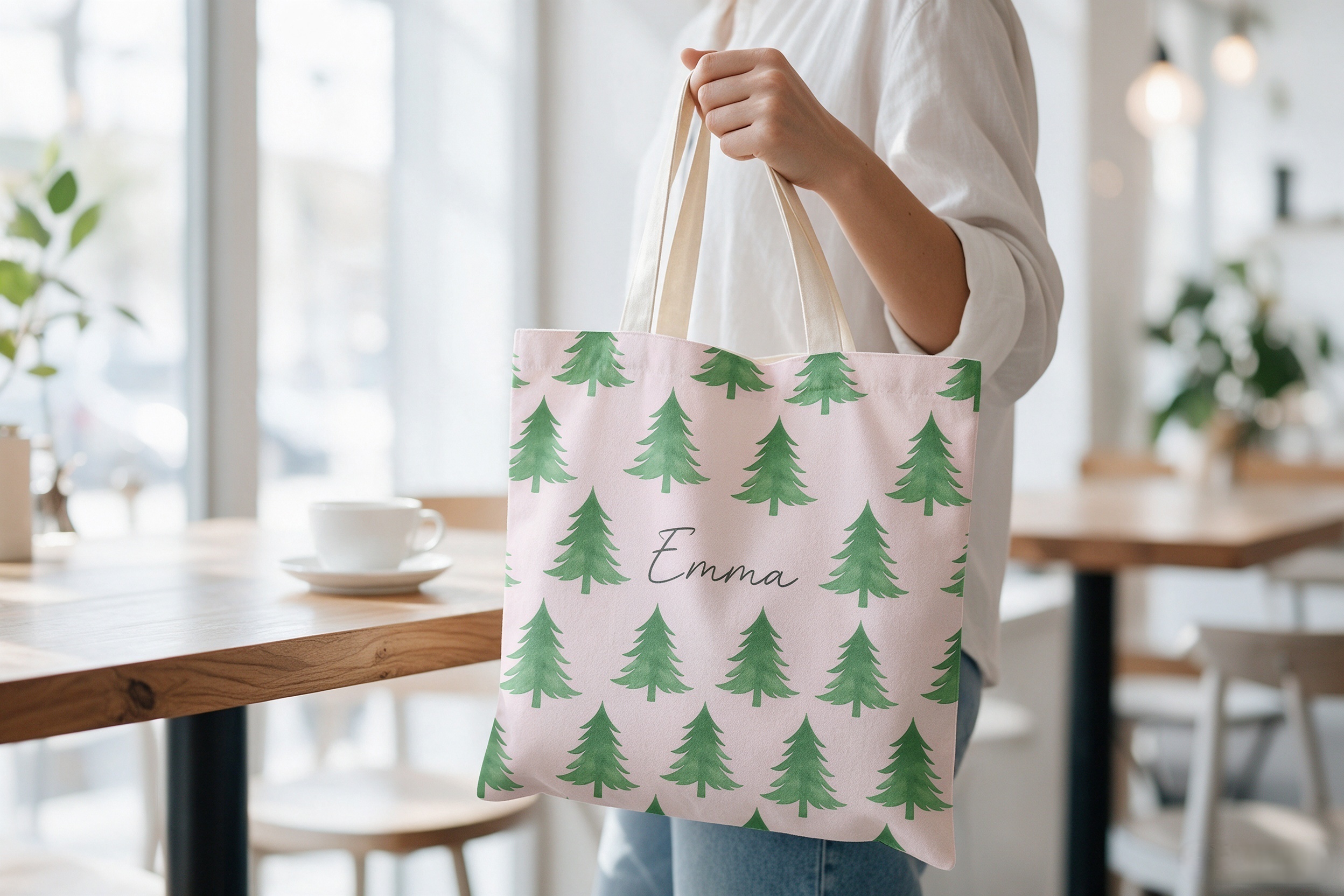
The Signal: Soft pastels and repeating names are trending for personalized gifts.
The Test: Since we don't do wrapping paper, test this on AOP tote bags and apparel. Before you list it, it's highly recommended to test the long-name layout. If a customer with a 15-letter name breaks your design template, it may result in a return. Check the actual print dimensions first.
4. Starry Winter Scenes & Religious Narratives
The Signal: Broad interest in winter aesthetics and niche religious gifting.
The Test: Starry winter scenes are perfect for winter wall art pod (canvas prints). Check the cropping on different sizes. For religious narratives, we suggest testing this only if your shop already serves that specific audience.
How to run the A/B Test (The Framework)
To get clear results, it's best to test one variable at a time. If you change the design, the carrier, and the price simultaneously, it becomes difficult to identify what drove the conversion.
Here is how you can set up your merrymaxxing pod test:
| Test Variable | Fixed Conditions | Observation Metrics | Decision Rule |
| Same Design, Two Color Bases (e.g., White Tee vs. Black Tee) | Same price, same mockup scene, same audience. | Clicks, Favorites, Orders | If one base gets 3x the clicks and actual orders, scale the winner and pause the other. |
| Same Design, Two Carriers (e.g., Tote Bag vs. AOP Hoodie) | Same price margin, same design style. | Clicks, Favorites, Orders | Do not judge by impressions alone. Look at the conversion rate. |
| Same Carrier, Two Layouts (e.g., Centered vs. Full-Bleed) | Same product, same price. | Clicks, Favorites, Orders | If full-bleed gets better engagement, use it for the next drop. |

A Validation Record (To Be Filled By You)
Here is a framework you can use to track your test results.
Validation Record: CASE-DESIGN-003 (Template)
- Background: Multiple design directions to choose from.
- Challenge: Inconsistent variables make comparison impossible.
- Plan: Test the same master design on two different carriers or two color bases. Keep everything else (price, mockups) fixed.
- Validation Items: Color difference, seam alignment, visual rhythm, and production days.
- Decision Rule: Quality pass + a clear click/favorite signal before moving to the next round.
- Result: [To be filled after your test data comes in]
- Limitation: One shop's test is not market-wide proof.
How to execute this on Peaprint
To execute these tests efficiently, here is the recommended workflow on our platform:
- Create your Master Design: Build the core artwork in your software (Canva, Photoshop, etc.).
- Adapt for Carriers: Use our templates to adapt the layout for AOP tees, hoodies, tote bags, or canvas prints.
- Use the Mockup Generator: Put the design on a realistic mockup to see how it looks on a model or in a room before publishing.
- Order a Sample: For AOP products, ordering a sample is highly recommended to verify seam alignment and color accuracy before listing.
Copyright Reminder: All the design directions above require original illustrations and fonts. To protect your store, avoid reusing sample artist work or copying existing layouts.
FAQ
Q: Can I just copy the sample Santa Claus I found on Etsy?
A: No. It is highly recommended to use original illustration and fonts to avoid copyright issues. You can be inspired by the general vibe, but you should create your own original artwork.
Q: I'm getting clicks but no orders. What should I check?
A: There are four main areas to review: 1. Price (is it competitive for your audience?). 2. Delivery date (will it arrive before Christmas?). 3. Mockup quality (does it look premium?). 4. Personalization clarity (is it obvious how to add a name?).
Q: Should I test all four directions at once?
A: It's usually better to pick one direction, test two variations, and see if you get a clear signal. Then you can move on to the next direction.
Q: Can I use AI to generate the retro characters?
A: You can use AI for inspiration, but the final output should be your original work. Etsy has policies regarding AI-generated content, and AI often struggles to guarantee seamless seam alignment for AOP products.
The part I keep coming back to
Trends can be loud, but data is quiet.
It’s easy to spend hours looking at holiday pod design trends 2026 and guessing which one will be the next big thing. But a more reliable approach is to take one design, test it on two different shirts, and let your customers' behavior guide your next move.
We look at this product data and keyword trends every single day here at Peaprint. The numbers above were checked as of October 20, 2026. We encourage you to use this information as a starting point for your own testing.
Pick one design. Pick two carriers. Run the test.
Let the data decide.
Head over to Peaprint to start designing your holiday products today, and launch your store without any inventory risk.