Cotton All-Over Print: How It Works, Benefits, and Design Tips
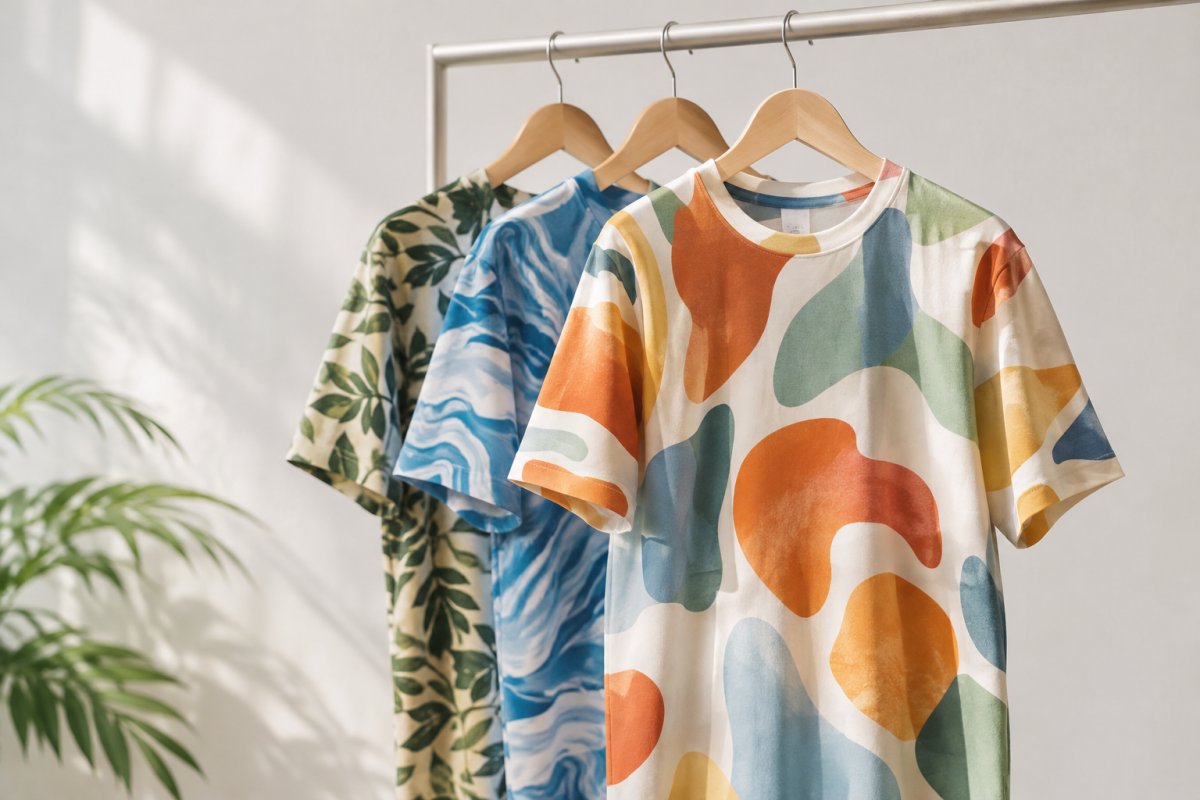
All-over print has become a popular way to create clothing with bold, full-surface designs. Traditionally, most all-over print apparel has relied on polyester fabrics and sublimation printing. But what if you want the same design flexibility with the soft, breathable feel of cotton? That's where cotton all-over print comes in. By using printing methods designed for natural fibers, manufacturers can now create cotton apparel with designs that cover nearly every part of the garment. Here's what you need to know about the technology, its benefits, and how to start designing and selling cotton AOP apparel.
What Is Cotton All-Over Print?
Cotton all-over print, also known as cotton AOP, is a printing approach that allows designs to cover most or all of a cotton garment's surface. Instead of placing a graphic on a single area, such as the chest or back, the artwork can extend across multiple sections, including the sleeves, front, and back.
The biggest difference between cotton AOP and traditional all-over printing comes down to the fabric and printing process.
Traditional AOP apparel is commonly made with polyester because sublimation ink bonds effectively with synthetic fibers. Cotton requires a different approach. Depending on the production method, manufacturers may use pigment-based digital printing or other textile printing technologies designed for cellulose fibers.
Understanding All-Over Printing
Unlike standard garment printing, which typically focuses on a limited print area, all-over printing gives designers more room to work with. It allows patterns, illustrations, and larger graphics to extend across an entire garment.
Most AOP apparel follows a cut-and-sew production process. The design is printed onto fabric before the material is cut into individual panels. Those panels are then sewn together to create the finished garment.This process makes it possible to print areas that are difficult to reach with traditional methods, such as sleeves, side panels, and sections near the hem.
Read Also: What is AOP? Everything You Need to Know About All-over Print
What Makes Cotton AOP Different?
Cotton AOP combines full-surface design coverage with the characteristics of cotton fabric. Cotton is widely used in everyday clothing because it generally offers a soft feel and good breathability. For consumers who prefer natural fibers over synthetic fabrics, cotton all-over print apparel provides another option for wearing colorful, personalized designs.
However, cotton AOP does not automatically mean the finished garment is made from 100% cotton. Some products use cotton blended with a small amount of elastane to add stretch and improve comfort.
How Does Cotton All-Over Printing Work?
Cotton fabric cannot be printed using conventional polyester sublimation in the same way as synthetic fabric. Its fibers have different chemical properties, so manufacturers need printing systems that work with cotton.
Two common approaches in cotton textile printing are pigment printing and reactive dye printing. Both can produce detailed designs, but they work differently and involve different production steps.
Digital Printing on Cotton Fabric
Digital textile printing applies a design directly to fabric through an inkjet printing system. Instead of using a screen or engraved roller for each color, the printer applies ink in controlled patterns based on a digital file.
For cotton AOP, one possible approach is water-based pigment printing. Pigments are colored particles rather than dyes that chemically bond with the fiber. A binder helps attach the pigment to the fabric, and heat curing helps set the printed design.
Pigment Printing vs. Reactive Printing
With pigment printing, colored particles sit on the fabric surface and are secured with a binder. The process generally involves printing, drying, and curing. It does not require the same dye fixation and afterwashing stages used in conventional reactive printing.
Reactive printing works differently. Reactive dyes form chemical bonds with cellulose fibers, including cotton. The process typically involves fabric preparation, printing, drying, fixation, and afterwashing to remove unfixed dye and processing chemicals.
Neither method is automatically better in every situation. The final result depends on the ink or dye formulation, fabric preparation, equipment, and finishing process. Pigment printing can offer a practical route for digital production, while reactive printing is widely used when strong color performance on cotton is important.
The Cut-and-Sew Production Process
Once the fabric printing stage is complete, the next steps turn the printed material into a wearable product.
A typical cotton AOP production workflow looks like this:
- Fabric preparation: The cotton fabric is prepared to provide a consistent printing surface.
- Digital printing: The design is printed across the fabric using the selected printing technology.
- Ink fixation and finishing: The fabric goes through the appropriate drying, curing, or other finishing steps.
- Fabric cutting: The printed material is cut into individual garment panels according to the product pattern.
- Garment sewing: The panels are assembled into the finished T-shirt, hoodie, dress, or other apparel item.
- Quality inspection: The finished garment is checked for printing, cutting, and sewing issues.
Because the fabric is printed before it is assembled, designers can create artwork that extends across different parts of the garment. That's what makes cut-and-sew production particularly useful for all-over print clothing.
Read Also: Cut and Sew All Over Print Explained: Process, Benefits & Uses
Cotton AOP vs. Polyester AOP vs. DTG: What's the Difference?
Cotton AOP, polyester AOP, and direct-to-garment (DTG) printing can all be used to create custom apparel, but they serve different purposes.
| Comparison | Cotton AOP | Polyester AOP | DTG |
|---|---|---|---|
| Common fabric | Cotton or cotton blends | Polyester | Cotton and suitable fabric blends |
| Printing method | Pigment printing or other cotton-compatible methods | Sublimation | Direct-to-garment inkjet |
| Print coverage | Full surface | Full surface | Usually a designated print area |
| Production | Typically cut and sew | Typically cut and sew | Usually printed on a finished garment |
| Main appeal | Cotton fabric feel and full coverage | Vivid designs on synthetic fabric | Detailed graphics and localized designs |
Cotton AOP vs. Polyester Sublimation
Traditional polyester AOP usually relies on sublimation printing. The design is first printed onto transfer paper using sublimation ink. Heat and pressure then turn the dye into a gas, allowing it to penetrate polyester fibers and form a durable color result.
Cotton does not work the same way. Conventional sublimation dyes are designed to bond with polyester or suitable polymer-coated surfaces. They do not directly produce the same results on untreated cotton. Cotton AOP solves this compatibility issue by using a printing method suited to cotton fabric, such as direct pigment printing.
The choice between the two comes down to the product you want to create. Cotton may be a better fit for everyday apparel and comfort-focused clothing lines. Polyester AOP is often more suitable for activewear and products where vivid sublimation graphics are a priority.
Cotton AOP vs. DTG Printing
DTG printing applies ink directly to a finished garment. It's a popular option for printing detailed graphics, photographs, logos, and illustrations on T-shirts and sweatshirts. Its main limitation is the available print area. Most DTG products offer specific printable zones rather than coverage across the entire garment.
Cotton AOP takes a different approach. The design is applied to fabric before the garment is cut and sewn, allowing more extensive coverage across individual panels. For a small chest graphic or a branded T-shirt, DTG may be the more practical option. For a garment covered in floral patterns, abstract graphics, or repeating illustrations, cotton AOP offers greater design flexibility.

What Are the Benefits and Limitations of Cotton AOP?
Key Benefits of Cotton All-Over Print
1. A Soft and Breathable Fabric Experience
One of cotton's biggest advantages is its familiar feel. It is widely used in everyday apparel because it can offer a soft, comfortable wearing experience.
For customers who prefer cotton over polyester, cotton AOP provides an opportunity to enjoy full-surface designs without choosing an entirely synthetic garment.
2. More Creative Freedom
Traditional garment printing often limits designers to a few designated areas. With cotton AOP, artwork can extend across the front, back, sleeves, and other fabric panels.
This makes it easier to create coordinated patterns and visually distinctive clothing.
3. More Product Differentiation
A standard graphic T-shirt is competing with thousands of similar products online. Full-surface patterns and carefully designed garment layouts can help an independent clothing brand develop a recognizable visual identity.
A collection built around a consistent design theme can also include several complementary products.
4. More Options for Apparel Collections
Cotton AOP can be used across different clothing categories, depending on supplier availability. This gives sellers more opportunities to develop matching pieces or expand an existing apparel line.
Potential Limitations to Consider
Cotton AOP is not perfect for every design or customer. One consideration is print hand feel. Pigment printing uses a binder to hold colored particles on the fabric surface. Depending on the formulation and coverage, this can affect how the printed area feels, especially with large, heavily covered designs.
Color performance is another factor. The color you see on a computer screen may not match the finished garment exactly. Fabric texture, ink formulation, printing conditions, and finishing can all affect the result.
Cut-and-sew production also introduces placement considerations. Small variations during cutting and sewing may cause patterns to shift slightly around seams. Designs that rely on perfectly aligned graphics across two panels can be difficult to reproduce consistently.
The best way to evaluate these limitations is to order samples. Check how the garment feels, how the colors look in natural light, and whether the design holds up after washing.
What Products Can You Create with Cotton AOP?
Cotton all-over printing can be used for more than basic T-shirts. Depending on the supplier's catalog, sellers can explore different apparel categories and develop collections around specific customer interests.
Cotton T-Shirts and Oversized Tees
T-shirts are a natural starting point for a cotton AOP collection. Oversized silhouettes work particularly well with bold illustrations, retro graphics, and repeating patterns. They're also a practical choice for brands targeting streetwear and casual fashion audiences.
Cotton Hoodies and Sweatshirts
Hoodies and sweatshirts offer a larger canvas for full-surface designs. Artwork can extend across the body and sleeves, creating a more coordinated look than a standard front graphic. These products are worth considering for fall and winter collections.
Cotton Dresses
Skater dresses, bodycon dresses, and T-shirt dresses can all provide opportunities for all-over patterns, depending on supplier availability. Floral prints, abstract artwork, and playful illustrations are possible design directions.
Cotton Pants and Matching Sets
Wide-leg pants and shorts can help sellers build coordinated outfits. A matching top and bottom collection is also a practical way to create additional product combinations without developing an entirely new design theme for every item.
How to Design for Cotton All-Over Print
Designing for cotton all-over print requires a different mindset from creating a standard T-shirt graphic. Your artwork needs to work across several garment panels, not just within one small print area.
Choose Patterns That Work Across the Entire Garment
Repeating patterns are a reliable starting point for AOP designs. Floral prints, geometric shapes, small illustrations, and abstract textures can cover a large surface without relying on one exact image placement. Larger graphics can work too, but they require more planning. Consider how the main artwork will be divided between the front, back, and sleeves before finalizing the design.
Design for Individual Fabric Panels
AOP garments are assembled from separate fabric pieces. This means an image that looks perfectly positioned in a digital mockup may appear slightly different after sewing.
Think about each panel as part of the overall composition. Avoid placing important text, faces, or logos directly across seams. If the design includes a large central illustration, keep the main subject within a section of fabric where it can remain intact after cutting.
It's also worth checking how the artwork will look in different sizes. A design that works well on a large T-shirt may need adjustments for a smaller size.
Understand Bleed Areas and Safe Zones
Every AOP product has specific printing and cutting requirements. Understanding the template markings can prevent common design problems.
The bleed area extends beyond the final cutting boundary. Your background or repeating pattern should generally cover this area so that small cutting variations do not leave unprinted fabric near the edges.
The safe area is where important design elements should stay. Keep text, logos, and focal graphics away from boundaries where they could be trimmed or hidden in seams.
You should also consider seam allowance, which refers to the extra fabric used during sewing. Some artwork near these areas may become partially hidden when the garment is assembled.
Prepare High-Quality Design Files
Your file needs to match the actual print dimensions. Check the supplier's recommended resolution, file format, color profile, and maximum upload dimensions before exporting. PNG is useful when your design needs a transparent background, while JPEG can work well for full-coverage artwork without transparency.
It's also important to remember that digital screen colors and printed fabric colors are not identical. Highly saturated colors, neon shades, and very deep tones may look different after printing.
Preview and Test Your Design
Before publishing a product, review the full garment from multiple angles. Check the front, back, sleeves, and other panels for awkward transitions or cropped elements.
Then order a physical sample. A mockup cannot tell you exactly how a printed fabric feels or how a pattern behaves around real seams. Testing your design on an actual product is one of the simplest ways to catch issues before customers do.
PeaPrint Offers You Premium All-over printed Cotton Products
All-over printing offers apparel brands a new way to achieve full-coverage designs while preserving the comfortable, soft feel characteristic of cotton garments. As a premium print-on-demand supplier, PeaPrint possesses deep expertise in printing processes and product selection. We provide guidance on preparing design files for "cut-and-sew" production—a method that empowers POD sellers to create truly unique product collections.
Are you ready to bring your apparel concepts to life? Explore PeaPrint’s catalog of print-on-demand clothing, create your own personalized designs, and launch your apparel business—all without the need to hold any inventory.
FAQs
Can You Do All-Over Print on 100% Cotton?
Yes. You can create all-over prints on 100% cotton using printing methods designed for natural fibers, such as pigment or reactive printing. The key is choosing a compatible printing process that can deliver consistent color and coverage across the fabric.
Is Cotton AOP Better Than Polyester AOP?
Neither is universally better. Cotton AOP is a good option for customers who prefer the softness and breathability of cotton apparel. Polyester AOP is often preferred for sportswear and products that benefit from sublimation printing. The right choice depends on your product type and target audience.
Does Cotton All-Over Print Fade After Washing?
Cotton all-over print can experience color fading over time, but its durability depends on the printing method, ink formulation, fabric preparation, and finishing process. Before choosing a supplier, check available wash-fastness test results and order samples to evaluate how the print performs after repeated washing.