10 Best Etsy Print On Demand Service In 2026
Creating an Etsy shop selling unique products through print-on-demand services is one of the best startup ideas for 2026. One of the first challenges when starting a business is choosing the right Etsy print-on-demand partner. Based on our years of experience in the POD industry, we recommend the following top companies to help you take your business to the next level.
What is Etsy's print-on-demand service?
Let's first understand what print-on-demand is.
Print-on-demand, or POD, is an e-commerce fulfillment process that allows you to design and sell your own products online without holding inventory. You can either start retailing by adding your own designs directly to existing white-label products or build your own niche brand.
Etsy Print on Demand (POD) refers to a service where sellers on Etsy have their products manufactured and shipped by a third-party POD provider. It's important to note that this isn't a printing service offered by Etsy itself, but rather an Etsy + POD provider business model. For example, you design a custom pet T-shirt and list it on Etsy. When a customer places an order on Etsy, the order is synced to the provider via the Print on Demand app, and the provider then prints, packages, and ships the shirt to your customer.
Is Etsy suitable for print-on-demand?
One of the biggest differences between Etsy and other general e-commerce platforms is that consumers buy not just products, but also design, creativity, and personalized experiences. "Personalized gifts" is the most popular search term on the platform, meaning that many shoppers are looking for meaningful, customized products, which perfectly matches the advantages of print-on-demand customization.
Another major concern for Etsy entrepreneurs is inventory risk. Traditional e-commerce often requires purchasing a batch of products before selling them, while POD (Product on Demand) suppliers typically only produce and ship after a customer places an order. Therefore, sellers don't need to purchase dozens or even hundreds of units at once to test a new design. This is especially significant for Etsy, as Etsy sellers frequently need to continuously test different niches, products, and designs.
Therefore, if you plan to sell private label products using your own designs, print-on-demand services are the best option.
Read Also: How to Launch Your Etsy POD Store in 30 Days
Best Etsy print-on-demand Partner for 2026
The following is a list of Etsy's officially recognized best print-on-demand partners:
| Partner | Pros | Cons |
|---|---|---|
| Printful | High-quality products; global fulfillment; strong branding | Higher product costs |
| Printify | Huge catalog; competitive prices; many suppliers | Quality varies by provider |
| Gelato | Local fulfillment; fast global delivery; eco-friendly focus | Smaller catalog |
| Gooten | Wide product range; unique products; automated fulfillment | Less control over suppliers |
| PeaPrint | 1,200+ products; low costs; strong AOP range | Longer shipping on some products |
| Customcat | Fast fulfillment; competitive pricing; easy setup | Limited branding options |
| Prodigi | Fine-art focused; global fulfillment; white-label packaging | Better suited to art-based stores |
| Printed Mint | Premium products; branded packaging; no MOQs | Higher product costs |
| Podbase | Tech-focused products; fast fulfillment; branded packaging | Limited product range |
| Teelaunch | Unique products; automated fulfillment; easy Etsy integration | Smaller catalog |
1. Printful
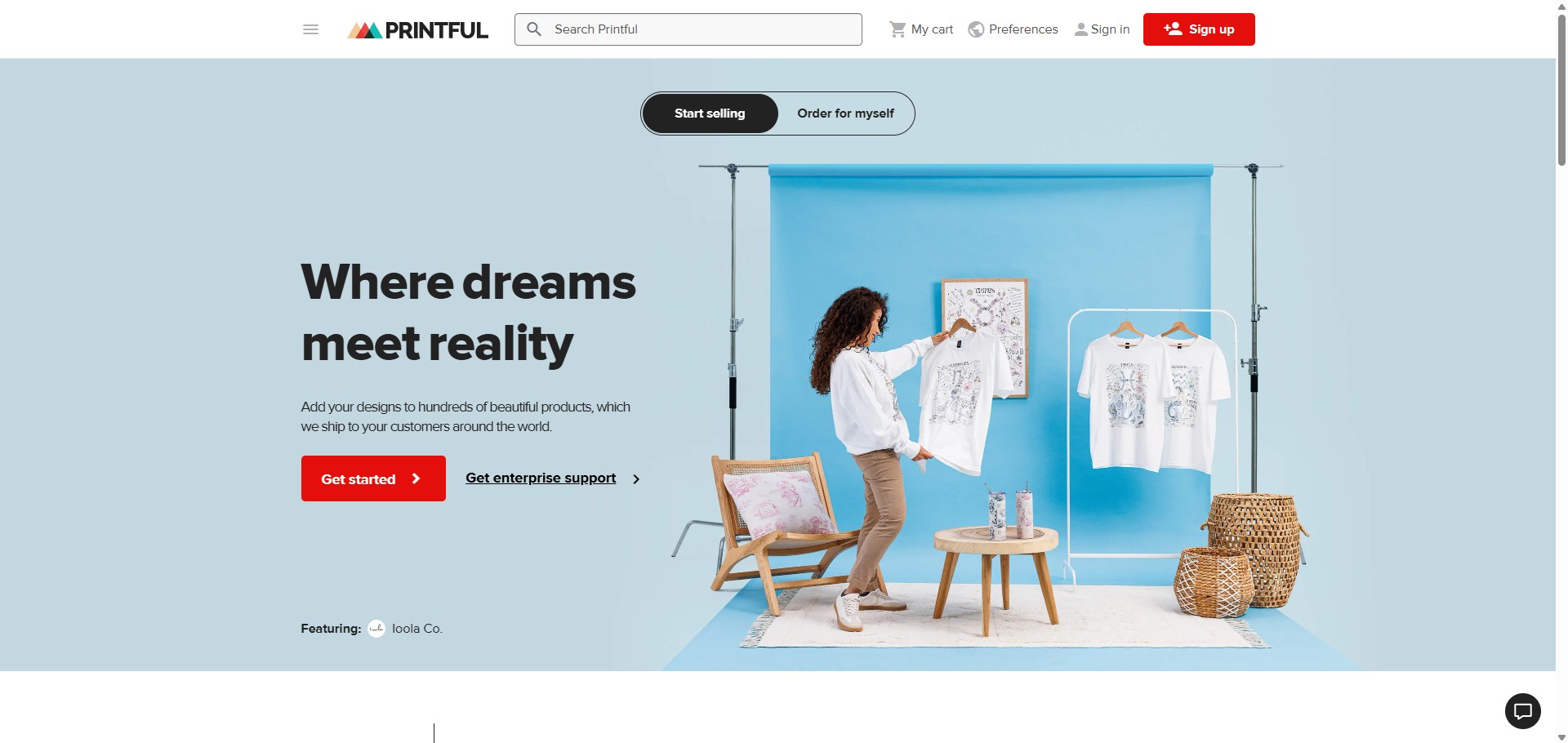
Printful is one of the best Etsy print-on-demand providers, making it a great integration option for beginners.
Pros
Printful's current product catalog includes over 300 high-quality products from various categories. In terms of logistics and distribution, they have established multiple logistics centers worldwide, including in Europe and the United States, providing sellers with industry-leading logistics services.
They offer a range of services from manufacturing and order fulfillment to store setup. They can also provide design and photography support. Additionally, Printful offers a professional toolkit integrating useful Etsy SEO tools, which is very helpful for new sellers.
Cons
Pritful's products and services are impeccable, but its prices are likely the highest. Therefore, it may not be suitable for sellers with limited budgets, otherwise its high costs will significantly squeeze your profit margins.
Etsy Integration
Printful is a certified manufacturer that integrates natively with Etsy, reducing manual steps between product setup, product information synchronization, order import, shipping, and tracking. Printful integration is one of the best integration options available, but currently, their integration does not allow users to view detailed information such as shipping costs, shipment status, or inventory status on Etsy.
2. Printify
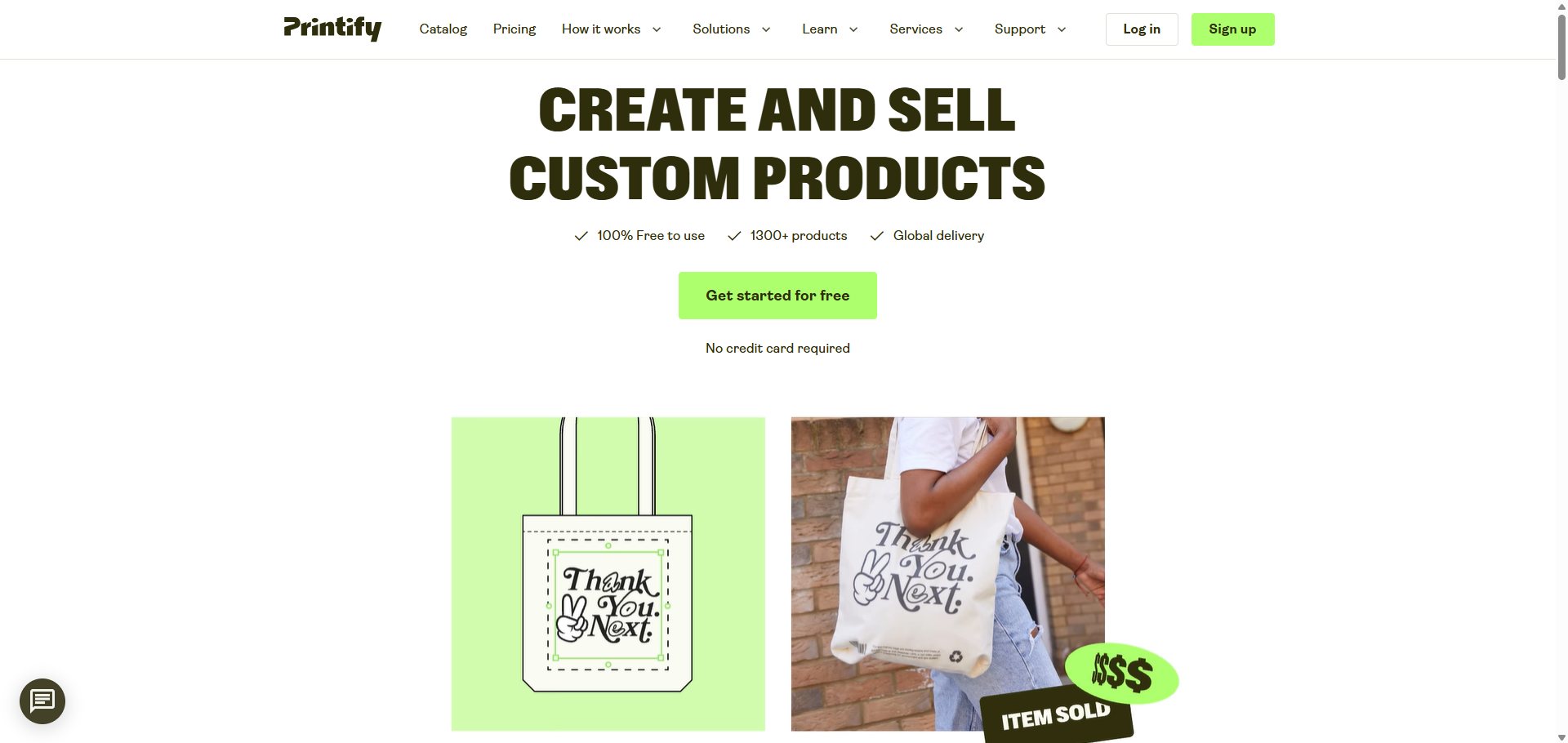
Printify is another industry giant on par with Printful, and is also one of Etsy's top certified print-on-demand providers. Many sellers use both print-on-demand services.
Pros
Printify's biggest advantage lies in its vast product catalog of over 1,300 products, including pet products and other niche items. This means you can operate multiple niche businesses by partnering with a single POD service provider.
In terms of its operating model, Printify does not own its own production facilities; instead, it partners with numerous print-on-demand manufacturers worldwide. For example, if you select a T-shirt, multiple manufacturers will be available on the product details page. Printify, acting as an intermediary, will connect you with and send production orders to your chosen manufacturer. This solution allows you to select different manufacturers to optimize production costs and delivery times, thereby improving customer satisfaction. They claim to work with over 90 manufacturing plants, with a fulfillment network spanning the globe.
Cons
With numerous manufacturers, consistency in quality and delivery times cannot be guaranteed for many products. Therefore, when using multiple manufacturers, it is essential to personally verify the product quality and delivery time from each production facility by ordering samples.
Etsy Integration
Like Printful, Printify also supports native Etsy integration and is very easy to use, making it very beginner-friendly. However, many Etsy sellers have reported that the integration does not allow direct editing of product information on Etsy, which may need to be improved in the future. Another limitation is that Printify's integration with Etsy does not allow store owners to automatically update size charts. You must add the size chart to the product images.
3. Gelato
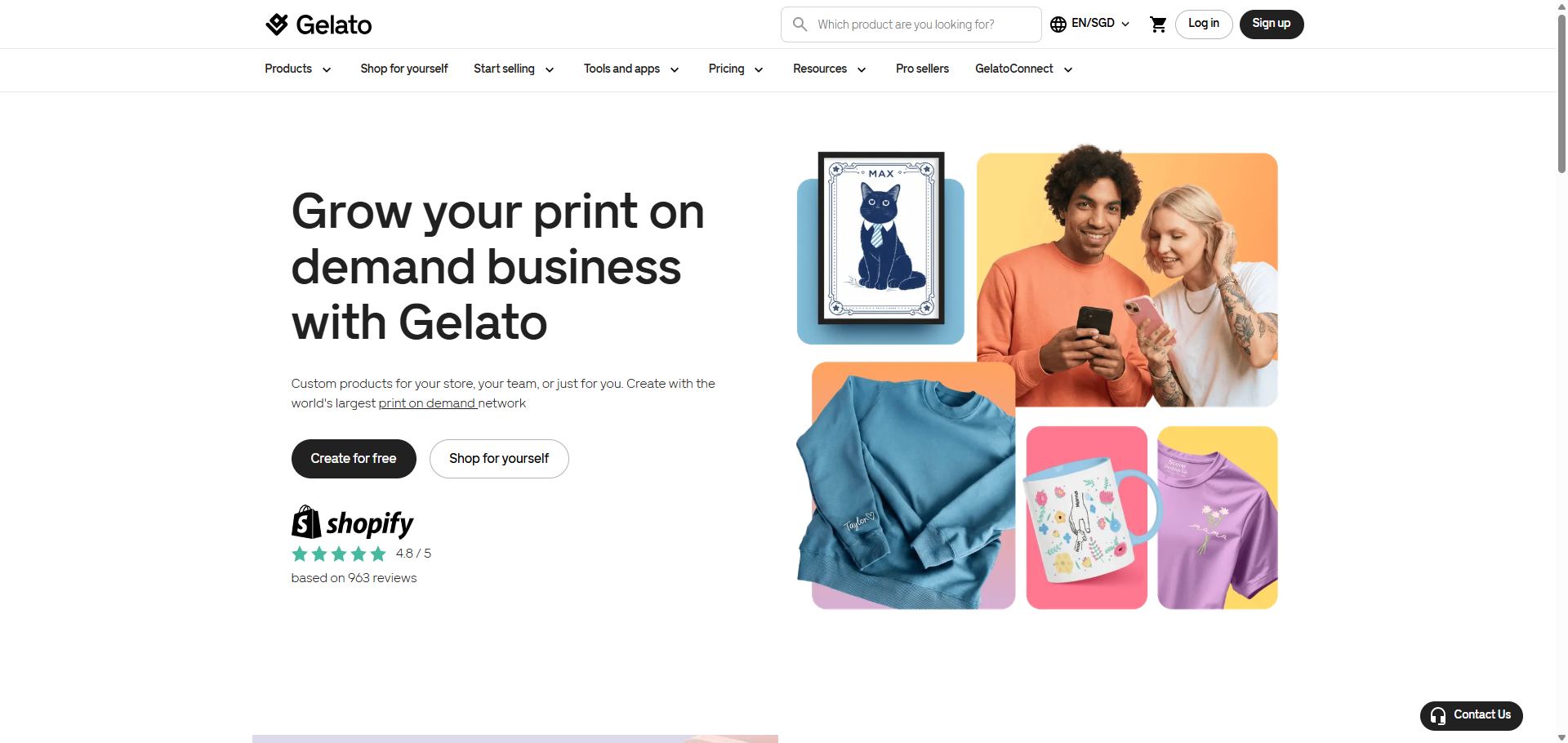
Gelato, also an Etsy certified provider, operates similarly to Printify. The company doesn't own its own production and printing facilities; instead, it outsources orders to other print-on-demand manufacturers. However, they provide software solutions to help businesses manage and process their orders.
Pros
With over 100 production facilities in 33 countries, Gelato can handle production quickly and efficiently and achieve localized fulfillment, making it an ideal fit for Etsy stores targeting the international market . Their focus on environmental protection in recent years makes them the perfect partner if your brand emphasizes eco-friendliness.
Cons
Gelato's biggest drawback is its limited selection of hormone products. Currently, their product catalog contains fewer than 100 products, covering only best-selling items, leaving little room for exploring new markets.
Etsy Integration
Gelato offers a wide range of integration options, including Etsy, Shopify, WooCommerce, Wix, Amazon, and TikTok Shop. Integrating your store into Gelato is also very simple and easy to understand.
4. Gooten
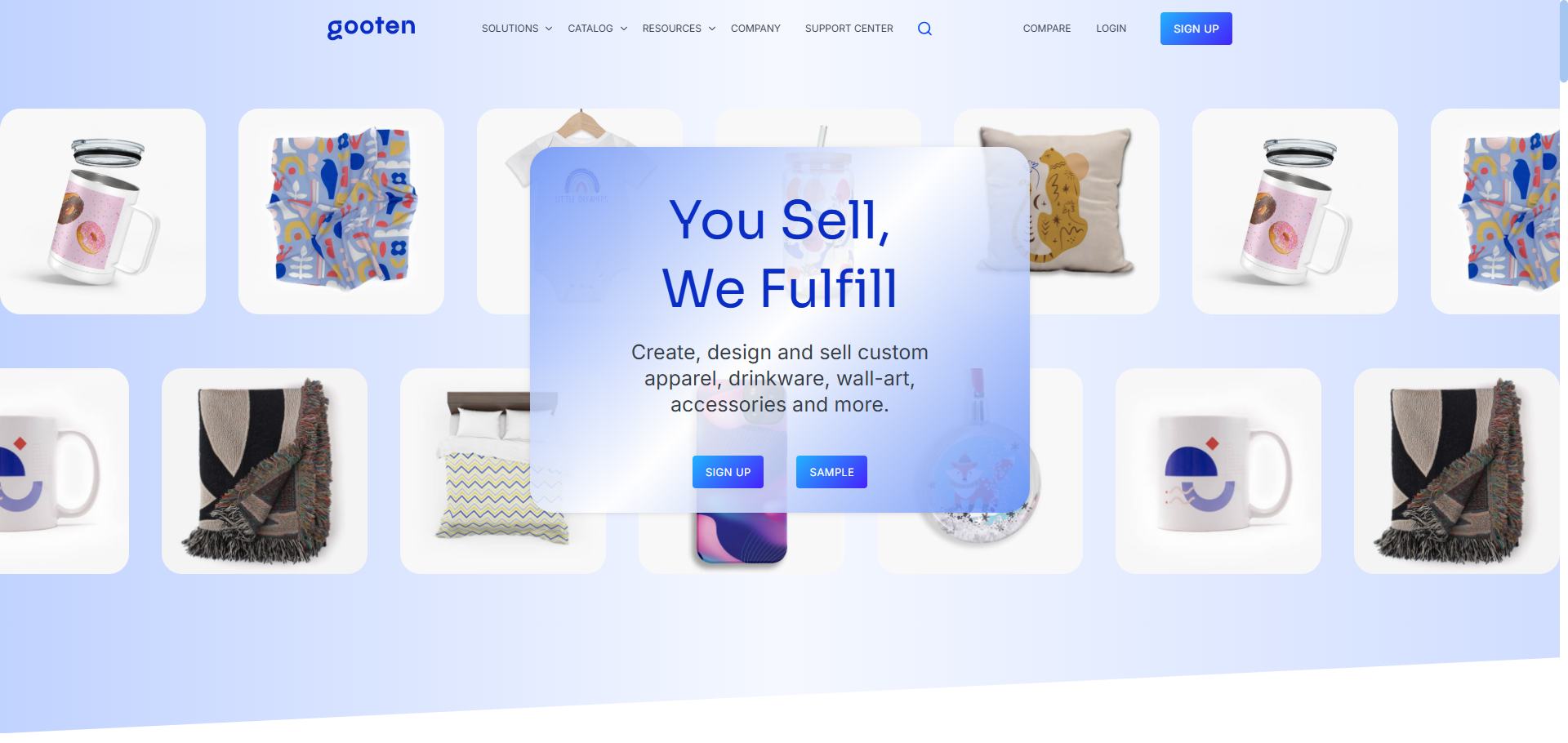
As an Etsy-certified print-on-demand integration solution, gooten operates on a similar model to printify. It partners with over 30 POD manufacturers in more than 70 countries and regions worldwide, enabling the production of over 130 different products.
Pros
Gooten's most outstanding feature is its Dynamic Order Routing system. When a store places an order, the system automatically and intelligently dispatches the order to the nearest and most cost-effective factory for production, based on the customer's shipping address, cost, and factory capacity, thereby shortening logistics time and reducing shipping costs.
In addition, gooten also offers some niche products with high demand, making it a reliable option for sellers with such needs.
Cons
Because Gooten uses a network of third-party contract manufacturers , there are fluctuations in quality and process consistency. Additionally, Gooten's customer service primarily relies on email or ticket submissions, lacking real-time online chat and resulting in slow response times. Gooten 's backend interface, SKU settings, multi-variant synchronization, and product editor are relatively traditional, making it slightly more difficult for beginners to learn print-on-demand than Printify or Printful. Batch synchronization and image adjustments may also feel cumbersome.
Etsy Integration
Gooten supports seamless integration with mainstream e-commerce channels such as Shopify, Etsy, WooCommerce, and BigCommerce, and its Etsy plugin meets the platform's requirements for third-party compliance disclosure.
5. PeaPrint
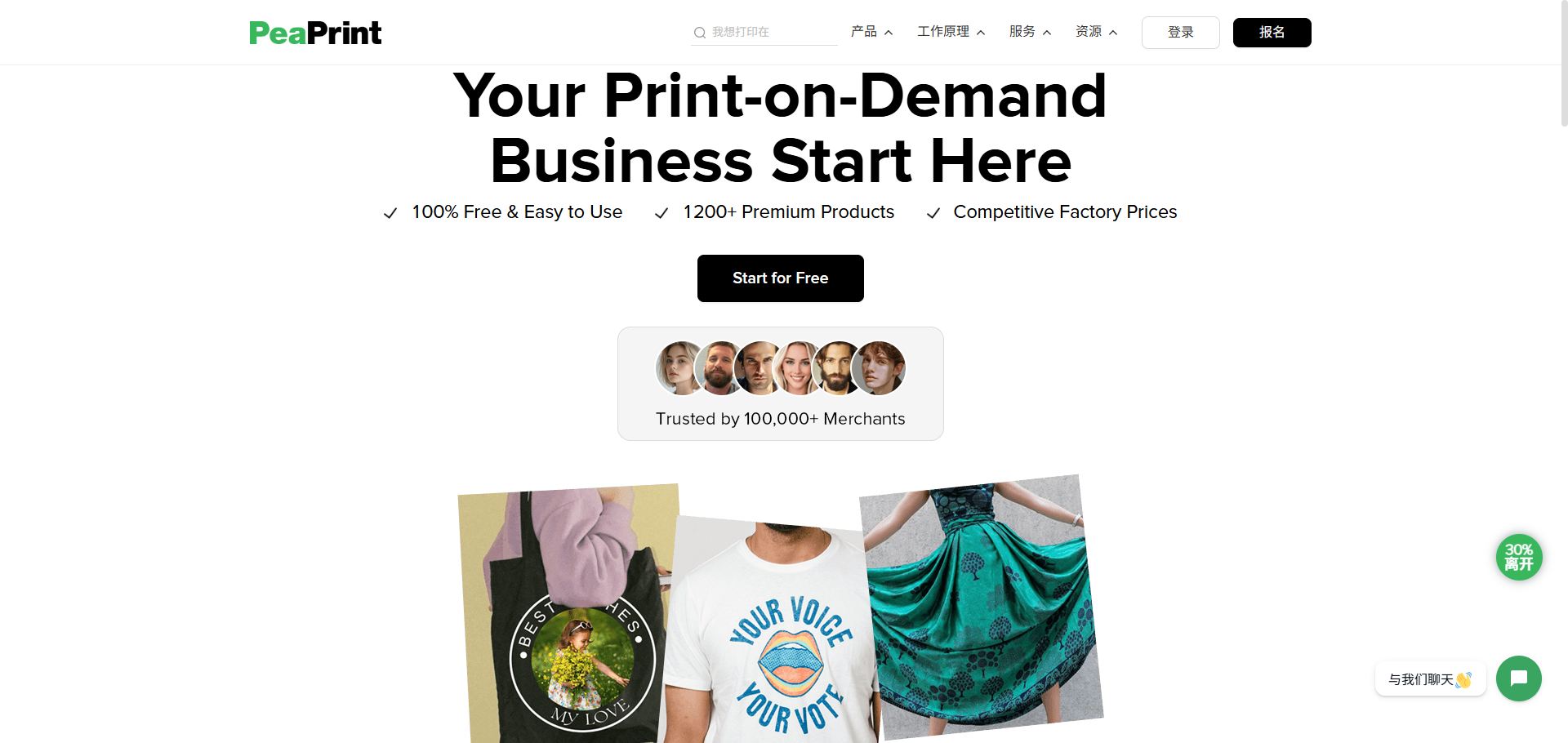
PeaPrint is a China-based print-on-demand company that holds a dominant market share in China. PeaPrint's next goal is to expand internationally and provide print-on-demand services to sellers worldwide.
Pros
PeaPrint provides Etsy sellers with a one-stop service from production to shipping. We partner with dozens of suppliers, offering over 1200 products, including niche items like car accessories and pet products, and support all-over printing. Our biggest advantage lies in our highly attractive base cost, potentially one of the most competitive prices on the market. PeaPrint integrates with major e-commerce platforms, helping global sellers efficiently operate their print-on-demand businesses.
Cons
Since most of PeaPrint's products are manufactured in China, their shipping times may be longer. This puts PeaPrint at a disadvantage compared to localized fulfillment platforms.
Browse best-selling print on demand products for your Etsy Store
6. Customcat
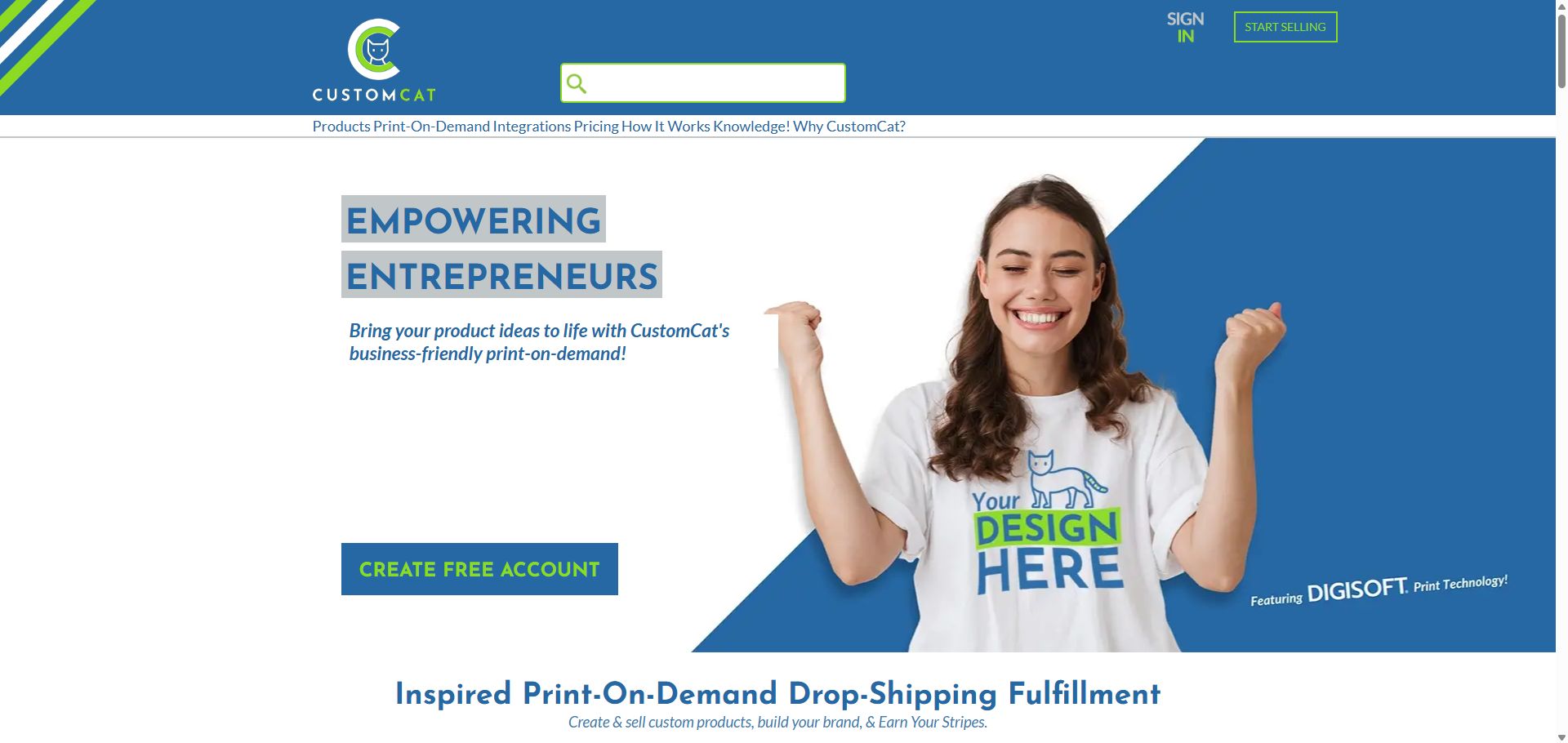
Customcat is also an Etsy-certified premium print-on-demand partner, making it an ideal fit for Etsy stores targeting the US market. Headquartered in the US, it has its own domestic manufacturing facilities and can offer a wide variety of customized products.
Pros
Because they own their own factory, the vast majority of orders can be printed and shipped within 1 to 3 business days, resulting in very stable fulfillment efficiency. Furthermore, the product quality is highly consistent, and their base wholesale prices are relatively low compared to similar platforms, allowing sellers to maintain healthier profit margins.
Cons
Because their main production is concentrated in the United States, their efficiency in markets outside the US is relatively low. Additionally, their backend interface and design tools are rather traditional, presenting a learning curve for complete beginners. Compared to Printify or Printful, which support dozens of platforms, CustomCat's channels are more limited, currently only supporting a few major e-commerce systems and lacking expanded support for some emerging or niche platforms.
7. Prodigi
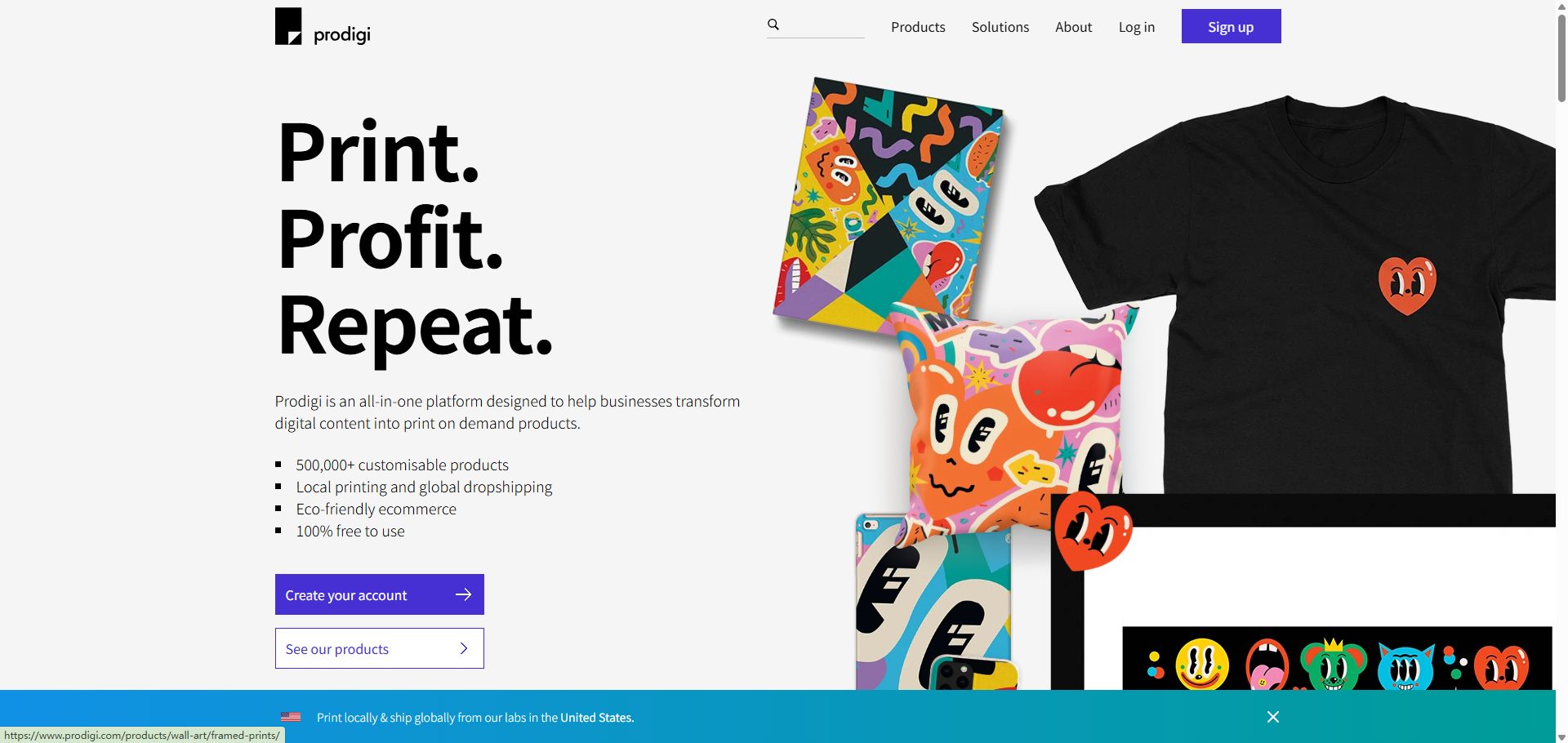
Prodigi is a UK-based print-on-demand company. They are renowned worldwide for their giltée prints, wall coverings, and high-quality paper products, particularly favored by artists and photographers. Although Prodigi is headquartered in the UK, many of their products are manufactured in different countries and then shipped to customers around the world.
Pros
They possess a robust global localized fulfillment network, significantly reducing international shipping costs, shortening delivery times, and effectively avoiding customs duties. Prodigi is worth considering for sellers of white-label products, as they offer a mature white-label dropshipping service. If you focus on paper printing or wall art prints, this is the best option.
Cons
The clothing and general merchandise catalogs are relatively narrow . If you plan to focus on trendy clothing, all-over print (AOP) or embroidered hoodies, the styles and available materials in the clothing categories are far less extensive than those in Printify or Printful.
The website backend (Dashboard) and product editor are relatively basic and rudimentary, lacking some modern and convenient layout or intelligent auxiliary functions, and are somewhat cumbersome when adjusting variations in batches.
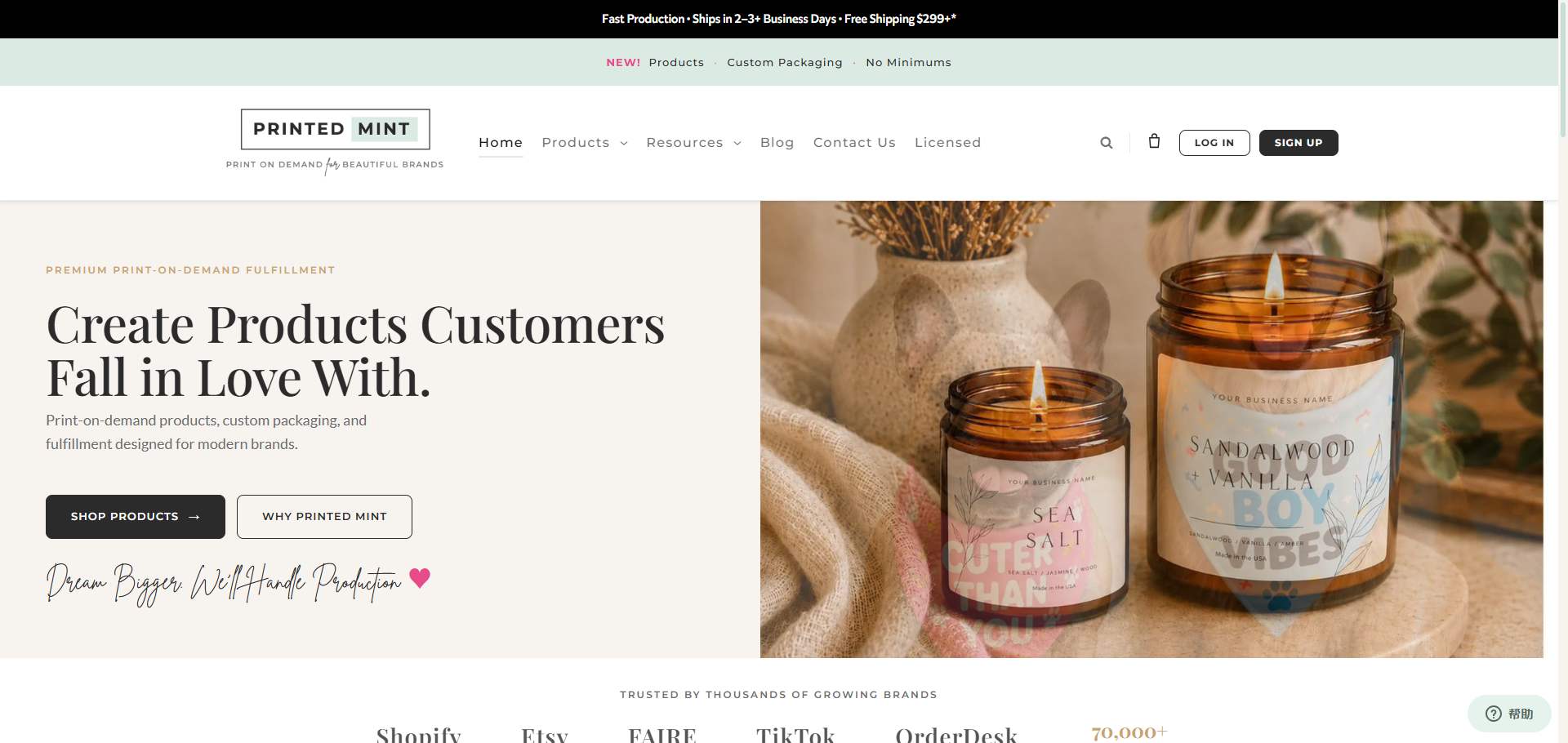
8. Printed Mint
Printed Mint is a supplier in the print-on-demand industry known for its premium gift feel and superior unboxing experience. These unique competitive advantages can help you grow your print-on-demand business. It is also an Etsy-certified print-on-demand manufacturer.
Pros
- Nearly 300 unique products are available, including technology accessories, children's clothing, and holiday supplies.
- Printed Mint excels at customizing and branding products and packaging.
- There are no minimum order quantities or bulk purchase requirements.
- Easy-to-use built-in design tools and model generator for showcasing product designs.
Cons
While Printed Mint offers Etsy integration, its functionality is less than ideal. After integration, your orders will be synced to the Etsy system. You'll need to manually view and confirm these orders, which can be a significant burden if you have a large number of orders. Another point to note is that it's considerably more expensive compared to Printify and other print-on-demand providers.
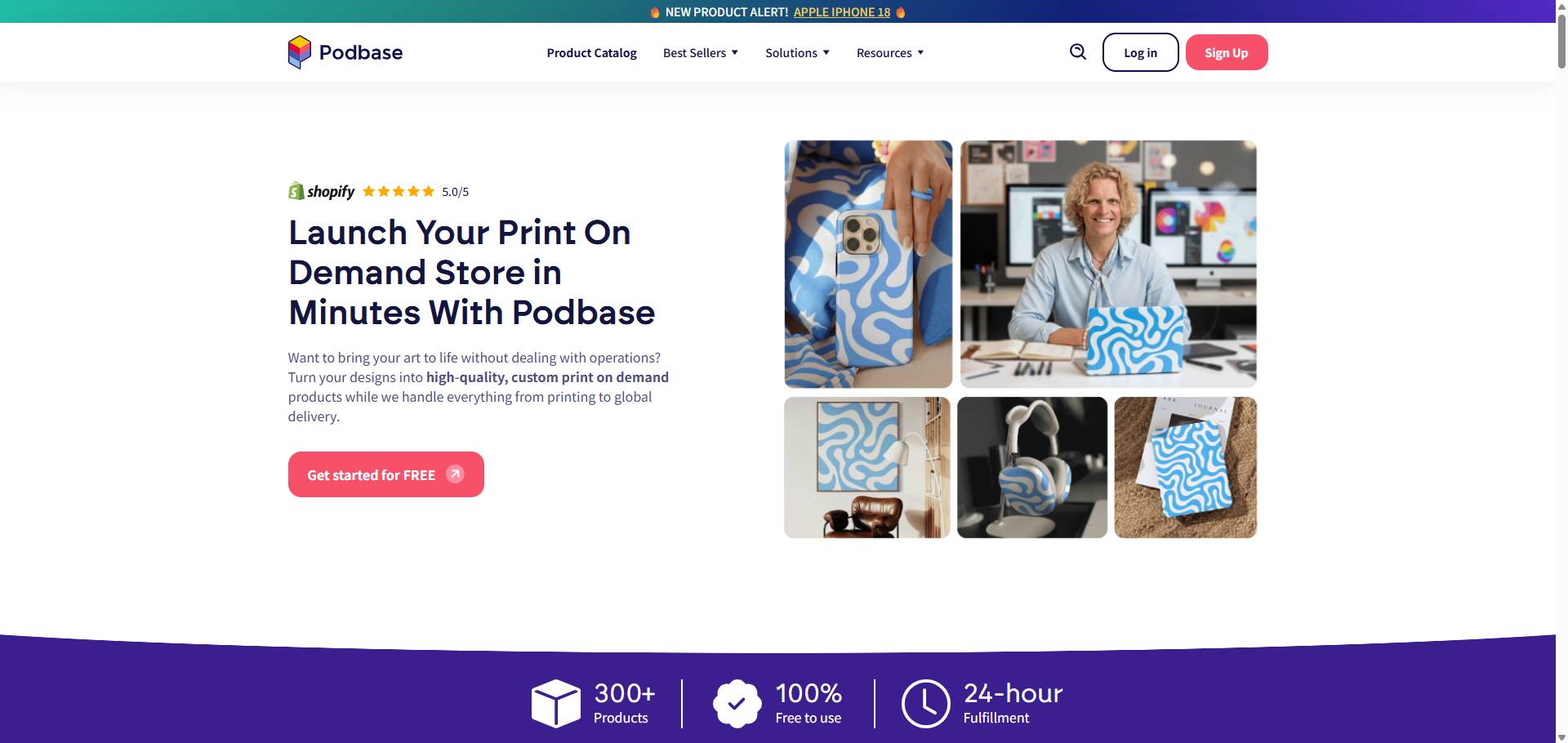
9. Podbase
Podbase is an print-on-demand company specializing in tech products such as phone cases, laptop cases, iPad cases, and AirPods cases. They target a niche market, and since production and shipping are handled in-house, they maintain excellent quality control.
Pros
They are the undisputed leaders in the field of technology accessories. And because all processes are completed in-house, production is rapid, with printing and shipping within 24 hours, and they boast highly reliable and efficient logistics and delivery in the US and EU markets.
Cons
Its catalog primarily revolves around tech and digital products, as well as specific lifestyle items. If you're looking to sell T-shirts, hoodies, sneakers, or large wall posters, it won't meet your needs. Currently, it mainly supports mainstream channels like Shopify and Etsy, and compared to super aggregators like Printify that support dozens of platforms, its ecosystem expansion is relatively limited.
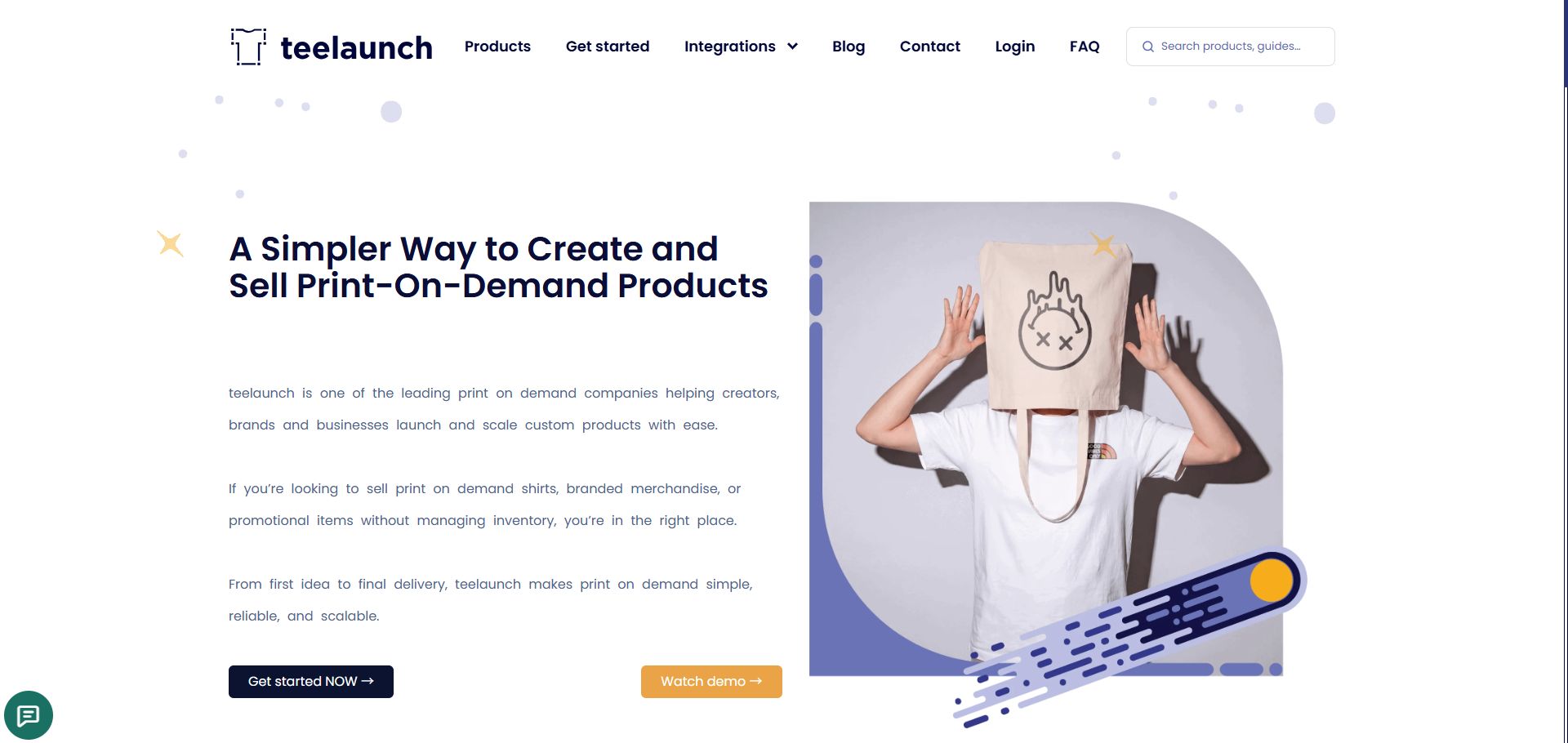
10. Teelaunch
Teelaunch is an excellent Shopify print-on-demand application, but they also offer integration services for Etsy sellers. They are also a very well-known print-on-demand company, supporting numerous sellers in their businesses.
Pros
They offer a wide variety of unique and niche products. In addition to common items like clothing and canvas paintings, they have many other specialty product lines that are less common on other platforms, such as custom jewelry, solid wood cutting boards, serving trays, specialty cups, and a variety of home décor and pet supplies.
Adopting a pay-as-you-go model with no minimum order requirements, there are no mandatory membership subscription fees, and the wholesale prices of basic apparel are competitive in the market. With partner printing plants in the US, UK, Canada, and Europe, we can provide basic localized shipping and logistics support for buyers in Europe and America.
Cons
For some of Teelaunch's less popular product categories (such as phone cases, mugs, or full-print designs), buyer feedback is somewhat polarized regarding color reproduction, edge alignment, and durability.
Its core technology and system optimizations are almost entirely focused on the Shopify platform. While it also supports integration with Etsy and WooCommerce, its overall ecosystem and plugin functionality are significantly less complete than Shopify's. Furthermore, its built-in product design and layout tools are very basic, typically only supporting the upload of fixed-size transparent PNG images, and lacking the ability to perform complex text additions or advanced image editing in the backend.
Etsy integration method
Etsy integration , connecting external systems, tools, or vendors with an Etsy store typically involves concepts from different dimensions, including technical implementation, platform plugins, third-party gateways, and compliance registration. The specific meanings and application scenarios of these four methods are as follows:
API
Etsy provides a standard programming interface (API) that allows sellers or technology partners to create custom routing systems. API-based workflows offer maximum control, enabling developers to batch list products, retrieve order data, synchronize inventory in real-time, and report logistics status. This is ideal for medium to large sellers with technical development teams who need to build their own ERP systems, multi-channel website synchronization tools, or deeply customized automated workflows.
Native App
Native integration connects supplier accounts directly to Etsy, synchronizing products, orders, logistics tracking, and pricing. This is the case with the official one-click authorization plugins built into major print-on-demand services like Printify and Printful. This native integration is the most user-friendly and hassle-free for ordinary sellers. No coding knowledge is required; simply click "connect," log in to your Etsy account, and authorize in the backend to complete the binding. Product design and order fulfillment can be automated within the plugin's closed loop.
Middleware
This is a third-party integration bridge between the user's software system and the Etsy platform, such as API2Cart and Apideck, providing a unified interface. It standardizes and integrates Etsy's underlying API with the interface specifications of dozens of different platforms, including Shopify, Amazon, and WooCommerce. Developers only need to connect to this middleware to manage store data across multiple platforms at low cost. It is primarily aimed at SaaS software service providers, multi-platform ERP developers, or technical teams that need to perform complex data synchronization across multiple different e-commerce systems.
Production Partner
"Production Partners" refers to the manufacturing role under Etsy's policies; it doesn't describe the technical connection itself. You can think of it as a mandatory compliance requirement of Etsy's official policies. When selling print-on-demand products on Etsy, sellers must truthfully enter and publicly disclose the information of the third-party factories they partner with on the "Production Partners" page in their store's backend. This transparently demonstrates to buyers that you are responsible for the original design, and the factory is responsible for the physical production.
How to choose the best Etsy print-on-demand company for you
No single Etsy print-on-demand company is suitable for every seller. Your best choice depends on what you sell, where your customers are located, your profit margins, and your brand and fulfillment requirements.
Create a candidate list based on your business type.
First, narrow down your supplier pool based on your Etsy store positioning, rather than comparing all platforms from the start.
If your store primarily sells T-shirts, hoodies, and other apparel, focus on product cost, garment style, print quality, and fulfillment speed. If you sell wall art, posters, or other art products, prioritize print quality, paper selection, and global shipping capabilities.
For personalized gifts, special attention should be paid to customization features, product selection, and order processing efficiency; while if your goal is to build your own brand, you should focus on comparing branding, custom packaging, and white-label fulfillment.
After this screening, you usually only need to keep 3–5 suppliers that meet your business needs, and then conduct in-depth comparisons.
Create scorecards for suppliers
To make the comparison more objective, you can create a simple scorecard for each candidate supplier. Set scores of 1–5 for the following metrics, depending on your business needs:
- Product Costs
- Product Range
- Print quality
- Etsy Integration
- Execution speed
- Logistics and distribution
- Branding
- Ease of use
- Customer Support
You can also adjust the weights according to your own store strategy, instead of giving each factor the same weight.
Choose the best supplier for your Etsy print-on-demand business based on the score.
After completing the scoring, don't just look at the total score; also confirm whether the highest-scoring supplier truly meets your core needs. Finally, select 2-3 suppliers for actual testing. Order test samples from each supplier, compare product quality, production time, packaging, and delivery experience, and then decide which one to be your primary POD partner. This method is more practical than simply searching for the "Best Etsy POD Company" because the right supplier should match your product, customers, and profit model.
FAQs
Which is the best print-on-demand company on Etsy in 2026?
There is no single best print-on-demand service provider for every Etsy seller. Because every seller's business and strategy are different, finding the right fit is key. In this guide, you can find partners that match your business based on our recommendations using our rating system.
Is Etsy Print-on-Demand Profitable?
Yes, Etsy print-on-demand can be profitable, but your margins depend on your product costs, selling price, shipping, and Etsy fees. Etsy currently charges a $0.20 listing fee and a 6.5% transaction fee, while payment processing and advertising fees may also apply. To estimate your profit, subtract all Etsy and POD costs from your selling price before deciding whether a product is worth selling.
Can I Use Multiple POD Suppliers with One Etsy Shop?
Yes. You can work with multiple POD production partners in the same Etsy shop and assign different partners to different listings. For example, you might use one supplier for apparel and another for wall art or personalized gifts. Etsy allows POD production partners, but sellers must disclose applicable partners and ensure products are based on their original designs or buyer customization.