How to Sell Custom T-shirts on Etsy: 5 Steps Guide From PeaPrint Expert
Etsy is a marketplace that thrives on unique goods, making it a massive hotspot for custom t-shirts. If you have fresh t-shirt design ideas, Etsy is the ultimate platform to sell them. It's home to nearly 100 million active buyers, and the key is that most of them are shopping specifically for fun, interesting items rather than mass-produced, cookie-cutter designs.
So, are you ready to launch your own custom t-shirt brand on Etsy? If you want to start selling your personalized tees and turn your passion into profit, this guide is a must-read. Our experts are here to walk every e-commerce beginner through the first steps of their t-shirt selling journey. Buckle up—let's dive in!
Step 1: Define Your Target Audience
Before you launch your custom t-shirt shop, your top priority is defining your target audience—in other words, finding your niche. Nailing down a specific audience is essential for running highly targeted marketing campaigns later on. Plus, Etsy heavily favors hyper-targeted products over generic "funny shirts."
The t-shirt space on Etsy is incredibly competitive. To make your shop stand out quickly, you need to put in the market research to uncover high-potential niches. Keyword research is an absolute must here, and you can leverage Etsy-specific SEO tools like eRank, Marmalead, or EverBee. Focus on hunting down keywords with "high search volume and low competition" to use as your entry point.
Don't sleep on the Etsy search bar—it's also a fantastic research method. Type in a broad term like "custom t-shirt" and let Etsy’s autocomplete feature show you exactly what buyers are actually searching for. It's an absolute goldmine for design inspiration.
Still drawing a blank? Here are some proven t-shirt niches on Etsy to get you started:
- Holidays and seasonal events
- Profession-specific humor
- Pet lovers
- Sports and hobbies
- Personalized family gifts
- Weddings and bridal parties
- Retro and vintage aesthetics
- Memes and internet culture
Our experts always give sellers this piece of advice: think of a niche like a small pond. The smaller the pond, the easier it is to catch a fish.
Step 2: Research What's Already Selling
Before you even think about designing anything, take some time to study successful Etsy shops. Plug niche keywords like "custom t shirts," "retro graphic tee," or "personalized family shirt" into the Etsy search bar, and browse through the top-ranking shops in the search results.
What should you be looking for? Identify their best-sellers, go-to color palettes, price ranges, and the hot keywords they're using in their titles. Don't expect a sudden burst of inspiration right out of the gate. You need to put in the reps—click through listings to analyze their t-shirt mockup styles, read their product descriptions, and soak in the details. The more you browse, the better you'll be able to read the market trends. This deep dive will pay massive dividends when it comes time to create your own designs.
Step 3: Create Designs People Actually Want
Beautiful artwork alone doesn't guarantee sales. Etsy buyers typically make a purchase for one of these three reasons:
- Identity: If a customer sees your design and thinks, "This is so me," you've likely just made a sale.
- Emotion: If your design strikes an emotional chord or taps into a specific feeling, they won't hesitate to check out.
- Humor: Funny never goes out of style, whether it's a cheesy dad joke or dark humor.
Keep your target audience in mind during the design process, and stay locked into your niche. After doing your market research, you should have a solid grasp on what types of t-shirt designs are trending—now, it's time to infuse those winning concepts with your own brand's unique style.
When you're ready to bring your ideas to life, there are plenty of design tools at your disposal. Whether you have graphic editing skills or not, these tools can help you churn out stellar designs.
Platforms like Canva, Placeit, and Kittl are perfect for non-designer sellers looking to create their own tees. If you don't have a design background, typography-based (text-only) t-shirts are usually the easiest way to get your feet wet.
If you do have graphic design chops, Adobe Illustrator and Photoshop are right up your alley. Additionally, many artists love using an Apple Pencil to sketch on their iPads before exporting the finished piece as a high-resolution file.
Finally, if you want to take your t-shirt designs to the next level, you can always hire a freelance artist on platforms like Upwork or Fiverr to do the heavy lifting for you.
Related Reading: 30 Best-selling Custom T-Shirt Designs in 2026
Step 4: Turn Your T-Shirt Design into Reality
Custom t-shirts sold on Etsy generally fall into two main categories: those handmade by artists at home (typically using tie-dye or heat transfer), making each piece one-of-a-kind, and those fulfilled through print-on-demand (POD) services, which guarantee design consistency.
DIY at Home (Tie-Dye & Heat Transfer)
Tie-Dye
Handmade tie-dye doesn't allow for strict product consistency, but that's exactly what gives each piece its unique charm. Because of this, you can put a prominent disclaimer in your product listings: "Every item is hand-dyed. The texture and details of the actual product you receive will vary slightly from the photos, which means you are getting a t-shirt that is truly one-of-a-kind." This kind of expectation management not only drastically reduces return rates but actually justifies a premium price tag for a handcrafted item.
Heat Transfer
Home-grade heat transfers often fall short of customers' expectations. This process usually involves a basic combo of standard heat transfer paper, an inkjet printer, and a mini heat press. Designs printed this way tend to have a heavy, plasticky feel to them. It's really only suitable for small-batch or local group shirts; it's probably not the best fit for retail sales.
Print on Demand (POD)
The advantages of print-on-demand t-shirts are crystal clear: you don't need to buy inventory upfront, and you don't have to physically make the shirts yourself. You only pay for the product after you've made a sale. All you have to do is upload your designs to a POD platform like PeaPrint, and leave the rest of the production and fulfillment to us. It's a low-risk business model that allows you to launch and scale rapidly.
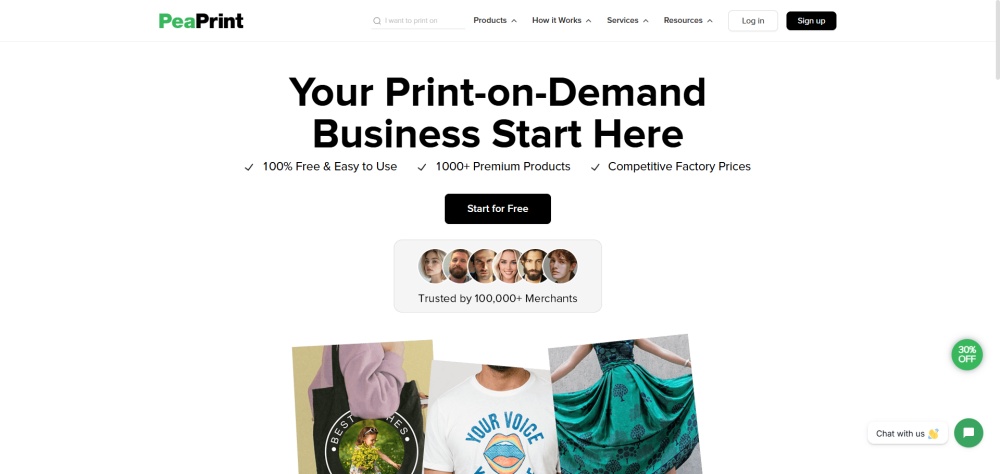
Selling POD t-shirts also breaks down into two models. The first model allows Etsy customers to customize the t-shirt to their own liking. Buyers love exclusive products, so you can offer personalization options like adding dates, custom text, family roles, pet photos, or team names. Once you receive the customer's custom order details, you simply place the order with your POD provider to produce and ship it directly to the buyer.
The second model uses POD purely as a production method. You create original t-shirt designs, use a mockup generator to create realistic product images (or take actual photos of samples), and list them in your Etsy shop. Once an order rolls in, production is triggered. It sounds a bit like dropshipping, but what sets it apart from traditional dropshipping is that you are providing your own unique, original artwork rather than just flipping white-label products. This is the exact POD strategy that the vast majority of Etsy t-shirt sellers use.
Related Reading: Top 30 Print On Demand Platforms in 2026
Step 5: Open and Optimize Your Etsy Shop
Register an Etsy Account
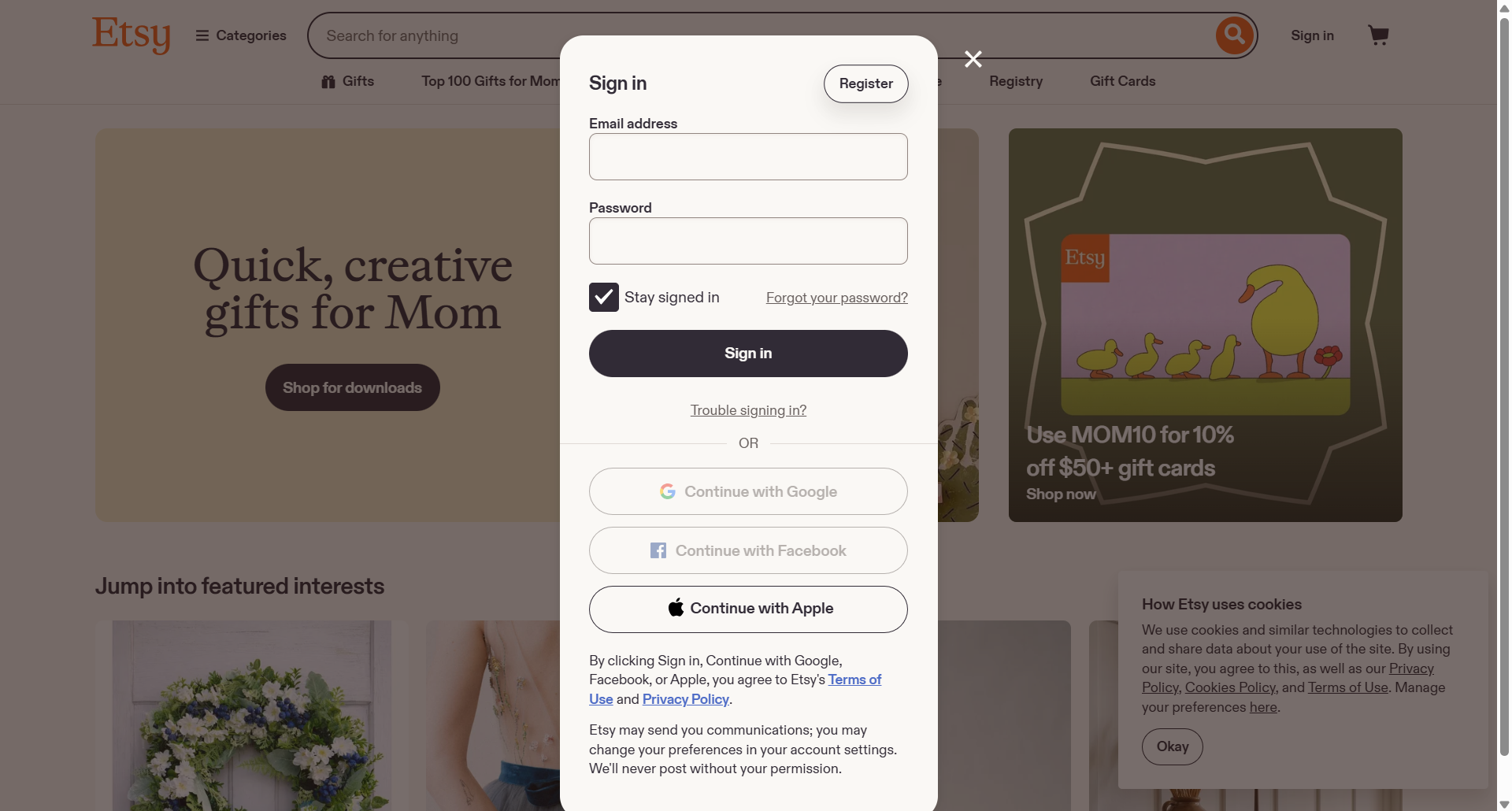
If you don't have an Etsy account yet, head over to Etsy.com and sign up using your business or personal email. Registration is completely free.
Set Up Your Etsy Seller Account and Shop
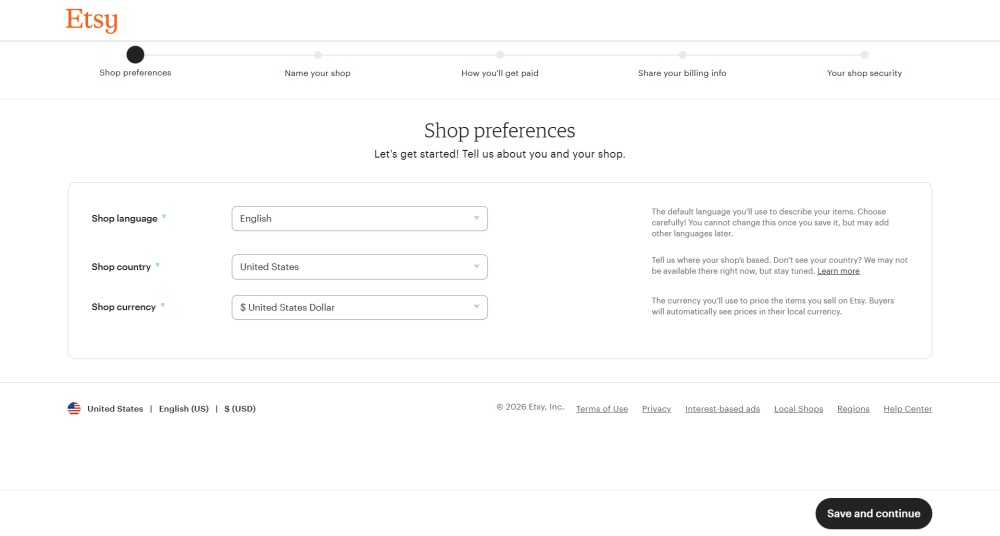
Once you've registered, find and click "Sell on Etsy" in the drop-down menu in the top right corner. This will take you to the onboarding page—just follow the step-by-step prompts to create your new shop. Select your shop language, country, and currency.
Next up is naming your Etsy shop, and this is a big deal. Generally speaking, your shop name should clearly tell customers that you sell custom t-shirts. Never underestimate the power of a great shop name. It can significantly boost your ranking and help you stand out in the search results. It works wonders for optimizing your SEO and driving up your CTR!
After naming your shop, the system will move you to the payment setup page, where you'll need to enter a credit card to cover Etsy's fees. Etsy charges a $0.20 listing fee for every item you publish, plus a one-time shop setup fee that usually ranges from $15 to $29, depending on your location and risk assessment.
Customize Your Etsy Storefront
With the basic setup complete, you can start customizing your Etsy storefront. Upload a banner and logo that match your shop's vibe. Next, craft an "About Us" section to introduce your t-shirt brand and your flagship products. Don't forget to fill out your shop policies! Be sure to explicitly outline your shipping details and return/exchange policies. Buyers care deeply about this information, so make it crystal clear. You can also build out an FAQ section to address common questions your customers might have.
Related Reading: How to make your Esty store look trustworthy?
Create Your Listings
You've reached the final step of the shop setup. Your very first batch of product listings is absolutely crucial. If you go in with the mindset of "I'll just throw something up and optimize it later," you are going to miss out on Etsy's new-listing algorithm boost.
The Etsy search algorithm gives newly listed items a temporary visibility boost to test how well they resonate with buyers. If you just slap together your titles, tags, and main images, you run the risk of mismatched search intent due to poor keywords, which will tank your click-through and conversion rates. Once the algorithm decides your product is a dud, those listings will be pushed to the bottom of the pile when the new-item boost ends, making it incredibly difficult to claw back your ranking no matter how much you optimize later.
That's why you need to bring your A-game for your first listings right out of the gate. Once you've connected your print-on-demand platform to your Etsy shop, import your pre-designed products and start optimizing your title keywords and product descriptions based on your specific t-shirt niche. You can use the mockups generated by your POD platform for your product images—these usually look great—but if you are aiming for a highly authentic feel, you can always order samples and shoot the lifestyle photos yourself.
Step 5: Market Your Store
If you want to turn selling custom t-shirts on Etsy into a steady, reliable income stream, you need a well-thought-out marketing strategy. Here are some highly effective ways to drive long-term growth for your t-shirt business:
Etsy SEO
Etsy SEO is the lifeblood of your shop's long-term organic growth. You need to understand how the Etsy search engine ticks. Etsy's official seller handbook breaks this down in detail, and if you read through it, you'll notice striking similarities to Google's algorithm. Keywords are arguably the single most important factor for matching your listings to search results.
Make sure to naturally weave relevant keywords into your titles, tags, and categories. Focus heavily on the exact phrases buyers are typing into the search bar.
Don't just set and forget! Regularly updating your listings can trigger a temporary surge in search visibility. We highly recommend tweaking your listings every 2-3 months by adding fresh details to your product descriptions (like highlighting new use cases or styling tips).
Etsy also heavily weighs customer satisfaction when calculating your shop's rating. If you maintain a high shop score—or better yet, earn that coveted "Star Seller" badge—your listings are much more likely to rank higher in the search results. If you do get a negative review, we strongly advise communicating professionally and handling returns or refunds gracefully. Because of this, actively encouraging customers to leave reviews during your day-to-day operations is critical. Positive feedback works wonders for boosting both your shop's reputation and its SEO ranking.
Social Media
As an Etsy seller, leveraging social media to promote your products does more than just drive external traffic to your listings—it actually boosts your Etsy SEO. Because you are bringing outside traffic into the Etsy ecosystem, Etsy views those external links as highly valuable. When you hype up your shop and products off-platform, Etsy often rewards you with a bump in their search rankings.
When sharing on platforms like Facebook, Instagram, TikTok, Quora, and Reddit, always pair eye-catching visuals with your direct Etsy listing links to entice more clicks and views.
Off-Site Advertising
Beyond Etsy's native on-platform ads, you can also run external advertising campaigns to funnel more traffic to your shop. Think about promoting your listings on Google, Facebook, and Instagram. Even if the users on these platforms aren't regular Etsy shoppers, they might still fall in love with the custom tees you're selling.
Expert Tips
Do:
- Niche down: Focus on a specific target market.
- Leverage strong SEO: Optimize your search engine visibility.
- Upload consistently: Keep your shop active with fresh listings.
- A/B test your designs: See what resonates best with buyers.
- Spy on the competition: Study what's working for top sellers.
Don't:
- Steal copyrighted artwork: Never copy protected designs.
- Use trademarked phrases: Always check text for active trademarks.
- Upload low-effort graphics: Avoid random, cheap-looking images.
- Expect overnight success: Don't think you've made it after just listing 3 items.
Most successful Etsy t-shirt shops are built on steady iteration, not viral fame. Once your listings gain traction, Etsy’s algorithm works around the clock, pushing buyers your way while you sleep. Think of it as a highly efficient, tireless digital shopkeeper.
FAQs
Is selling custom t-shirts on Etsy worth it?
Absolutely. Etsy comes with massive, highly-targeted built-in traffic. Buyers come here specifically hunting for unique, personalizable items (like couples' matching shirts, bridal party apparel, family reunion tees, or pet memorial shirts). This strong demand for gifting and keepsakes gives custom t-shirts a much higher premium pricing ceiling compared to standard, off-the-rack apparel.
How much does it cost to sell t-shirts on Etsy?
The barrier to entry for selling tees on Etsy is incredibly low. Aside from the production costs you pay your POD supplier, you pay a $0.20 listing fee for each item published, plus a 6.5% transaction fee per order. Additionally, there’s a payment processing fee, which in the US is 3% + $0.25. All in all, the overhead is very manageable.
Can I sell other print-on-demand products on Etsy?
Of course! Beyond POD t-shirts, there are tons of other best-selling POD items on Etsy, like custom mugs, pet supplies, personalized puzzles, and stickers. As long as you find the right niche, create stellar designs, and stay consistent with your store management, you can absolutely build a lucrative income stream.
Sell Custom T-Shirts on Etsy with PeaPrint Print-on-Demand
Now that you know the ropes of selling custom t-shirts on Etsy, it's time to take action. Partner with PeaPrint to eliminate inventory risks through print-on-demand sourcing, allowing you to focus entirely on crafting killer designs and marketing your personalized tees to your audience. Plus, with localized US manufacturing ensuring fast, 5-day delivery times for American buyers, you can offer the kind of premium fulfillment experience that easily wins 5-star reviews.
Join PeaPrint today to build your custom t-shirt business and create a steady, sustainable income!