The Ultimate Guide to Choosing Blank T-Shirts for Your Custom Brand
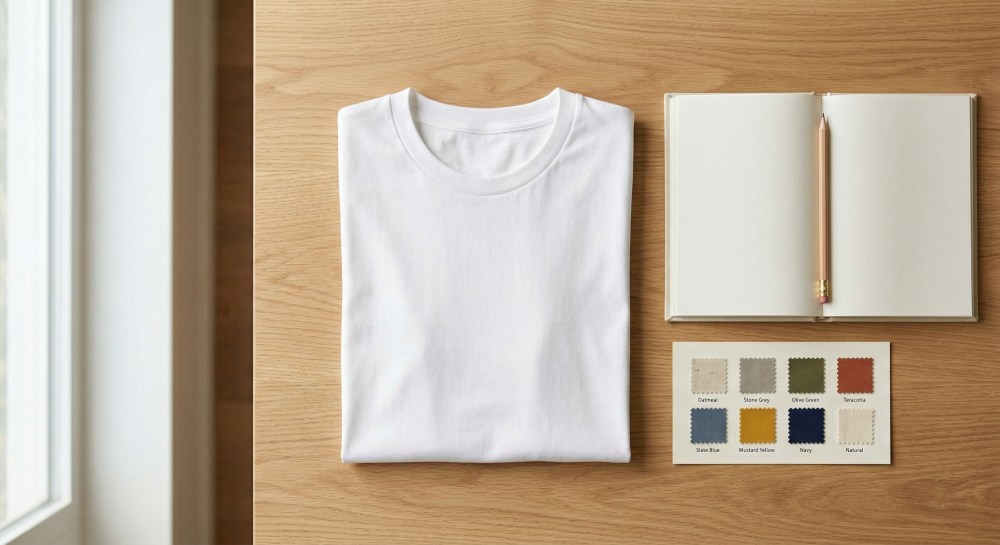
Not all T-shirts are created equal, and sometimes choosing canvases for your custom T-shirt brand can be a real headache. If you're looking to select blank T-shirts for your custom T-shirt brand, you've come to the right place. In this complete guide, we'll delve into factors such as fabric, weight, style, fit, and brand positioning to help you choose the perfect T-shirts for your brand.
Understanding Common T-shirt Fabric
The fabric of a T-shirt plays a crucial role in its comfort, durability, and printability. Therefore, when choosing a blank T-shirt, the fabric is the first factor to consider.
In modern clothing, both natural and synthetic fabrics are widely used, each with its own characteristics and applications. Generally speaking, natural materials tend to excel in comfort, while synthetic materials are primarily performance-oriented. You can choose the appropriate fabric based on your brand needs and target customer group.
Here are 9 of the most commonly used T-shirt printing fabrics:
Cotton
In the print on demand industry, cotton is one of the most popular and widely used fabrics because inks penetrate cotton fibers very well. Cotton is widely grown around the world, and cotton fabric is comfortable, breathable, and soft, while also possessing strong water absorption. Cotton fabric quality varies, and in the textile industry, Yarn Count is the most crucial indicator for measuring the fineness of cotton yarn. Simply put: the higher the yarn count, the finer the yarn; the finer the yarn, the thinner, denser, and more skin-friendly the fabric. Most T-shirts from mainstream brands like Uniqlo and Gap use 25s cotton yarn.
Combed cotton
Combed cotton is a high-quality fabric chosen by most high-end T-shirt brands. During production, cotton fibers are combed to remove impurities and short, breakable fibers. This leaves only the longest, straightest fibers, which are then tightly spun into yarn with a count of 30s or higher. The final product is an incredibly soft, durable, and smooth fabric. Combed cotton is stronger and more durable than carded cotton, and has a better feel, but it is also more expensive.
Organic cotton
The core logic of organic cotton and organic food is the same: they both adhere to a set of stringent natural farming standards. Organic cotton is grown without the use of synthetic fertilizers, pesticides, or genetically modified seeds . Beyond cultivation, organic cotton certification extends to processing. Even if the cotton is entirely organic, it cannot be labeled GOTS if dyes containing heavy metals or toxic substances are used during the dyeing process. GOTS certification also includes audits of factory labor rights and working conditions. Therefore, organic cotton may be slightly more expensive than conventional cotton, but this reflects a commitment to environmental protection and human rights. Increasingly, environmentally conscious consumers are willing to pay higher prices for ethically compliant fashion products.
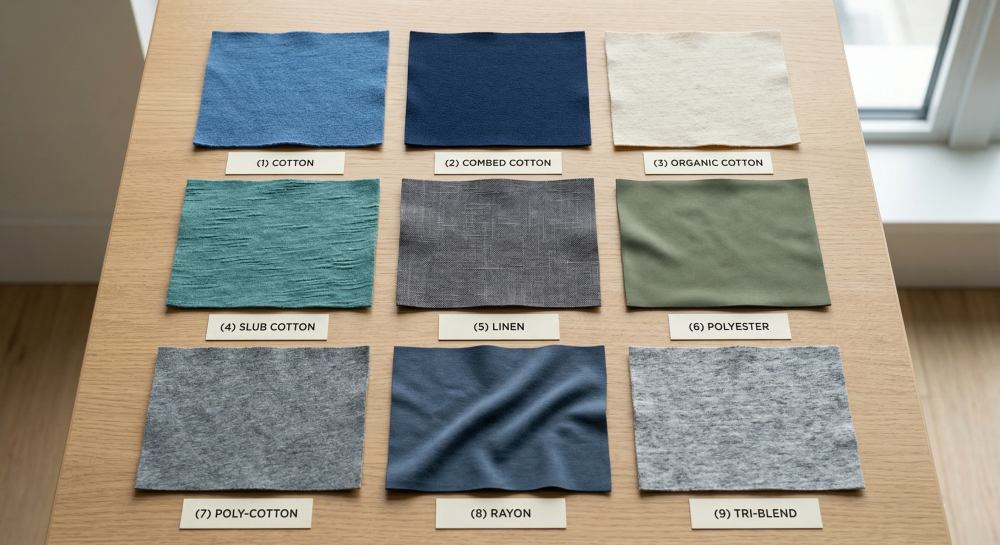
Slub cotton
The intentional inclusion of fine knots and imperfections (known as "coarse knots") in spun cotton yarn creates a unique texture and a slightly mixed-color look . This subtle imperfection has become quite popular in some fashion circles. Blank t-shirts made from coarse cotton are lightweight and breathable, making them ideal for boutiques seeking a relaxed, retro, or bohemian style. It's worth noting that the uneven surface may slightly affect delicate DTG prints, but garments made from coarse cotton with an uneven surface do not require ironing.
Linen
Linen is made from the natural fibers of the linseed plant and is widely used in the textile industry. It is highly breathable, wicks away moisture, and has a crisp structure. Linen can absorb up to 20% of its own weight in water, making its moisture-wicking properties even better than cotton. Linen fibers are relatively coarse, and the gaps between the fibers greatly aid in heat dissipation, making linen T-shirts a popular choice in summer. Due to the roughness of linen, it requires multiple processing steps to achieve its soft and lightweight state, resulting in a higher cost. Therefore, 100% linen T-shirts are not commonly found in standard print on demand catalogs.
Polyester
Polyester is a durable, petroleum - derived synthetic fiber . It first appeared in the 1930s. After World War II, DuPont obtained a patent and began commercial production, leading to its widespread use in the mass-market apparel industry. Today, it remains one of the world's most popular fabrics . In the on-demand printing sector, polyester is the preferred fabric for many sportswear brands due to its lower cost, high durability, excellent quick-drying properties, and perfect printing results. However, it's important to note that 100% polyester fabric has no elasticity; therefore, many sportswear garments use polyester blends.
Poly-cotton
Poly-cotton combines the advantages of both cotton and polyester: the softness and breathability of natural cotton with the durability, tear resistance, and wrinkle resistance of polyester. 50/50 polyester/cotton blends are already very common in casual wear, while sportswear and casual sportswear tend to use a 65/35 ratio. Poly-cotton T-shirts maintain their shape even after multiple washes. This is the superior quality created by blending natural and synthetic fibers. Poly-cotton offers excellent balance, retaining the softness and comfort of cotton while also providing wrinkle resistance, quick-drying properties, and tear resistance. However, its drawback is that none of these properties are particularly outstanding.
Rayon
Originally developed as a synthetic alternative to silk, rayon is a semi-synthetic fiber made from natural cellulose fibers such as wood pulp. It is characterized by its extremely smooth texture, excellent drape, and breathability. While rarely used alone in the production of ordinary T-shirts, rayon is highly regarded in the women's apparel industry because, when blended with other fabrics, it imparts a silky, luxurious feel and a flowing, beautiful silhouette to garments.
Tri-Blend
Tri-blend fabrics are typically composed of 50% polyester, 25% cotton, and 25% rayon , creating exceptionally soft, stretchy, and durable T-shirts. The unique "heathered" effect of tri-blends makes them ideal for fashion brands and creative products seeking a vintage, high-end feel. Due to the presence of synthetic materials, DTG printing on tri-blends naturally produces a slightly faded, vintage look , a style sought after by many high-end bespoke clothing brands. These fabrics are usually more expensive , and retailers should weigh the pros and cons before making a purchase.
What does fabric weight mean?
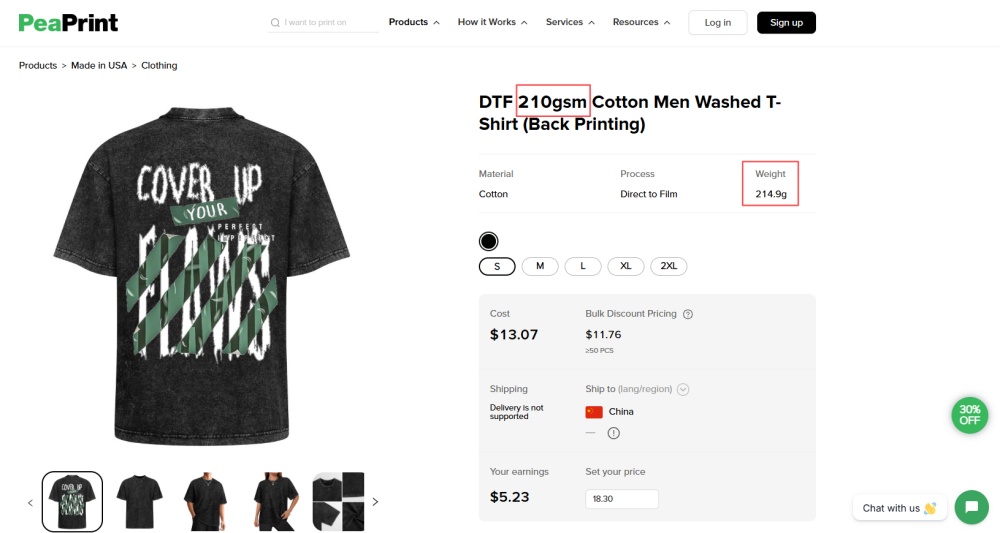
In the apparel industry, another important indicator for measuring fabric weight is its weight per square meter (gs). Especially for T-shirts, the weight of the fabric not only determines the customer's wearing experience and drape, but also affects consumers' perceived value, durability, and seasonal suitability of the T-shirt.
When choosing a blank T-shirt, fabric weight is usually measured in two ways: ounces per square yard (oz/yd²), which is mainly used in the United States; or grams per square meter (GSM), which is widely used internationally.
The following is a detailed description of the three main fabric weight categories to help you complete your product catalog:
Light Weight Shirts
Light-Weight Shirts: 3.0 - 4.5 oz/yd² | 120 - 150 GSM
These T-shirts are highly breathable, lightweight, and have a beautiful drape. While comfortable in warmer weather, they can also be worn as an inner layer under a jacket without being as hot as a thick shirt. They can be worn year-round. Because the fabric is still relatively thin, they are prone to wrinkling. However, many wrinkle-free and non-iron lightweight versions are available. It's also worth noting that ultra-thin or white fabrics in this category can sometimes be slightly sheer, so consider the occasion when wearing them alone.
Medium Weight Shirts
Medium-Weight Shirts: 4.5 - 5.5 oz/yd² | 150 - 190 GSM
Medium-weight fabrics are the industry standard and a common choice for many T-shirt sellers. They offer a perfect balance of durability, sun protection, and year-round comfort. They have a substantial feel, and there are many wrinkle-free options available. These fabrics are primarily geared towards a casual style. If you're launching a creative merchandise line, a casual lifestyle brand, or standard corporate attire, medium-weight blank T-shirts are a safe bet.
Heavyweight shirts
Heavyweight shirts: 6.0 oz/yd² and above | 200+ GSM
Heavyweight cotton fabric is almost synonymous with quality and durability. These T-shirts have a crisp fit, excellent drape, and don't cling to the body, making them essential items for high-end streetwear, workwear, and retro collections. Because the fabric is thicker and more tightly woven, it perfectly showcases bold prints and is durable and resistant to deformation. At the same time, their warmth retention is far superior to thinner counterparts.
Choosing a t-shirt fit, style, sleeves, and neckline
Once you've chosen your ideal fabric and weight, it's time to determine the T-shirt's silhouette. If you've already established a style for your brand, then good luck with your sales. However, with so many T-shirt styles available now, it might be better to choose based on market potential and current trends. Here are some helpful buying guidelines.
Fit
Wearing different clothes for different occasions, such as casual wear at home and outfits for going out, requires different T-shirt styles. Moreover, certain body types may look more natural and comfortable in certain styles.
Muscle: This style of T-shirt can be understood as a form-fitting garment. It is elastic and usually not made of pure cotton. They wrap around the body and outline the wearer's body lines. This style is more common among women, and many fitness enthusiasts also like to wear this type of clothing to accentuate their figures.
Slim: This fit also hugs the body but isn't as tight as a muscle tee. When worn correctly, this style perfectly showcases the results of a regular workout. For those with an athletic body, this style of T-shirt is versatile and easy to match with various looks.
Regular: Most start-up print-on-demand businesses choose to start with regular styles, as these products cover a very broad customer base. They cater to almost all customer groups, regardless of age or gender. Because the styles are so common, competition is also fierce.
Baggy: When people think of loose-fitting clothes, many imagine oversized, exaggerated garments. But true looseness in T-shirts means that the shoulders fall naturally, allowing for more freedom of movement in the head and arms, rather than being as fitted as traditional clothing.
Style
We might think of T-shirts as just short-sleeved, straight-cut styles, but in reality, there are far more styles than you can imagine. Below are some of the more common types of T-shirts available on the market.
The Basic Half-Sleeve: The most common and classic type of T-shirt, it almost never goes out of style. Its design suits both men and women, regardless of body type or age, and it boasts unparalleled advantages in practicality and versatility. It's an essential product for any print on demand T-shirt business.
Cropped: This is a shorter style of women's T-shirt, with the hem usually above the waist, revealing the waistline or abdomen and visually raising the waistline, thus making the legs appear longer.
Off-Shoulder: This wide-collar shirt is designed to fall naturally below the shoulders, revealing the shoulders, collarbone, and neckline. It has a more feminine feel, with a casual, romantic, and slightly sexy style.
Polo: This is a style that everyone is familiar with. It simply adds a collar, transforming what was originally a casual garment into a slightly formal look. You could also call it a business casual style.
V-neck short sleeve: The V-neck short sleeve is one of the most basic and classic styles in the fashion world. Its core feature is that the neckline extends in a V-shape towards the chest, and compared to a crew neck, it has a significant advantage in terms of visual functionality.
Flared sleeve: This style features cuffs that gradually widen, resembling a trumpet or bell shape. In modern fashion, it is a representative design that showcases a woman's elegant style and feminine charm.
Raglan tee: Its most distinctive feature is the way the sleeves are connected to the shoulders. The seam of the sleeves of the Raglan tee extends diagonally from the neckline to the armpit. This makes the sleeves and shoulders a single unit, providing a great deal of freedom of movement.
Long-Sleeve Crewneck: This is a basic short-sleeve T-shirt with longer sleeves. Besides being warmer, it's also great for layering. It's also a very typical gender-friendly style, suitable for both men and women.
Baseball tee: All baseball tees feature a raglan cut, making them very similar to raglan sleeve tee shirts, but with more striking color schemes. Suitable for both men and women, it's a core item for the popular sportif trend this spring.
Muscle shirt: This is a sleeveless shirt designed specifically to showcase the muscular contours of the upper body. Muscle shirts typically retain the torso shape of a T-shirt, but without the sleeves.
Babydoll tee: This is a retro-style women's T-shirt that is extremely flattering. It is usually cropped at the waist or has a hem that resembles a dress. It was all the rage during the Y2K era and has now made a full comeback in the current retro trend.
Sleeve
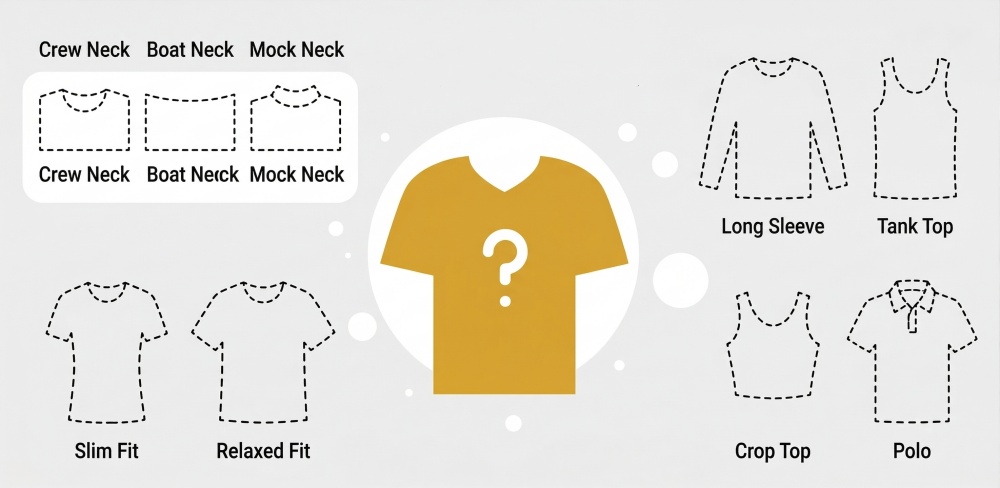
Sleeve length and sleeve design can drastically alter the look and seasonality of a garment. Everyone has their own preferred styles, and in on-demand T-shirt printing, you must understand the structural performance of these styles to better capture consumer preferences.
Sleeveless: Also often called a tank top or cutoff, it's essentially a T-shirt with all sleeves removed. Without the restriction of sleeves, it offers greater freedom of movement and better ventilation, making it popular among sports enthusiasts. It can also be worn as everyday casual wear in the summer, making it a core fashion item.
Cap Sleeve: A feminine T-shirt style with extremely short sleeves. Its name vividly describes the shape of the sleeve, which, like a small cap, only covers the very top of the shoulder. Because the cuffs are cut upwards at an angle, it visually increases the width of the shoulders, and the cap sleeve adds a more feminine touch, giving it a light and airy feel.
Regular Sleeve: The standard short-sleeved T-shirt is the best-selling and most common style in the global T-shirt market. It's the most common crew neck or V-neck short-sleeved T-shirt we see every day. The cuffs typically extend to one-third to one-half of the way down the upper arm. It can be worn alone or layered under a sweatshirt, jacket, or shirt.
Raglan Sleeve: The signature design feature of this type of shirt is the raglan sleeve. Because there are no vertical seams at the shoulders, its lines are more rounded, accommodating different shoulder widths.
Long Sleeve: A long-sleeved shirt typically refers to a shirt with sleeves that extend to the wrists, covering the entire arm. This type of shirt offers better warmth and is often worn as loungewear in winter or as an inner layer.
3/4 Sleeve and Elbow-Length Sleeve: Both three-quarter sleeves and five-quarter sleeves refer to the length of the sleeve. Three-quarter sleeves typically extend to the middle of the forearm, while five-quarter sleeves reach the elbow, covering the entire upper arm. These designs can showcase various styles and suit different occasions.
Neckline
Like other garments, T-shirt necklines come in a variety of styles. These different necklines can directly influence a customer's choice. For example, some customers with a clear purchase intention might directly enter "crew neckline tee" or other styles of clothing into the search bar.
Crew Neckline: The classic round neckline. Located high on the chest, it provides the largest and flattest surface area for DTG or screen printing. This standard crew neck T-shirt has become a universal standard and is so popular that almost everyone owns several.
V Neckline: This V-neckline is a versatile design, especially popular in women's wear. However, as a custom brand owner, you must carefully adjust the design placement, as a deeper V-neck reduces the printable area above the chest.
Y Neckline: More commonly known as the Henley Shirt in the fashion world. It falls between a crew neck and a V-neck; the Y-neck is similar to a crew neck but features a few inches of buttons down the front. This design is suitable for both men and women.
Polo shirts: These collared T-shirts have always been popular, originating with golfers and eventually spreading to the general public. They have a unique business casual vibe.
Scoop Neckline: This is a neckline design that is wider and deeper than a standard crew neck. Its shape resembles the edge of a spoon, forming a smooth semi-circle or a large U-shape, extending down to below the collarbone and even close to the upper chest. It's a piece that showcases feminine curves and a minimalist style.
T-shirt printing technology
Another crucial factor to consider when choosing T-shirts is the printing technology. Even the highest quality blank T-shirts can suffer from poor results if the printing process is incompatible. You need to ensure your T-shirts are vibrant, washable, durable, and maximize your profit margins. The following three of the industry's most important T-shirt printing processes will help you perfectly align your production with your business strategy.
Direct-to-garment (DTG) printing
This is actually not hard to understand. Think of a DTG machine as a highly advanced garment inkjet printer that sprays specially formulated water-based ink directly onto the garment fibers. The advantage of this process is that it can produce a full spectrum of vibrant colors and vivid patterns. To achieve the clearest and most vibrant DTG direct-to-garment printing results, it must be paired with 100% ring-spun or combed cotton T-shirts, as natural fibers perfectly absorb water-based inks.
DTG direct-to-garment technology is that it first sprays a layer of white base ink onto the garment before printing the colors on top. Regardless of whether the base color of your garment is red, blue, or black, this white base ensures that the white areas in the original design are printed accurately, and the colored areas appear vibrant and precise against the white background. Many traditional printing methods assume you are printing on white clothing. If your blank T-shirt is blue and your design includes a white pattern, the printer simply leaves the white area unprinted, relying on the white of the garment itself to fill in the pattern area. This completely disrupts the color balance of the design.
Screen printing
Screen printing requires creating a woven mesh stencil for each color in the design, then printing thick layers of plastisol or water-based ink directly onto the fabric through the screen. For complex patterns containing multiple colors, screen printing may not produce the desired results. However, it offers unparalleled quality in printing striking, solid-color designs.
Because each color requires a separate plate-making process, screen printing is only cost-effective for large-volume orders. If you are an established brand that needs to order hundreds of identical T-shirts for promotional events, corporate team building, or wholesale distribution, screen printing offers the best economies of scale. It works on almost all fabrics, including standard cotton and polyester-cotton blends.
Sublimation printing
Sublimation printing is a highly specialized process that uses heat to directly convert solid ink into gas, which then chemically bonds with the fabric fibers. The ink doesn't remain on the surface of the garment but truly integrates into the fabric, creating a print that will never crack, peel, or fade .
all-over prints that cover the entire fabric. However, it has a strict limitation: sublimation printing is only suitable for synthetic materials because thermal sublimation gases cannot bind with natural fibers such as cotton.
Selecting Blank T-Shirts from a Brand Positioning Perspective
The key to success in the custom apparel business lies in accurately matching products with the target audience. Therefore, you must select T-shirts from the perspective of your brand positioning. This article explores how to develop strategic apparel sourcing plans based on five different brand positioning models.
The Promotional & Event Brand
If your business model involves supplying apparel for corporate gifts, charity marathons, or one-off promotional events, your primary goal is to maximize reach within a tight budget. Predictably, consumers won't expect these T-shirts to be particularly durable or glamorous ; they simply need to look presentable during the event. Therefore, standard straight-cut T-shirts are sufficient in this case, made from standard combed cotton or a basic polyester-cotton blend. These T-shirts can significantly reduce your wholesale costs and protect your profit margins without compromising the visibility of your customers' logos.
The Creator Merch & Lifestyle Brand
For YouTube creators, TikTok influencers, and lifestyle brands, the goal is to find the perfect balance between cost and retail quality. If you're familiar with these peripheral T-shirts, you'll find they generally range in price from $20 to $40.
Audiences buy T-shirts to support their favorite creators , but they'll only wear them frequently and repurchase them if they're comfortable. At this price point, you must upgrade to a medium-weight, 100% ring-spun cotton fabric. This fabric offers significant improvements in softness and structural integrity compared to promotional T-shirts, resulting in a substantial reduction in customer complaints and return rates.
The Premium Streetwear Label
The essence of streetwear lies in uniqueness, trendiness, and high perceived value. These trendy T-shirts typically cost between $50 and $80 or even more. Your customers scrutinize every detail, and if their quality doesn't hold up, it can instantly destroy your brand reputation. To compete in the high-end market, heavyweight combed cotton T-shirts are undoubtedly the best choice. Your target customers expect crisp, structured styles with a good drape; they often prefer loose, dropped-shoulder, or oversized fits. Furthermore, blank T-shirts with tear-off labels can also enhance your brand. You can print your own custom labels on these blank T-shirts, transforming them into your high-end brand.
The Performance & Activewear Brand
Sportswear brands are somewhat unique within traditional apparel, as their clothing is typically designed for athletic performance. Natural fabrics, like cotton and linen, can become heavy and stuffy after absorbing sweat. Gyms, yoga studios, and fitness enthusiasts need products that combine functionality and flexibility. For sportswear brands, your catalog should highlight 100% polyester or high-quality three-blend fabrics. These fabrics offer the moisture-wicking and quick-drying properties that customers require.
From a style perspective, you need to go beyond ordinary T-shirts; sourcing professional apparel such as breathable vests and sweatshirts is crucial to meeting the specific needs of athletes and fitness enthusiasts.
The Eco-Conscious Brand
Modern consumers , especially Millennials and Gen Z , are increasingly voting with their wallets when it comes to sustainability. If your custom apparel brand is centered on ethical consumption, environmental action, or outdoor conservation, then your products must genuinely reflect these values. Building an eco-friendly brand requires sourcing organic cotton, recycled polyester, or sustainable bamboo blends. While these blank T-shirts have the highest wholesale costs, they offer a compelling marketing story. You can proudly showcase your sustainable supply chain to your audience , easily building deep trust between your brand and consumers —consumers with high loyalty who are willing to pay a premium for clothing that aligns with their ethical standards.
Conclusion
T-shirts hold a pivotal position in the apparel industry, especially in today's fast-fashion world where they've become an indispensable item . The concept of selling T-shirts isn't new; many chain brands like Uniqlo, Zara, and H&M sell hundreds of millions of T-shirts globally each year. This demonstrates the sheer size of the market, making it entirely worthwhile for you to enter. Furthermore, the on-demand printing model allows you to start selling T-shirts with virtually zero risk. By offering personalized, customized T-shirts, it's entirely possible to gain a share of the market from these apparel giants. Undoubtedly, T-shirts will continue to be popular and won't go out of style anytime soon. Now that you've read this guide, seize this booming market opportunity and start your print on demand T-shirt journey!
👉 Join PeaPrint now and start building your custom T-shirt brand.