All Over Print Fabric Requirements: Why Polyester Is the Only Choice for Sublimation Printing
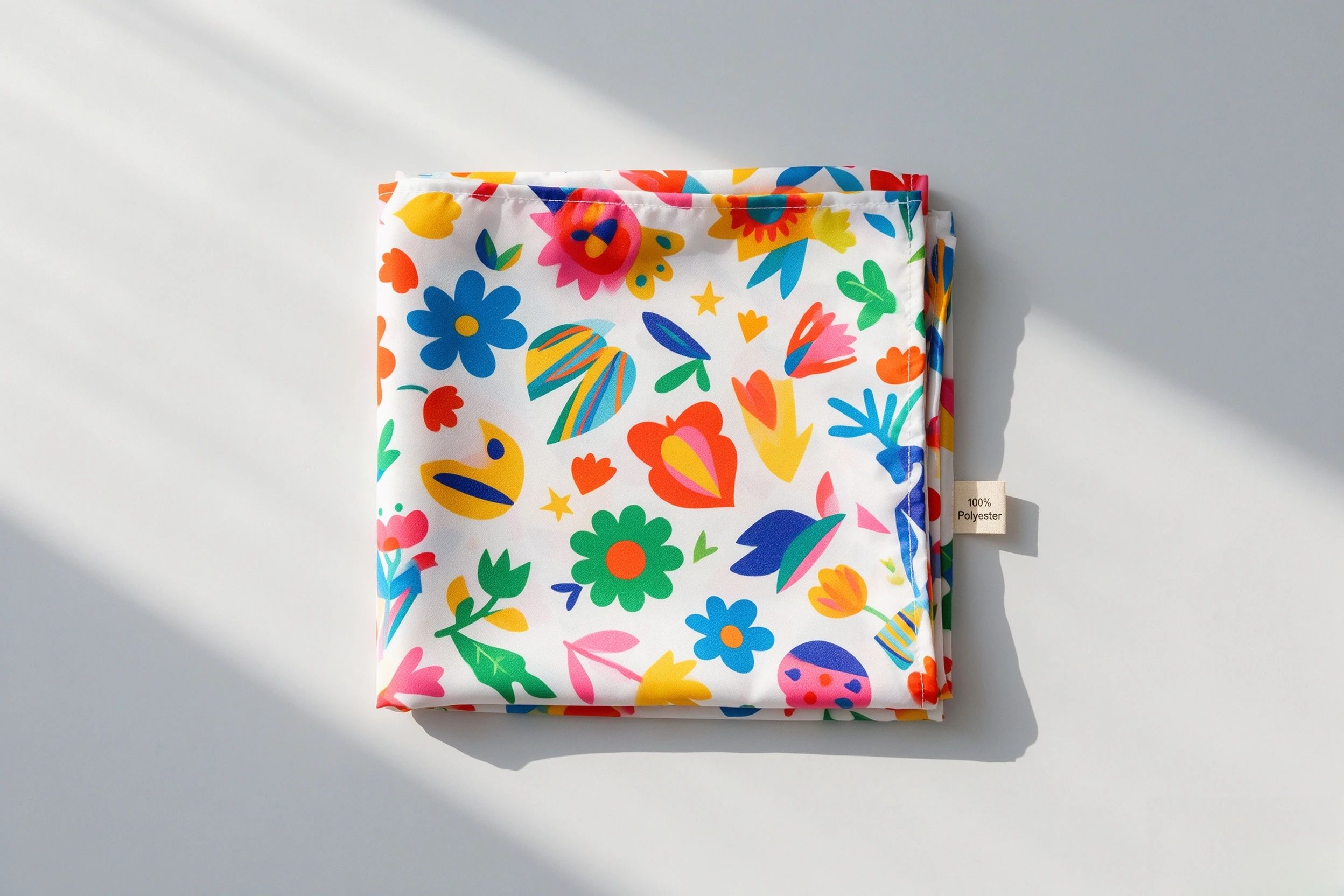
If you’ve ever searched for all over print fabric requirements polyester, you’ve probably seen a lot of conflicting advice.
Some people say AOP only works on polyester.
Some say their cotton shirts can do full-bleed printing.
And then someone else tells you a cheap poly-cotton blend will work just fine.
Every time I see that last one, I sigh a little.
Because this isn’t about preference.
It’s not about cost-cutting.
It’s chemistry.
And chemistry doesn’t care about your marketing copy.
In this guide, I’m going to walk you through the real all over print fabric rules: why polyester is the only choice for sublimation, how blend ratios affect color, how GSM changes the feel, and why almost every AOP product starts with a white base.
If you’re selling all over print on demand, custom all over print shirts, or any print on demand shirts, this will save you from a lot of “why does my print look nothing like the mockup?” moments.
Let’s get into it.
The “Only Choice” for AOP Fabric: Polyester
Here’s the bottom line:
Sublimation printing — the process behind most AOP products — only works on polyester fabric.
Not “polyester works best.”
Not “polyester is preferred.”
It’s the only option.
If you try to sublimate onto 100% cotton, the dye won’t bond.
It might look okay for a day.
Then you wash it once, and the color fades into a sad, blurry memory.
This isn’t a machine issue.
It’s not a “bad operator” issue.
It’s the molecular structure of cotton versus polyester.
So why does polyester work?
Let’s talk chemistry — the simple version.
The Chemistry of Sublimation (Plain English)
I’m not going to turn this into a chemistry lecture.
But you need to understand this if you want to stop getting fooled by “cotton AOP” claims.
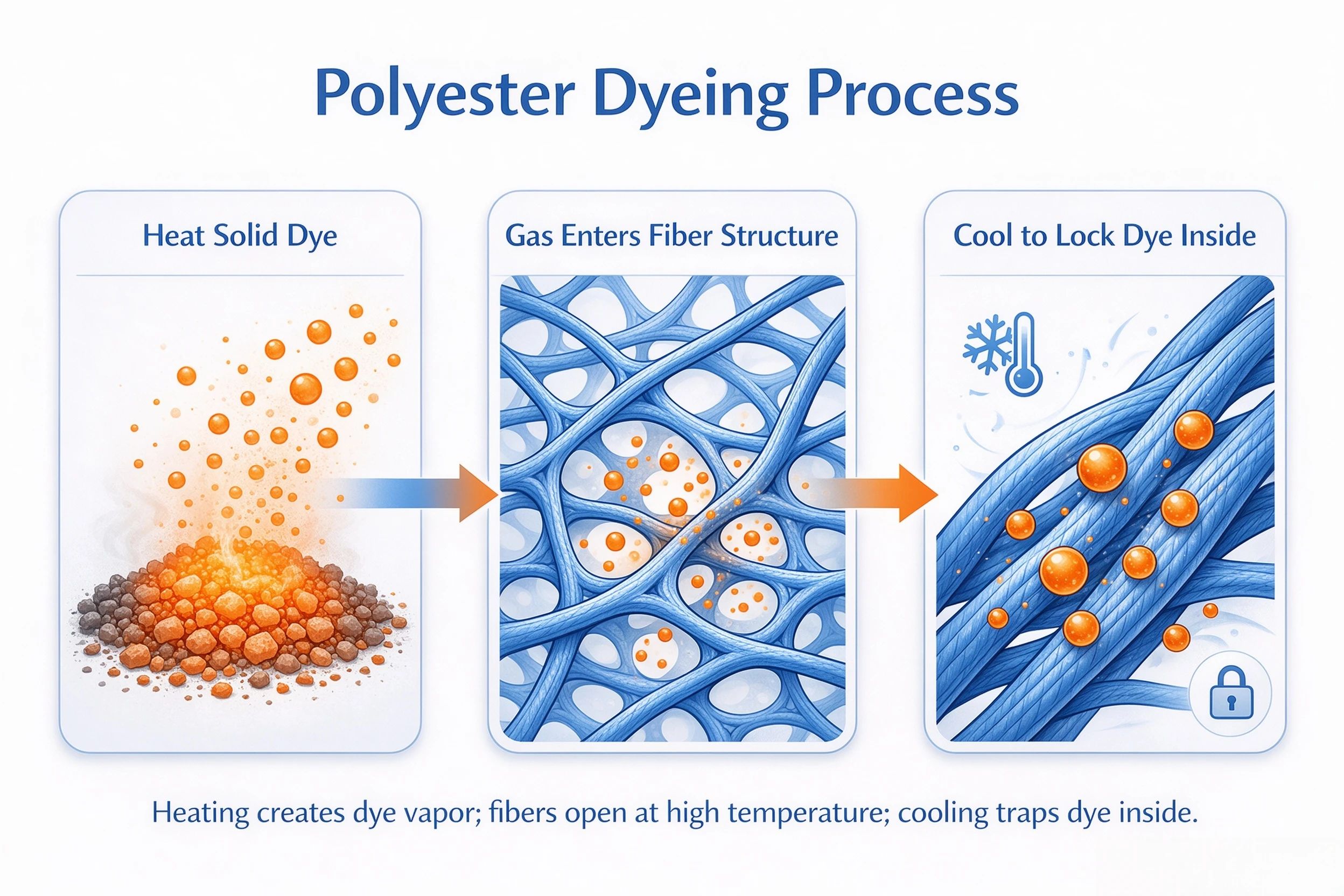
Sublimation happens in three steps:
1. Solid → Gas
Sublimation dye is heated to around 180–200°C.It doesn’t become liquid. It turns directly into gas.That’s why it’s called “sublimation.”
2. Gas penetrates the polyester fibers
At high heat, the polyester fibers open up.The gas dye molecules slip inside the fiber structure.
3. Cooling locks the dye in place
As the fabric cools, the polyester fibers close back up.The dye is now trapped inside the fiber.That’s why the print doesn’t crack, peel, or wash out.
Why don’t cotton, nylon, or rayon work?
Because their molecular structure doesn’t have the right “doors” for the dye to enter.
The dye just sits on the surface.
And anything sitting on the surface will wash off, rub off, or fade.
So when you see someone selling “100% cotton all over print,” you can be pretty sure they’re either using a different process (like DTG, which can’t do true full-bleed AOP) or they’re hoping you won’t ask questions.
The “Golden Ratio” for Polyester Blends
Not all polyester is created equal for AOP.
The percentage matters.
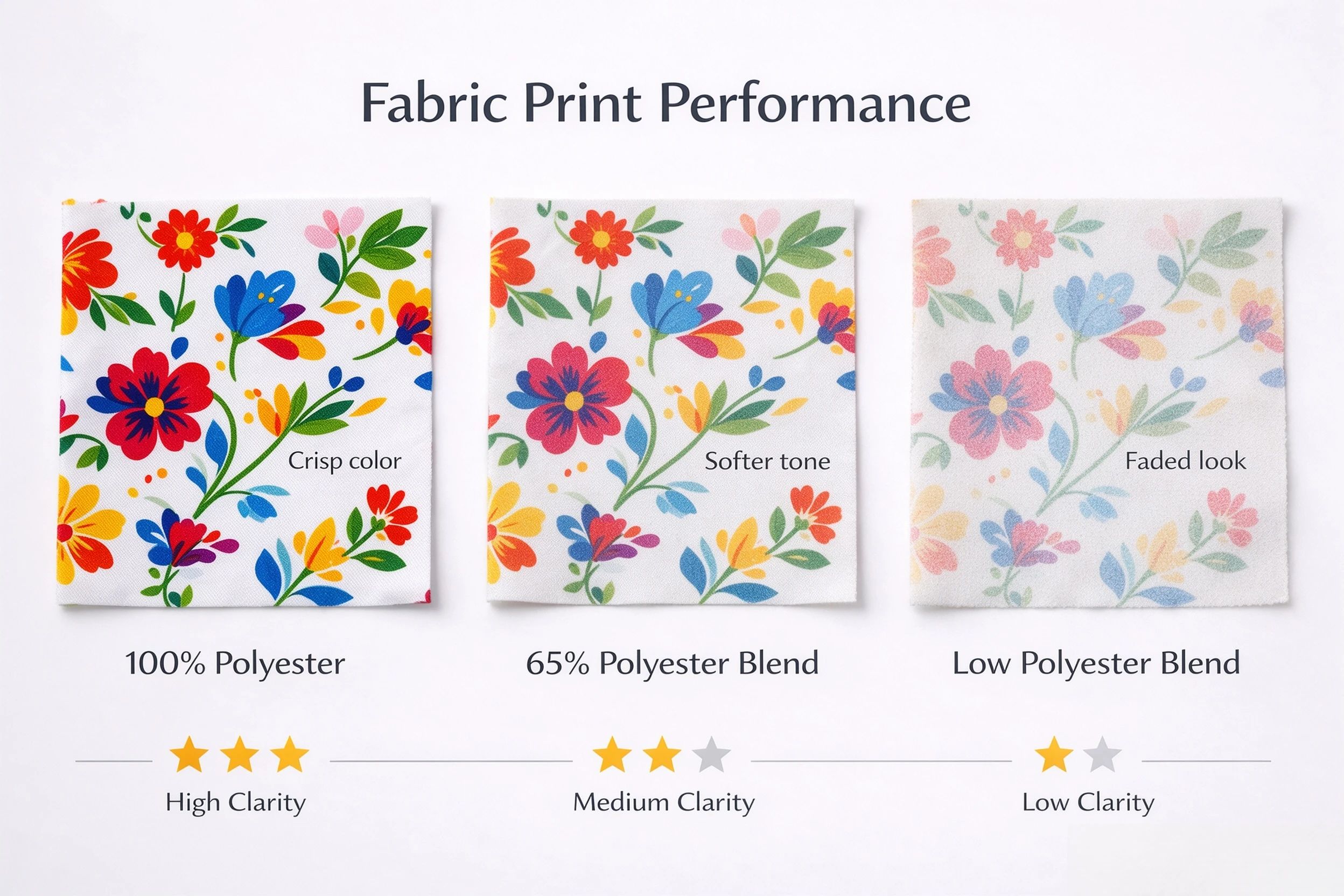
100% polyester: Best AOP results, most vibrant colors.
The dye fully penetrates the fibers.
Colors are saturated. Edges are crisp.
If you’re making all over print shirts, start here.
65%+ polyester blends: Acceptable, but color saturation drops.
A 65% poly / 35% cotton blend can work, but the print won’t “pop” the same way.
It’s fine for cost-sensitive products where color accuracy isn’t the main selling point.
Below 65% polyester: Not recommended.
The print looks muddy, blurry, and fades fast.
You save a few cents on fabric, then lose dollars on returns and bad reviews.
Common blend: 82% polyester / 18% spandex.
This is the go-to for activewear, leggings, and yoga pants.
Spandex gives stretch. Polyester carries the print.
For all over print on demand leggings and sports bras, this ratio is standard.
One rule:
The higher the polyester content, the better the AOP result.
Don’t trade print quality for a slightly cheaper fabric.
How Fabric Weight (GSM) Affects AOP
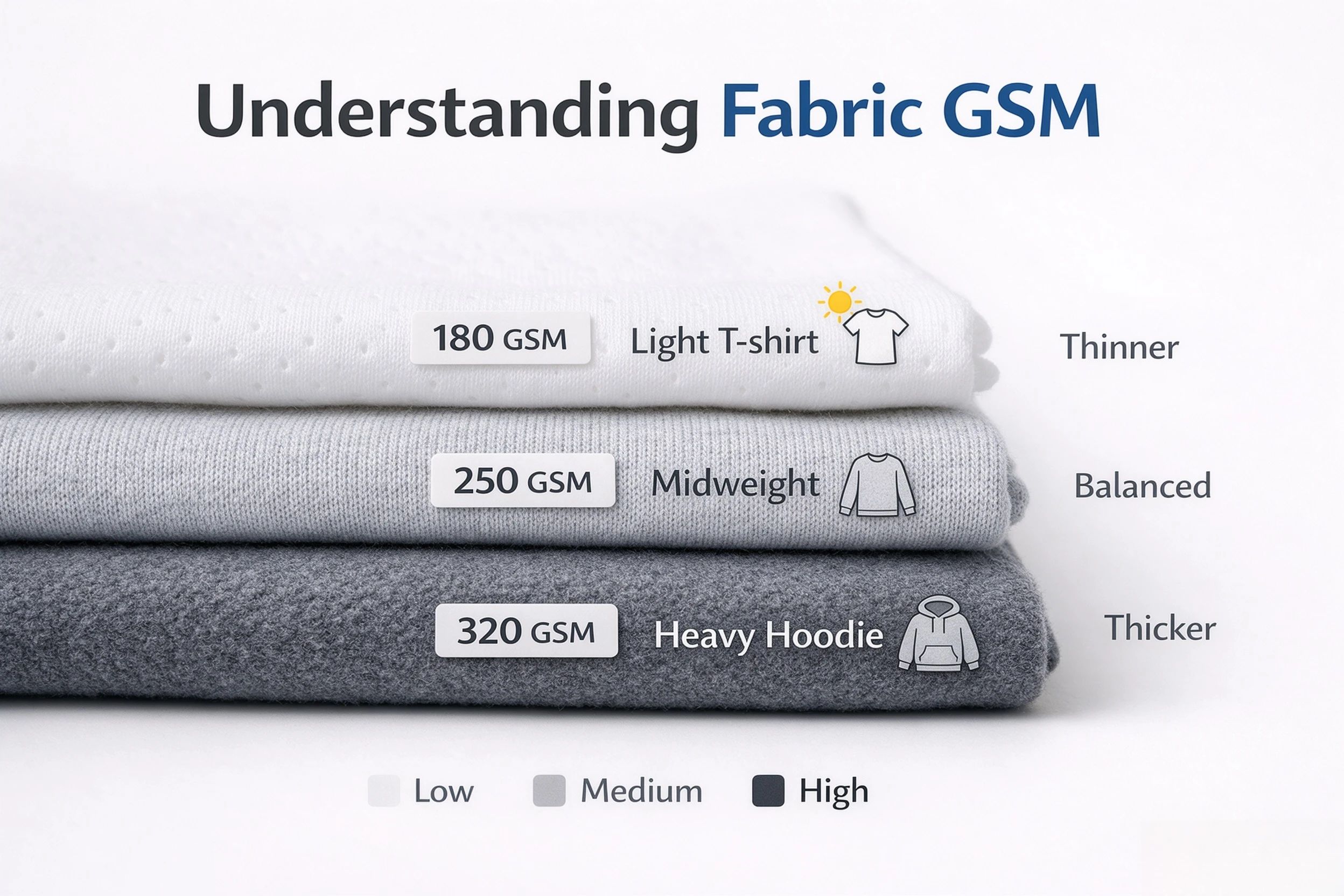
GSM (grams per square meter) determines how the fabric feels, drapes, and wears.
It doesn’t decide whether the print works — but it does affect the final product.
Lightweight (180–220 GSM)
Great for T-shirts and summer wear. Breathable. The print doesn’t feel heavy.
This is a solid range for print on demand shirts in warm-weather collections.
Midweight (220–280 GSM)
The sweet spot for everyday wear.
Good balance of hand feel, durability, and print performance.
Most custom all over print shirts fall here.
Heavyweight (280–350+ GSM)
Best for hoodies, outerwear, and fall/winter pieces.
The fabric feels substantial, and the print has more visual weight.
But note: thicker fabric needs more even heat penetration during sublimation. It’s a higher-skill production.
How to choose?
Look at your product positioning.
Don’t put a summer T-shirt on 300 GSM.
Don’t use 180 GSM for a hoodie.
Wrong GSM, wrong product — no matter how good the print is.
How Fabric Color Affects AOP
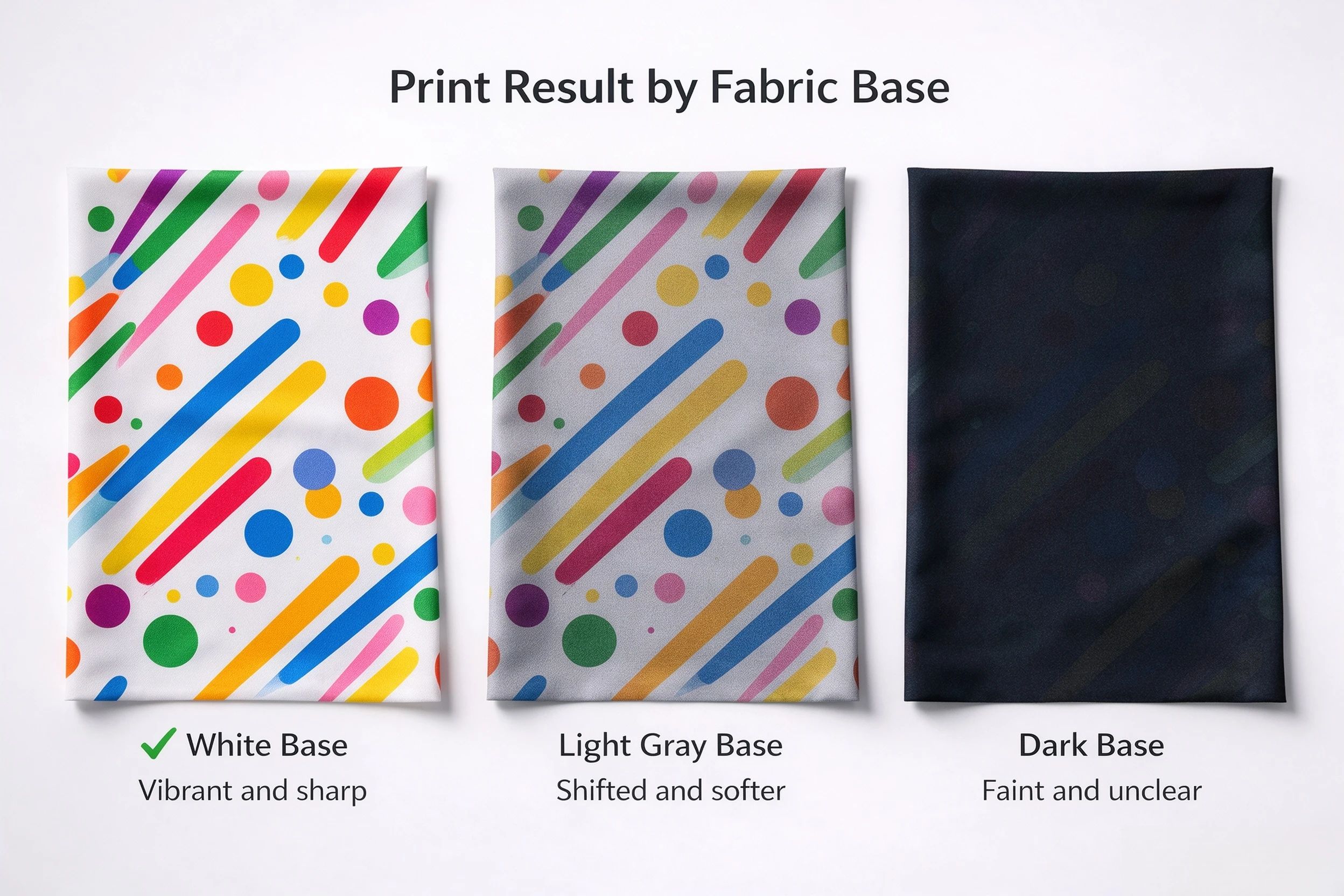
This is the part most people overlook.
White base fabric: Best color performance. Recommended.
Sublimation dye is translucent.
On a white base, colors stay pure, bright, and close to your design file.
Light-colored base: Acceptable, but colors shift.
Light gray, light pink, etc. will alter the final print.
You need to test swatches before selling.
Don’t assume it will look like the white-base version.
Dark base fabric: Not recommended.
Light designs won’t show up.
Dark designs blend into the background.
You lose all contrast and detail.
Why are most AOP products white-based?
It’s not an aesthetic choice. It’s science.
White lets the dye show its true color.
Any other base color “pollutes” the final result.
So if you see a dark AOP hoodie with a super vibrant print, it’s either printed on white polyester and then bonded, or it’s not true sublimation.
Peaprint’s Fabric Choices
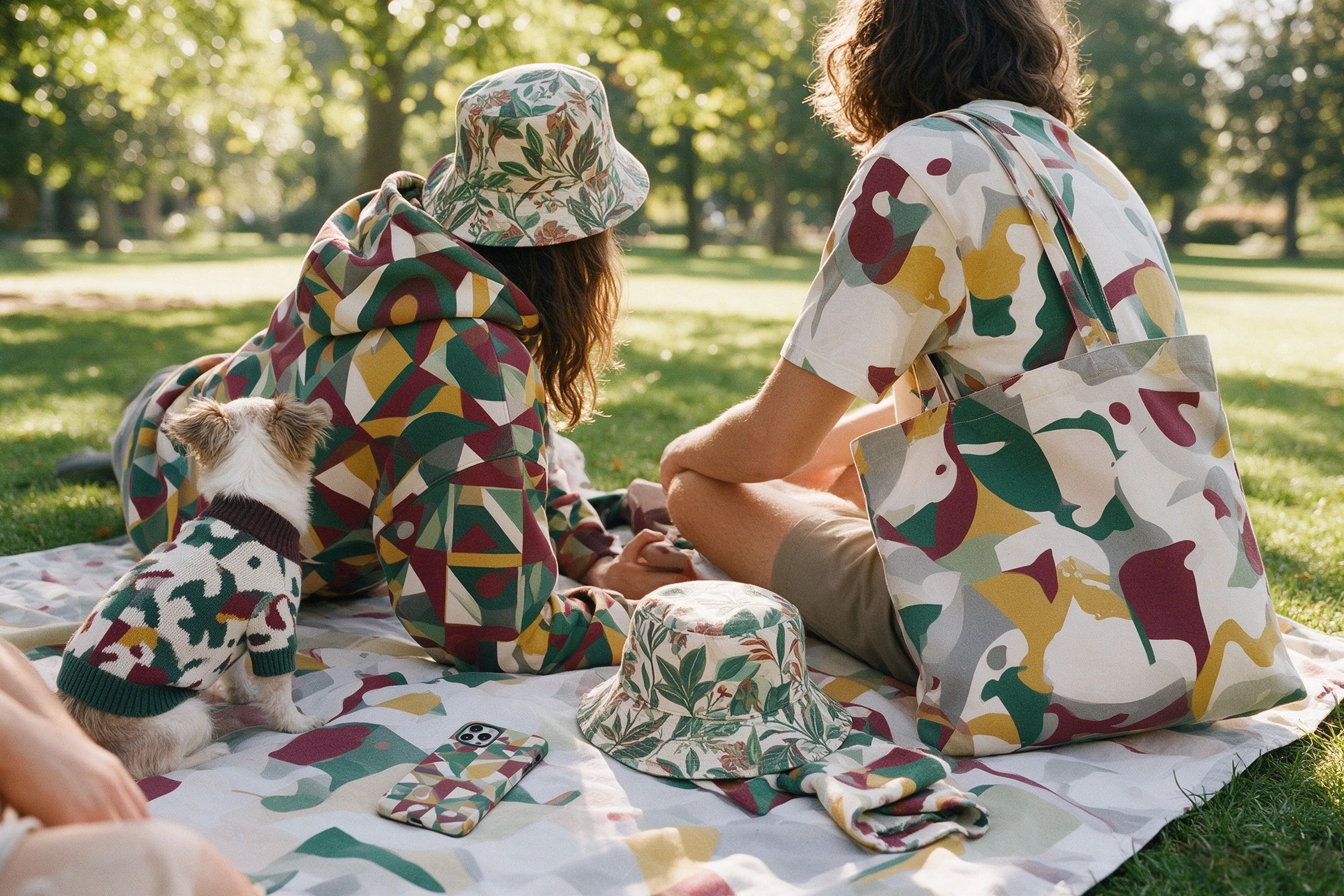
At Peaprint, our all over print fabric standards are straightforward:
- AOP T-shirts: 100% polyester, 180–220 GSM, white base
- AOP Hoodies: 100% polyester or high-poly blend, 280–320 GSM, white base
- AOP Leggings / Activewear: 82% polyester / 18% spandex, white base
- AOP Custom Shirts: 100% polyester, midweight, white base
Different categories get different fabrics.
We don’t use a one-size-fits-all approach.
If you’re not sure which fabric fits your design, just ask our support team.
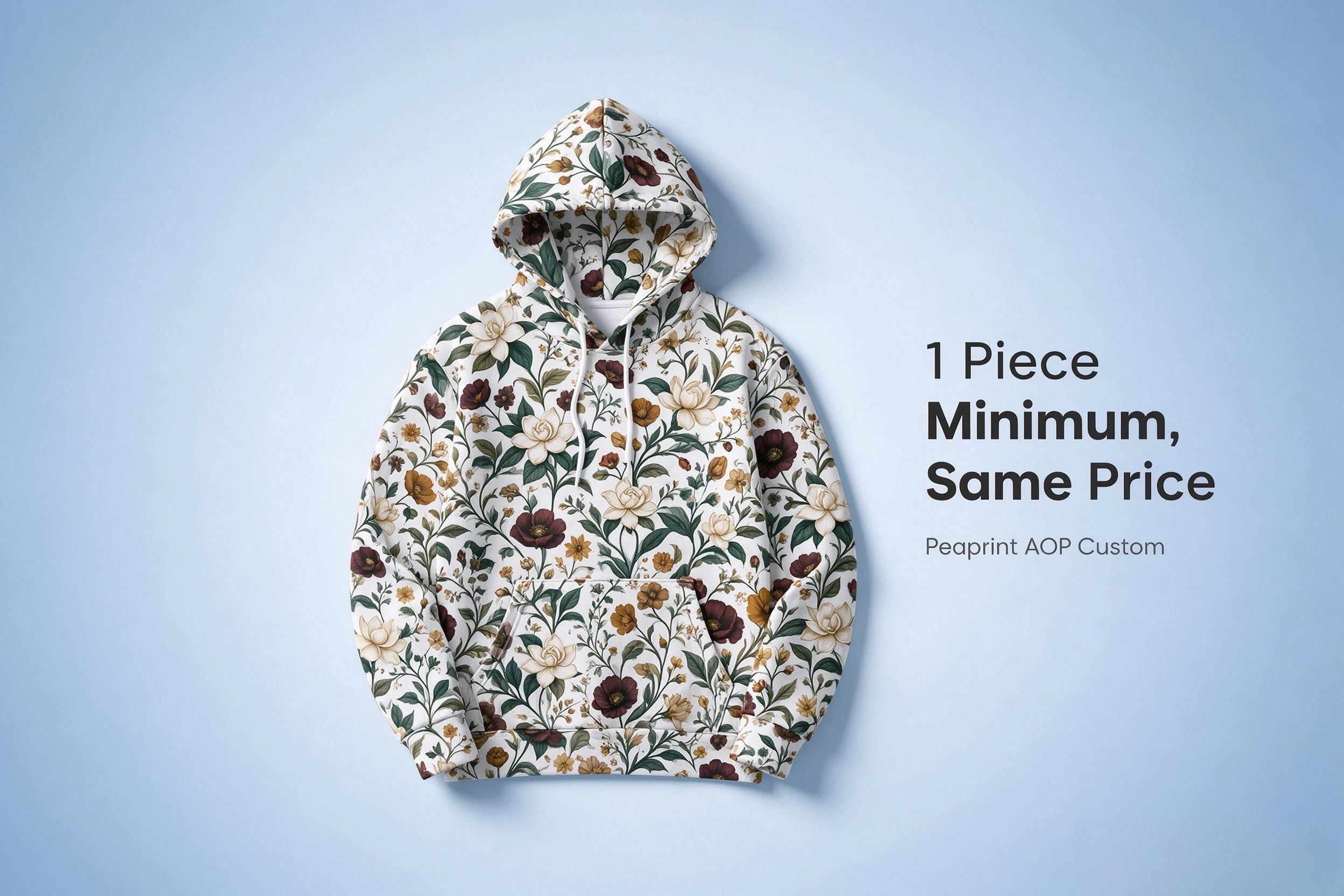
1 piece minimum. Same price for 1 or 100.
You don’t need to bulk-order to test a fabric.
Common Myths — Busted
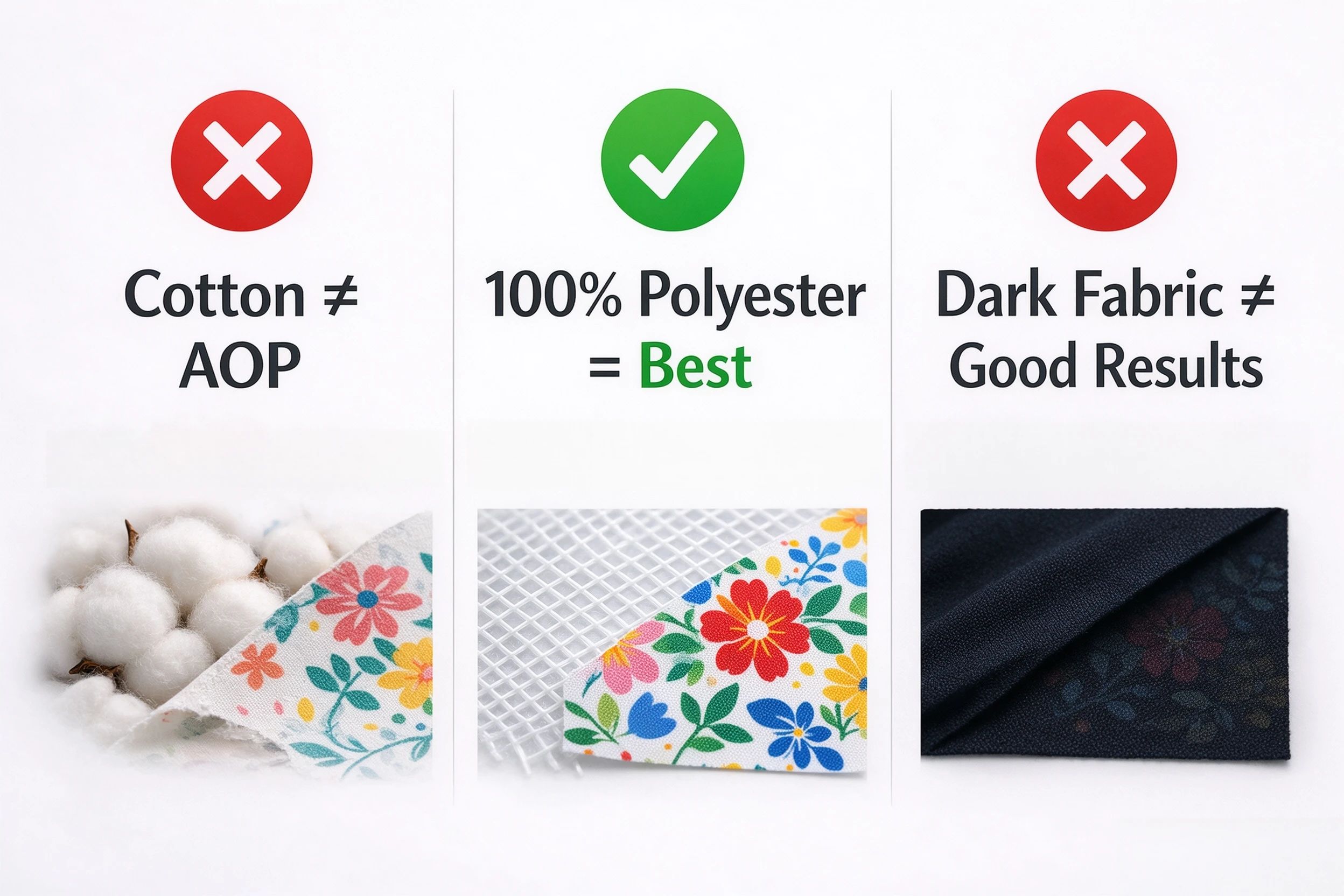
❌ “AOP can be printed on 100% cotton.”
✅ No.
Sublimation dye cannot bond with cotton fibers.
It sits on the surface and washes away.
❌ “Dark fabric works fine for AOP.”
✅ Technically possible, but the results are poor.
Light designs disappear. Dark designs lose depth.
Unless you want a subtle “ghost” effect, avoid it.
❌ “Lower polyester blend = cheaper, same quality.”
✅ It’s cheaper, but print quality drops.
Below 65% polyester, prints look blurry and fade fast.
You’ll pay for it in returns.
❌ “AOP is just like regular printing — any fabric works.”
✅ Not even close.
Regular screen printing can go on cotton.
AOP sublimation cannot.
All over print fabric requirements polyester is not a suggestion. It’s a hard rule.
FAQ
Can all over print be done on cotton?
No. Sublimation printing requires polyester. Cotton lacks the molecular structure to bond with sublimation dye.
What percentage of polyester is needed for sublimation?
100% polyester gives the best results. 65%+ polyester blends are acceptable but less vibrant. Below 65% is not recommended.
Does fabric color affect all over print?
Yes. White base fabric gives the most accurate and vibrant colors. Light colors cause shifts. Dark colors are not recommended.
What GSM is best for all over print T-shirts?
180–220 GSM for lightweight summer tees. 220–280 GSM for everyday wear. 280–350+ GSM for hoodies and outerwear.
Why does sublimation only work on polyester?
Because polyester fibers open at high heat, allowing gas dye to enter. When cooled, the fibers lock the dye inside. Other fibers don’t have this property.
So, Why Is Polyester the Only Choice?
Because sublimation dye needs a fiber that opens its doors.
Polyester opens up under heat and locks the dye in when it cools.
Cotton, nylon, and rayon don’t open the same way.
That’s it. That’s the whole story.
When you get the all over print fabric requirements right, everything else — color, washability, hand feel — falls into place.
Get the fabric wrong, and no design will save you.
If you’re still unsure about fabric, or you want to feel the difference for yourself,
check Peaprint’s AOP product fabric specs or contact our support team for fabric samples.
1 piece minimum. Same price for 1 or 100.
Don’t let fabric be the first wall your AOP business hits.