How Much Is The Cost to Start a Print on demand Business in 2026?
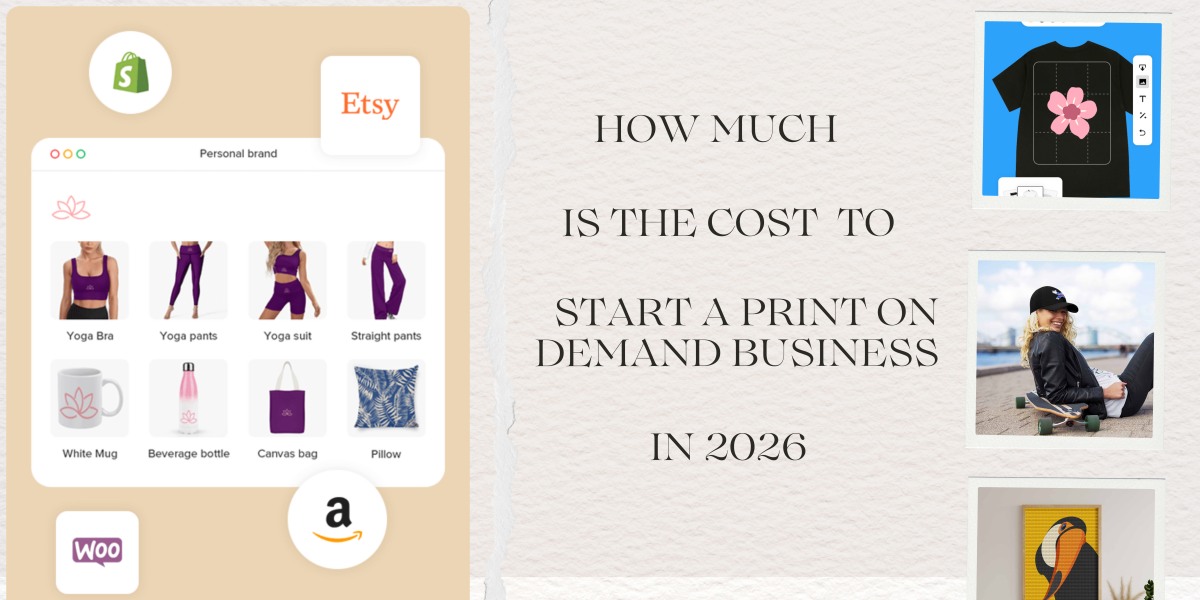
How much does it cost to start a print-on-demand shop in 2026? This is a question many POD newcomers want to know. In this article, we'll provide an in-depth analysis of the various costs involved in starting a POD business through different channels. Whether you're just curious or preparing to get into this business, this cost guide contains all the information you need.
Quick answer:
In 2026, most beginners can start a POD store with an investment of $150 to $300. With the help of various free tools and marketplace platforms, you can even start with $0 cost.
If you want greater control and a more professional image, it will likely cost between $300 and $800.
If you're making this your main business, it's recommended that you prepare at least $1,000 to have complete control over your store. This includes setting up a website, establishing a brand's visual identity, and investing in advertising.
What are the necessary costs involved in starting a POD store?
1. Business startup costs
While legally, operating a print-on-demand shop in the US as an individual doesn't require immediate company registration, registering a Limited Liability Company (LLC) is the optimal solution for long-term compliance, tax benefits, and risk mitigation if you intend to run it as a business. An LLC separates your personal assets from your company's. Even in the event of bankruptcy or legal proceedings, your personal assets are typically protected. Furthermore, having an LLC name will make you appear more legitimate when dealing with suppliers and opening bank accounts. In most US states, the cost of setting up a company ranges from $50 to $150. Here's a simplified process:
- Choose a name for your company, then apply for registration in your state.
- the state government approves it , you can apply for an EIN for free on the IRS website.
- Take your LLC approval documents and EIN to the bank to open a business account.
Business registration fees: One-time fee of $50-$150

2. Domain name and branding costs
If you're planning to build your own brand, creating a website is the best option. You have complete control over your store design and customer data, which is crucial for the long-term development of an independent brand. A domain name is essential for building your website. You can purchase domain names from providers like GoDaddy, Google Domains, and Namecheap. Sometimes they offer various promotions at very low prices, typically costing around $10-20 per year. If you plan to continue operating your business, remember to renew your domain name before it expires.
Besides a domain name, your brand also needs to build visual assets to make you instantly recognizable. You can use free AI tools to design and generate a brand logo and determine a color scheme. Ensure your website pages and social media platforms maintain a consistent style. You can also hire a designer on Fiverr to do this for approximately $50-$100.
Domain name fee: $10-20
3. Customized shop costs
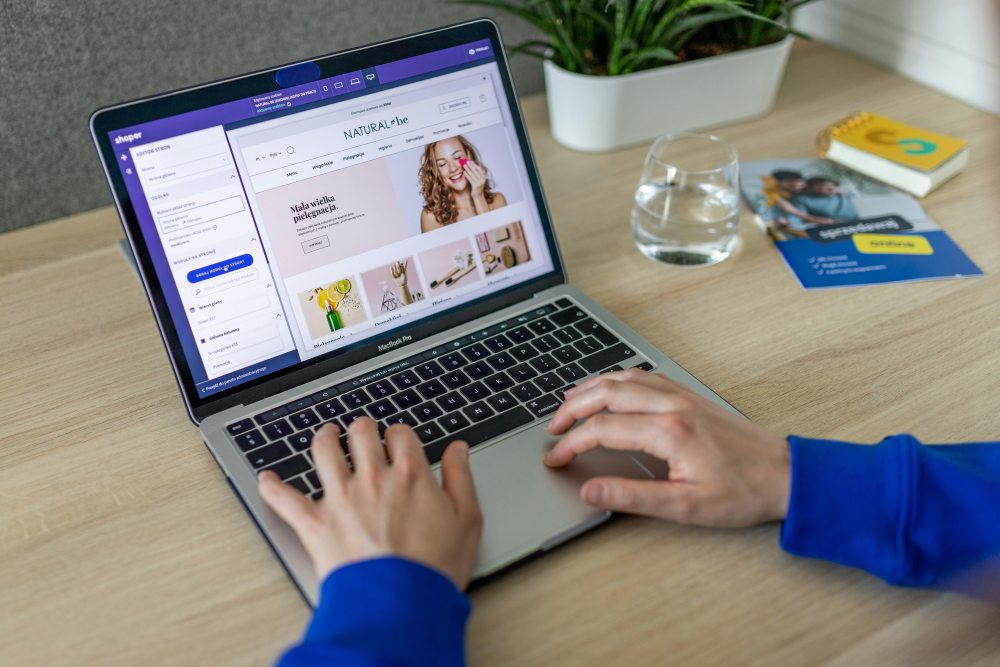
A professional POD store can significantly enhance customer trust and thus boost conversions, so you need to customize your store interface for your brand. Currently, the following two options are popular:
- Shopify: $39 per month, or $29 per month if you pay annually, and only $1 per month for the first three months.
- WordPress: Greater flexibility, and you can use the free e-commerce plugin WooCommerce to manage and sell products.
Shopify is very beginner-friendly; you don't need any coding knowledge to customize a beautiful website. Free themes like Dawn are sufficient for a startup Shopify store. However, for a better customer experience, I still recommend spending $200-$300 on a more feature-rich theme. This is well worth it for entrepreneurs with a generous budget and a strong brand focus.
For shop owners with some coding skills, WordPress offers a high degree of customization, allowing for various features. However, you'll need to purchase your own hosting server. For a startup shop, an entry-level hosting server with 2-4GB of RAM is sufficient, costing approximately $8–$24 per month.
Most print-on-demand services like PeaPrint can be directly integrated with platforms like Shopify and WordPress (woocommerce).
In addition, sometimes you'll need applications and plugins to enhance your store for features such as upselling and cross-selling, product reviews, abandoned cart recovery, email marketing, and SEO. Some of these applications are free, but some premium features can cost between $5 and $30 per month.
Custom shop fees: $100-$300
App and plugin cost: $20/month
4. Marketplace costs
Besides selling on your own website, you can also join Marketplaces , which come with their own traffic. Joining Marketplaces is a great option for beginners who're worried about marketing skills. However, it also has drawbacks: competition is fierce, and profit margins are lower compared to e-commerce platforms like Shopify. Furthermore, you have virtually no control over your brand and customer data.
Joining Marketplaces is free; they don't charge a monthly fee, but they do take a percentage of each transaction as commission. If you want to challenge yourself by starting your print-on-demand (POD) store at zero cost, using these Marketplaces might be the way to go:
Etsy: Starting a POD business on Etsy is the choice for most people, as it boasts massive traffic. It doesn't charge a monthly fee, but you need to pay a $0.20 listing fee each time you publish a new product, and in 2026, a one-time setup fee of $15 was added for new sellers, supposedly to curb spam and AI-generated bot stores.
Redbubble: Suitable for artists with personal style and unique designs. If you understand Redbubble's commission rules, you'll realize that your earnings here are essentially your design royalties. This is because its retail price = Base Price + Artist Margin, and for beginner standard accounts, a 50% platform fee is deducted. That means if you sell a T-shirt with a base price of $20 and set a 20% markup (i.e., $4 profit), after the platform deducts its 50% fee, you only actually receive $2.
TeePublic: This is a much more rigorous but precisely targeted smaller version of Redbubble. They focus on graphic tee tops and accessories. In fact, it was acquired by Redbubble a few years ago, so their underlying logic (account tiering) is converging. The profit margin is also similar to Redbubble's , around 10% - 12%.
Simply put, if you are an artist or designer, joining these marketplaces will offer very limited profit margins, but it's still a decent source of passive income.
Marketplaces fee: Free, but charges a listing fee and commission.
5. Design tool costs
You don't need to be a professional designer to start an on-demand printing shop. With some simple and practical design tools, ordinary people can also produce outstanding designs and visuals. Whether it's custom T-shirts, hoodies, or mugs, unique designs are key to making your products stand out. Therefore, you can invest some money in design tools. The good news is that there are also many free tools available now.
- Canva: A drag-and-drop design tool that offers a vast library of templates, icons, and fonts, even for free accounts, enough to handle simple text design.
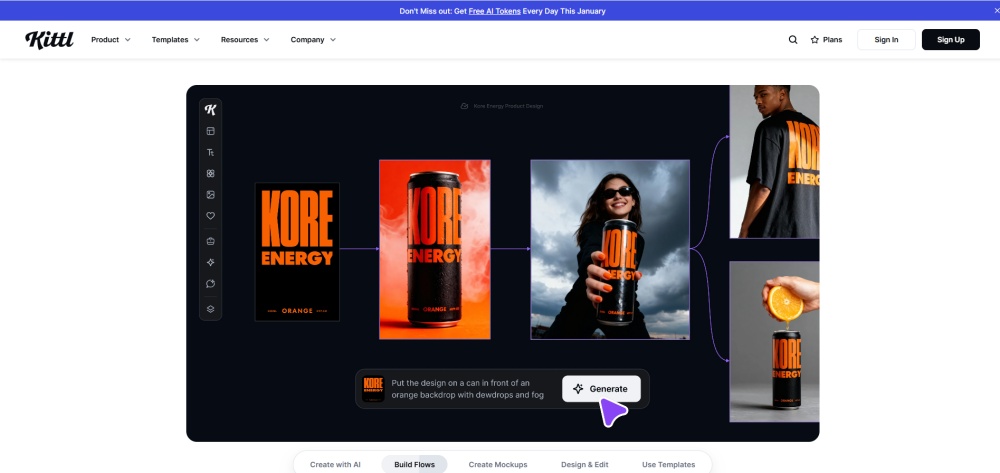
- Kittl: This is currently the most popular POD-specific design platform, with a large number of highly designed T-shirt and poster templates, as well as font effects (such as retro curves and shadows).
- Photopea: A web-based version of Photoshop that can open PSD files, supports advanced layer operations, and is completely free.
If you have the budget, the following paid design tools offer more powerful features:
Canva Pro: $15 per month, or $10 per month if you pay annually. It offers a full library of commercially licensed images and allows you to export high-resolution images with transparent backgrounds at 300 DPI.
Kittl Pro: $15 per month, or $10 per month on an annual basis, full access to all paid templates and fonts, fully commercial license.
Adobe Photoshop: The Photography Plan costs approximately $9.99 - $11.99 per month and includes Photoshop, Lightroom, and 20GB of cloud storage.
Midjourney: Basic Plan, $8-$10/month, quickly generates highly artistic illustrations, paintings, or vintage posters. A single prompt can produce work that would take a human artist several days to complete.
Design tool costs: $0 to $20 per month
6. Sample costs
Before selling your product to your potential customers, you need to order samples to check print quality, fabric feel, color, and shipping speed. This will minimize customer returns and negative reviews. You can also use these samples to take authentic marketing photos, making the product appear more trustworthy.
Most print-on-demand platforms offer sample discounts, and PeaPrint is no exception. We offer a 20% discount on samples every month, with a maximum of 3 items per order.
You can start with one or two designs you like and apply them to popular items like hoodies and T-shirts. We offer a wide variety of styles at affordable prices. Plus, there are sample discounts, so you won't need to spend too much on samples.
Sample fee: $5-30 per product
Advertising and marketing costs
Your goal in opening a store is definitely to make a profit, but if no one notices your store, you won't get any orders. Therefore, investing in advertising and marketing is necessary. If your budget is limited, then invest time in organic marketing. Whether it's paid advertising or a free strategy, the goal is to ensure your store continues to grow and thrive.
Paid advertising is the fastest way to see results, helping you test your designs and quickly reach potential customers. There are many channels for running ads; here are some common ones and their rates.
Facebook ads. They work well for specific market segments, with an average cost per click of approximately $0.34 in the retail industry.
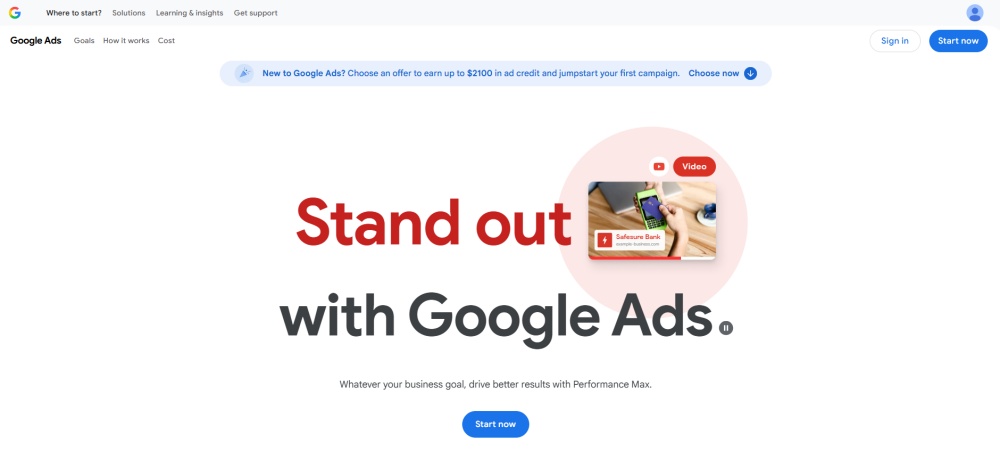
Google Ads. Google Ads typically have a higher average cost-per-click (CPC) because of stronger user intent; a single CPC can reach $3.50.
Instagram ads are more effective for visually appealing and impulse-buying products, with an average cost per click of $0.40-$0.75.
Etsy ads. Starting at $5 per day, with an average cost of about $0.50 per click, they can quickly bring exposure to your product.
TikTok ads. If you have the ability to create high-quality video content, it's perfect for you.
For beginners, it's good to start with a small budget, spending $10 a day to test and validate ideas, focusing on tracking product data rather than just chasing a little bit of traffic.
Besides paid advertising, relying on organic traffic growth is another path. You don't need to spend money on advertising, but you have to invest a lot of time and energy in creating content and materials, and the results may be slower. However, after a certain period of accumulation, the growth can be very considerable.
- Showcase your designs or products with short, engaging videos via TikTok or Instagram Reels.
- Create visual pins on Pinterest that link directly to your store.
- Perform search engine optimization (SEO) to improve product titles, descriptions, and tags, thereby increasing product visibility in search engines.
- Targeted remarketing to your customers via email.
Advertising costs: ranging from $0 to $300 per month , depending on the marketing strategy.
8. Payment processing costs
Payment processing fees are a type of expense that's easily overlooked. When you use PayPal and Stripe to receive payments, you'll need to pay them a small fee for each completed sale. This fee may seem negligible in the early stages of your business, but as your business grows, these fees can accumulate into a significant expense.
Stripe, PayPal , and Shopify Payments charge approximately 2.9% + $0.30 per transaction.
Transaction fees: Approximately 3.2% per transaction.
3 Budget options for launching POD business in 2026
The bootstrapper ($150 - $300)
Main channels: Etsy, Redbubble , and TeePublic .
Cost details:
- Store setup: $15 + $20 (Initial 100 listings).
- Design tools: $1.50 (Canva Pro) or $10 (Midjourney Basic)
- Samples: $50 for 2-3 samples
- Marketing: Focus on organic growth on TikTok, Pinterest, or search engines.
This budget plan is suitable for beginners who want to try printing on demand but don't want to take too much risk; the budget is usually between $150 and $300.
The side hustler ($300 - $800)
Main channels: Shopify or WooCommerce
Cost details:
- Platform fees: $39 (Shopify Basic) + $15 (domain) + $150 (paid theme) .
- Pro Tool Stack: $45 (Midjourney Standard + Kittl Pro).
- Samples & Content: $150 (Multiple products for TikTok/Reels content).
- Marketing: $100 - $300 for Facebook ads or Google ads
If you want to create a brand image that looks authentic and professional, a budget of $300 to $800 is more suitable for you.
The serious entrepreneur ($1,000+)
Main channels: Shopify + Etsy (Multichannel approach)
Platform & Apps: $39 (Shopify Basic) + $35 (etsy setup fee and listing fee for 200 products) + $60 (paid app) + $200 (premium theme).
Pro Tool Stack: $80
Samples & Photoshoot: $300
Marketing: $500+ (Meta ads + google ads + tiktok ads)
This budget plan is suitable for serious entrepreneurs who want to build a long-term e-commerce business and make it their main source of income.
FAQs
Is it possible to start a print-on-demand Business with $0 cost?
Yes, if you're on a tight budget, you can start a POD business on Redbubble or TeePublic with zero upfront costs. You upload your designs and wait to sell. But remember, you don't own the business; the platform owns it. If you want a real asset, you'll eventually need to invest a small budget (at least $150-$300) to open a dedicated store on e-commerce platforms like Etsy or Shopify.
Is Print-on-Demand saturated in 2026?
The "Gold Rush" era where you could upload generic designs and get rich is dead. However, the market itself is projected to grow to over $80 billion by 2033. The competition is high, but 90% of it is "noise" (low-quality AI spam). In 2026, the winners are those who focus on hyper-personalization and premium product quality (like heavyweight hoodies and sustainable materials) rather than volume.
What is the best Channel to start a print-on-demand (POD) store?
It entirely depends on your budget. For beginners, Etsy is the best starting point because it provides built-in traffic, allowing you to validate designs without spending money on ads. For those ready to scale and build a real brand, Shopify is the gold standard because you own the customer data and control your profit margins. The smartest strategy in 2026? Start on Etsy to find your winning products with low risk, then launch a Shopify store to maximize your profits.
Is 2026 your year to start?
Print on demand is currently one of the lowest-risk and most cost-effective ways to start an online business. As we've seen, you can get started for as little as $150 if you're willing to invest significant effort on e-commerce platforms like Etsy or Shopify. Alternatively, you can go all-in and invest over $1000 to build a high-end, scalable brand on Shopify.
With AI tools more powerful than ever, the technological barriers have disappeared. The only question remaining is: which path best suits your budget and vision? Ready to get started? We wish you great success in your business in 2026!