15 Best Zazzle Alternatives for Custom Products in 2026
Looking for the best Zazzle alternatives to sell your custom products? Zazzle is a popular print-on-demand marketplace, but you might prefer a platform with lower product costs, more control over your branding, a wider product catalog, or access to an established marketplace audience.
In this guide, we'll compare 15 websites like Zazzle, covering their features, pros and cons, pricing, and ideal use cases to help you find the right fit.
What Is Zazzle, and How Does It Work?
Zazzle is an online marketplace that allows customers to purchase personalized products and creators to earn money from their original designs. Its catalog includes apparel, home decor, accessories, invitations, stationery, and other customizable items.
Unlike a traditional print-on-demand supplier, Zazzle combines a shopping marketplace with a creator program. You don't need to build an independent website, purchase inventory, or handle order fulfillment to start selling.
How Does Zazzle Work?
Zazzle connects three main groups: creators, manufacturers (known as Makers), and customers. As a creator, you can follow a relatively simple process:
- Create an account: Sign up for free and set up your creator store.
- Upload your designs: Add original artwork, illustrations, photographs, or other eligible content.
- Choose products: Apply your designs to products such as T-shirts, mugs, posters, invitations, and phone cases.
- Set your royalty: Choose how much you want to earn from each sale, within Zazzle's applicable royalty limits.
- Publish and promote: Make your products available on the marketplace and promote them through your own channels.
When a customer places an order, Zazzle handles manufacturing, inventory, shipping, and customer service. You earn a royalty when your designs sell.
Zazzle allows creators to set royalty rates between 5% and 50% for physical products, although its recommended range for most physical products is 5% to 10%. Higher rates can increase the selling price and may affect competitiveness.
You can learn more through Zazzle's Creator Help Center.
Limitations of Zazzle
Zazzle is convenient for designers who want to monetize their creativity without managing the operational side of ecommerce. However, its marketplace-based model may not suit everyone.
- Limited brand control
- Profit margins are relatively low.
- Product selection and customization options are limited.
- The market is limited and the sales channels are not flexible enough.
Zazzle Alternatives at a Glance
| Platform | Business Model | Main Selling Channel | Pricing Model | Best For |
|---|---|---|---|---|
| Printful | POD fulfillment | Your own store | Free + per-order costs | Brand building |
| Printify | POD fulfillment | Your own store | Free + optional subscription | Product variety |
| Gelato | POD fulfillment | Your own store | Free + optional subscription | Global selling |
| PeaPrint | POD fulfillment | Your own store | No monthly fee + per-order costs | Affordable custom products |
| Gooten | POD fulfillment | Your own store | No membership fee + per-order costs | Growing POD businesses |
| Apliiq | Apparel POD | Your own store | Free + optional VIP plan | Clothing brands |
| PrintAura | POD fulfillment | Your own store | Free + paid plans | Apparel sellers |
| Fourthwall | Creator storefront | Your own store | Free + optional Pro plan | Content creators |
| Sellfy | Ecommerce platform | Your own store | Paid subscription | Digital and physical products |
| Society6 | Artist marketplace | Society6 marketplace | Artist earnings model | Artists and home decor |
| Redbubble | POD marketplace | Redbubble marketplace | Tier-based platform fees | Independent artists |
| TeePublic | POD marketplace | TeePublic marketplace | Fixed artist earnings | Graphic designers |
| CafePress | Custom product marketplace | CafePress marketplace and shops | Commission or markup-based earnings | Niche designers |
| VistaPrint | Custom printing | Direct orders | Per-product pricing | Small businesses |
| Custom Ink | Custom printing | Direct orders | Quote-based pricing | Teams and bulk orders |
What Are the Best Zazzle Alternatives for Print-on-Demand?
If you are ready to move beyond the limitations of e-commerce marketplaces and launch a print-on-demand business, the following alternatives to Zazzle offer different approaches to selling products. Each platform is categorized, with details provided on its pricing as well as its key pros and cons.
1. Printful: Best for Building a Professional Ecommerce Brand
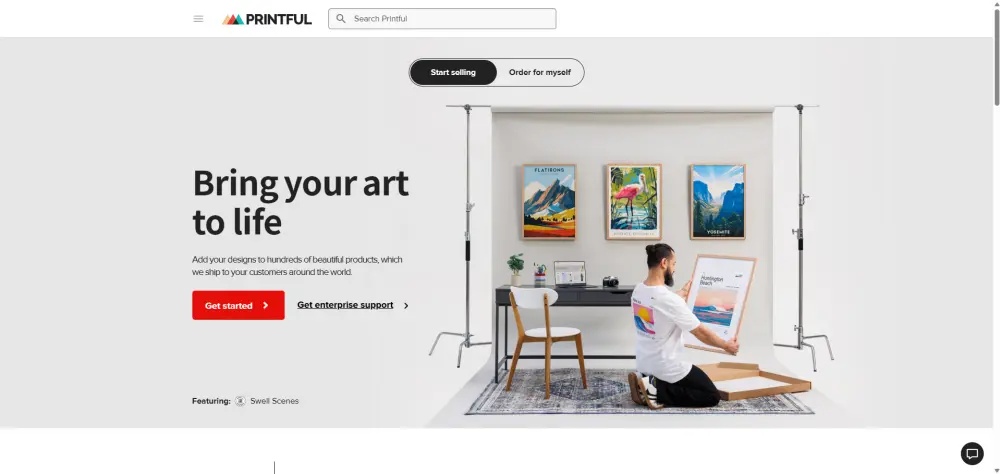
Printful is one of the most established print-on-demand fulfillment platforms. It helps entrepreneurs create and sell custom products through their own ecommerce stores without managing inventory or production. Its catalog covers apparel, accessories, home decor, drinkware, and more. Printful also provides design tools, product mockups, and branding options that help sellers create a more consistent shopping experience.
Pros
- A broad product catalog with hundreds of customizable items.
- In-house production and quality-controlled fulfillment for its orders.
- Integrations with Shopify, Etsy, WooCommerce, and other ecommerce platforms.
- Branding options, including custom packing slips and selected packaging services.
- Built-in design and mockup tools.
Cons
- Product prices can be relatively high compared with some competing POD providers.
- Costs can reduce profit margins when selling in highly competitive niches.
Pricing and fees
Printful offers a free plan with no monthly subscription or setup fees. Its optional Growth plan costs $24.99 per month and provides product discounts of up to 33%, along with additional benefits.
Best for: Sellers who prioritize branding options, managed production, and a professional ecommerce experience over the lowest possible product costs.
2. Printify: Best for Product Variety and Competitive Pricing
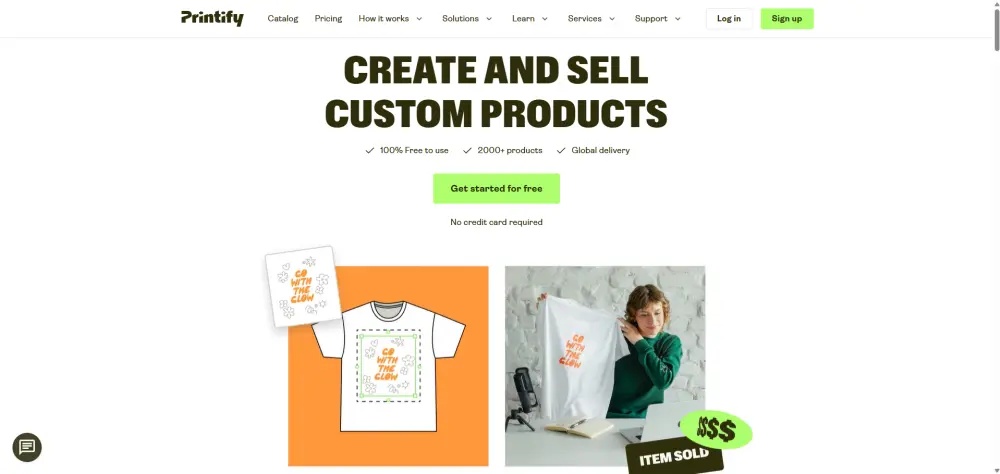
Printify is a POD platform that connects sellers with a network of third-party print providers. Rather than relying on one production facility, it allows merchants to choose suppliers based on product availability, pricing, printing methods, and shipping destinations. This gives sellers more flexibility when building a product catalog or comparing fulfillment costs.
Pros
- A catalog of more than 2,000 products.
- Multiple print providers to choose from.
- Competitive product pricing and optional subscription discounts.
- Integrations with Shopify, Etsy, eBay, and other selling channels.
- Easy-to-use product creation and mockup tools.
Cons
- Product quality and fulfillment experiences can vary between print providers.
- Managing multiple providers can make quality control and customer support more complicated.
Pricing and fees
Printify has a free plan at $0 per month. Its Premium plan starts at $39 per month, or $24.99 per month when billed annually. Premium members receive product discounts of up to 20% on eligible products, with certain new-product discounts reaching up to 33%. Production and shipping costs are charged separately.
Best for: POD sellers who want access to a wide product catalog and flexibility when comparing suppliers and product costs.
3. Gelato: Best for Global Fulfillment
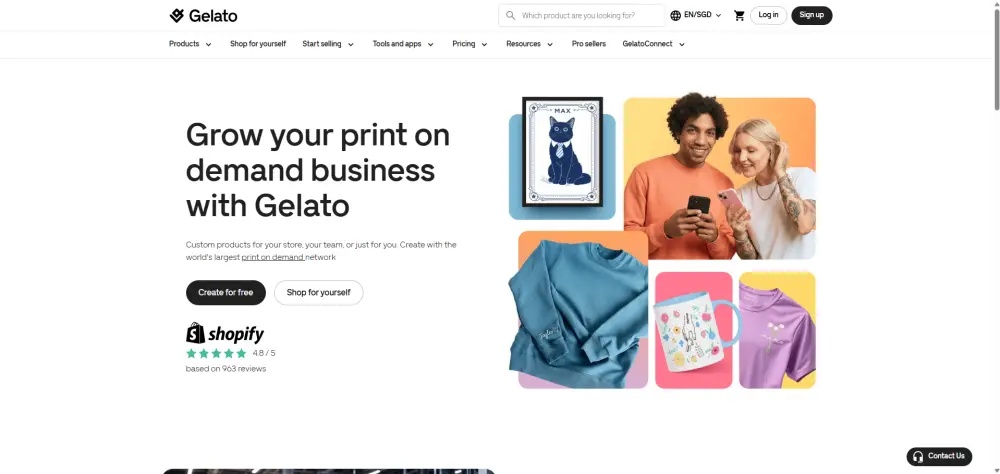
Gelato is a print-on-demand platform built around a global production network. Instead of shipping every order from one central location, Gelato works with local production partners across multiple countries to manufacture products closer to customers.
This model can be useful for ecommerce businesses selling to international markets, particularly those offering wall art, posters, apparel, and other printed products.
Pros
- A global production network spanning more than 30 countries.
- Local fulfillment that can help reduce international shipping distances.
- Integrations with Shopify, Etsy, WooCommerce, Wix, and other platforms.
- A selection of products suitable for home decor, stationery, and apparel.
- Tools for product design and order management.
Cons
- Product availability and manufacturing options vary by region.
- Some specialized product categories may have fewer choices than larger POD marketplaces.
- Local production does not guarantee the same shipping time or cost for every destination.
Pricing and fees
Gelato offers a free plan with basic POD functionality. Its optional Gelato+ subscription costs $29.99 per month or $19.99 per month when billed annually. Paid membership provides additional design tools, product discounts, and other features. Product and shipping costs are charged separately.
Best for: Sellers targeting international customers who want to take advantage of local production and a geographically distributed fulfillment network.
4. PeaPrint: Best for Affordable Custom Products and All-Over Printing
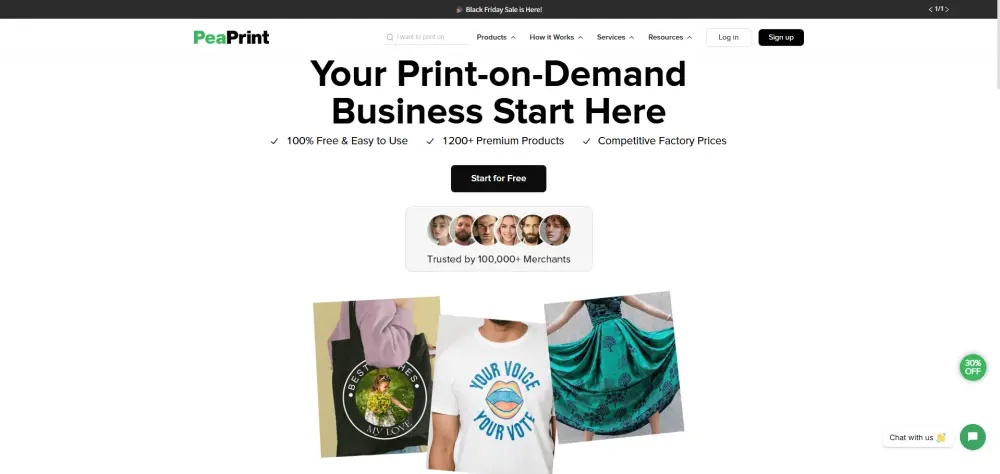
PeaPrint is a print-on-demand and dropshipping platform that focuses on affordable custom products, particularly apparel and all-over print (AOP) clothing.
Its product catalog covers T-shirts, hoodies, dresses, activewear, baby clothing, pet products, bags, home decor, and other customizable merchandise. For sellers who want to experiment with different apparel niches or create distinctive full-print designs, PeaPrint offers a range of products worth exploring.
One of its main advantages is its supply-chain-based pricing model, which helps sellers keep product costs competitive, especially in the AOP apparel category.
Pros
- Competitive product costs, particularly for AOP apparel.
- More than 1,000 customizable products across clothing, home decor, accessories, and other categories.
- No minimum order requirements, making it easier to test new products.
- Integrations with Shopify, Etsy, WooCommerce, and Amazon.
- Automated order processing and fulfillment.
- Design tools that help sellers create and publish custom products.
Cons
- Shipping times vary depending on the product, production location, and destination.
- Some products may require longer cross-border delivery times, so sellers should check shipping estimates before making delivery promises.
- It offers fewer brand customization options than POD providers specializing in private-label apparel.
Pricing and fees
PeaPrint is free to start, with no monthly subscription fee. Sellers pay for product production and shipping when orders are fulfilled. The actual cost depends on the product, customization method, and delivery destination. You can browse its product catalog to compare current product prices.
Best for: Sellers who want to keep product costs competitive, particularly those building apparel-focused stores or exploring AOP clothing and multiple custom product categories.
5. Gooten: Best for Automated Order Fulfillment
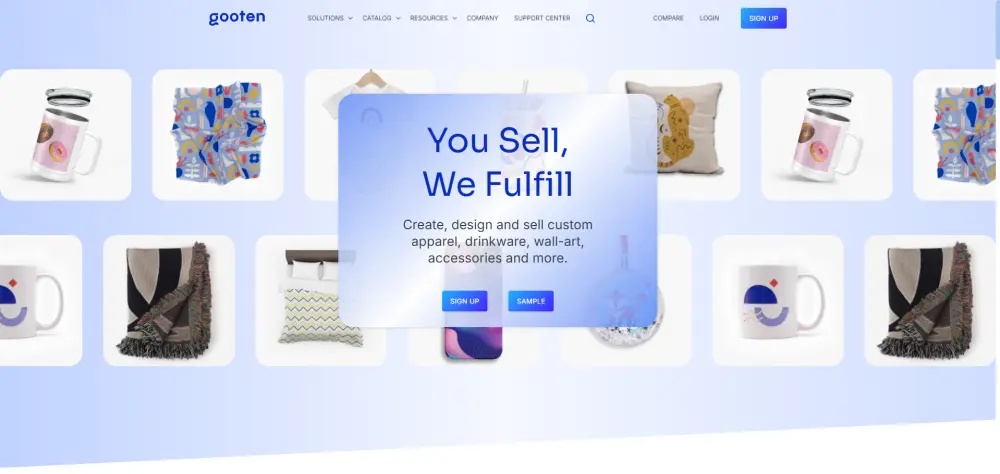
Gooten is a POD fulfillment platform designed to help ecommerce businesses automate production and shipping as their order volume grows.
It offers a range of products across apparel, home decor, accessories, and other categories. Its fulfillment network and integrations make it possible to connect an existing store to its order processing system without having to manage individual production tasks.
Pros
- A catalog covering more than 200 custom products.
- Automated order routing and fulfillment.
- Integrations with Shopify and Etsy, plus API options for custom setups.
- No inventory or upfront product purchasing required.
- Product and shipping costs are displayed for easier pricing calculations.
Cons
- Some sellers may find its product selection less extensive than larger POD marketplaces.
- The platform is more focused on fulfillment than built-in marketing or audience development.
- Shipping costs and delivery estimates vary by product and destination.
Pricing and fees
Gooten does not charge membership or hidden platform fees. You pay for the product, printing, and shipping when an order is processed. You set your own retail prices and keep the margin after covering these costs.
Best for: Ecommerce sellers who want to automate fulfillment and manage growing order volumes without paying a recurring platform membership fee.
6. Apliiq: Best for Private-Label Clothing Brands
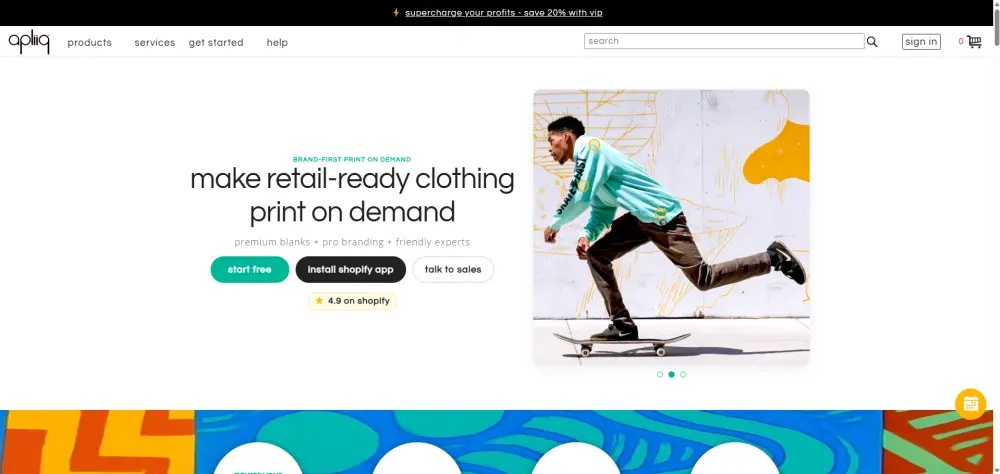
Apliiq takes a more specialized approach to print on demand by focusing primarily on apparel. It is particularly appealing to entrepreneurs who want to create clothing brands rather than simply sell printed merchandise.
The platform offers T-shirts, hoodies, sweatshirts, hats, jackets, and other clothing items. Beyond traditional printing, Apliiq supports embroidery, private labeling, woven labels, patches, and selected branded packaging options.
These features make it possible to create apparel that feels more like a retail clothing line.
Pros
- An apparel-focused catalog with a wide selection of garment styles.
- Private-label options, including custom neck labels.
- Embroidery, patches, and additional garment customization.
- No minimum order requirements for eligible products.
- Integrations with Shopify, Etsy, and WooCommerce.
Cons
- Less suitable for sellers who want a broad catalog of unrelated product categories.
- Private labeling and additional customization increase product costs.
- Its product pricing may be less competitive for sellers focused mainly on low-cost basic apparel.
Pricing and fees
Apliiq is free to install, and sellers pay for fulfilled orders. Its optional VIP membership costs $39.99 per month when billed monthly and provides a 20% discount on eligible products and services. Actual product costs depend on garment selection and customization.
Best for: Entrepreneurs building apparel brands, especially those interested in streetwear, custom clothing details, embroidery, and private-label products.
7. PrintAura: Best for Apparel-Focused POD Fulfillment
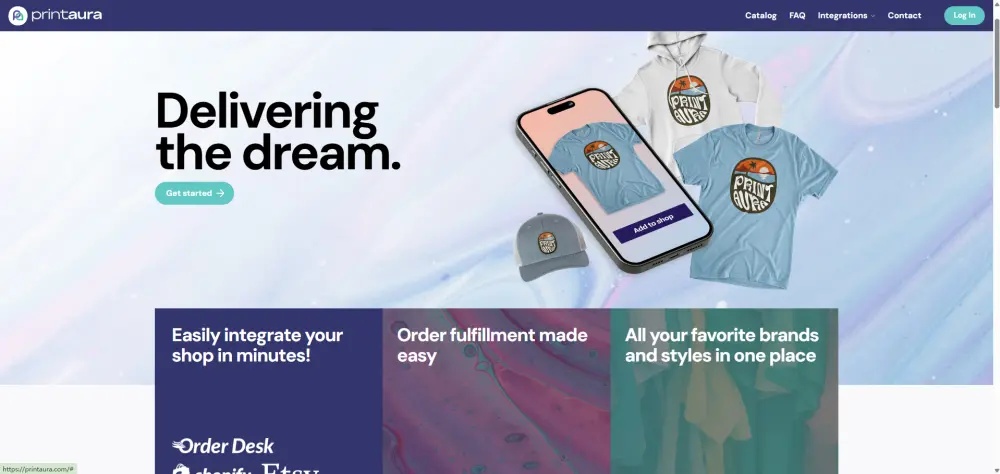
PrintAura is another print-on-demand fulfillment provider with a strong focus on custom apparel. It allows sellers to create products, connect their online stores, and outsource printing and fulfillment.
Its catalog includes hundreds of garment options, along with products such as bags, mugs, phone cases, and hats. PrintAura also offers direct-to-garment printing and additional printing options for compatible products.
Pros
- A wide selection of apparel styles, brands, and sizes.
- No minimum order requirements.
- Shopify and Etsy integrations.
- Branding services and selected white-label options.
- Multiple membership tiers with discounts for growing sellers.
Cons
- The catalog is more apparel-focused than some all-category POD platforms.
- Paid plans may be less attractive for sellers with low order volumes.
- Sellers should compare product and shipping costs before committing to a provider.
Pricing and fees
PrintAura offers a free Basic plan. Its Plus plan costs $25 per month and includes a 10% product discount, while the Pro plan costs $50 per month and offers a 20% product discount plus additional benefits. Product and fulfillment charges are separate.
Best for: Apparel sellers who want a specialized fulfillment partner with store integrations and optional branding services.
8. Fourthwall: Best for Creators and Influencers
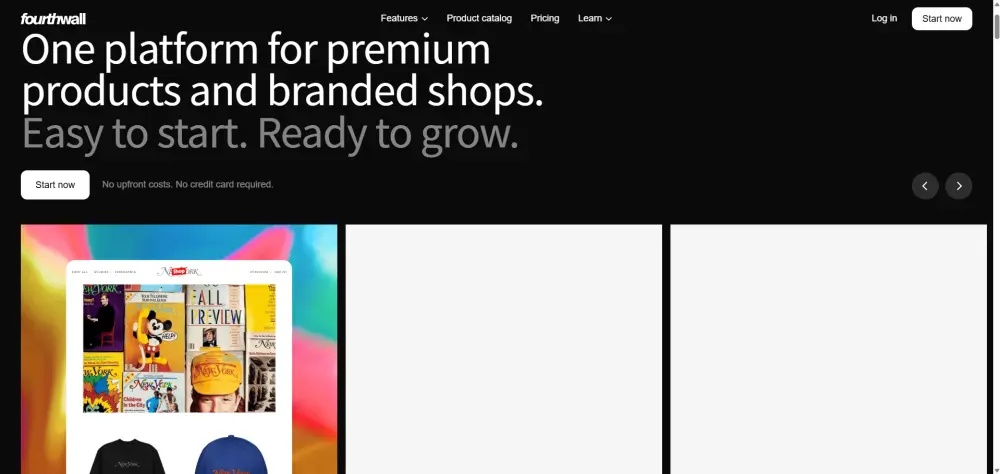
Fourthwall is an ecommerce platform designed primarily for creators, influencers, and online communities. It allows users to build branded storefronts and sell physical merchandise, digital products, and memberships.
Rather than focusing solely on POD fulfillment, Fourthwall combines store-building tools with product manufacturing and creator-focused integrations.
Pros
- A customizable storefront with support for custom domains.
- A built-in product catalog covering apparel, drinkware, accessories, and home goods.
- Integrations with YouTube, TikTok, Instagram, and other creator platforms.
- Order fulfillment and customer support for products from its catalog.
- Support for memberships, digital products, and promotional campaigns.
Cons
- Best suited to creators who already have an audience or community.
- Sellers need to drive their own traffic rather than rely on an established product marketplace.
- Product pricing and profit margins depend on the items selected and the retail prices set.
Pricing and fees
Fourthwall offers a free plan with no monthly subscription. Its optional Pro plan costs $15 per month and includes additional benefits, such as annual shop credit and no platform fee on digital products. On the free plan, digital products carry a 5% platform fee. Product catalog items have their own base costs, and payment processing fees may also apply.
Best for: YouTubers, streamers, influencers, and content creators who want to monetize their audiences through branded merchandise and digital products.
9. Sellfy: Best for Selling Digital Products and Merchandise
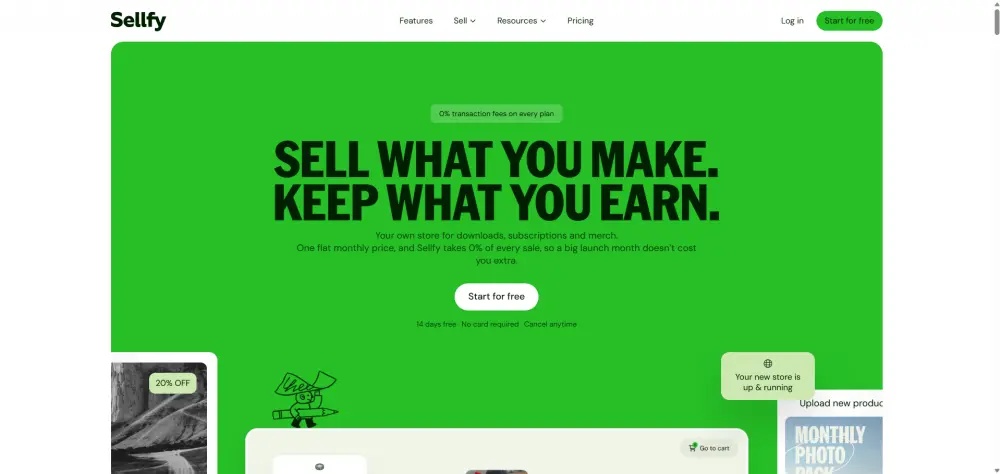
Sellfy is an ecommerce platform that helps creators and small businesses build online stores without needing extensive technical knowledge.
Unlike traditional POD marketplaces, Sellfy does not provide an established shopping audience. Instead, it gives sellers the tools to create their own storefronts and sell digital downloads, subscriptions, physical products, and print-on-demand merchandise.
Pros
- An easy-to-use store builder.
- Support for digital products, subscriptions, and physical merchandise.
- Print-on-demand product options.
- Built-in email marketing and promotional tools.
- Features such as upselling and abandoned cart recovery on eligible plans.
Cons
- No built-in marketplace traffic, so sellers must handle their own marketing.
- Monthly subscription costs can add up, even when sales are slow.
- Additional payment processing fees apply.
Pricing and fees
Sellfy offers three main plans:
- Starter: $29 per month.
- Business: $79 per month.
- Premium: $159 per month.
Annual billing offers discounted pricing. Sellfy does not charge additional transaction fees, but PayPal and Stripe charge their own payment processing fees.
Best for: Creators and small businesses that want to sell digital downloads alongside physical products or merchandise through an independent online store.
10. Society6: Best for Artists Selling Wall Art and Home Decor
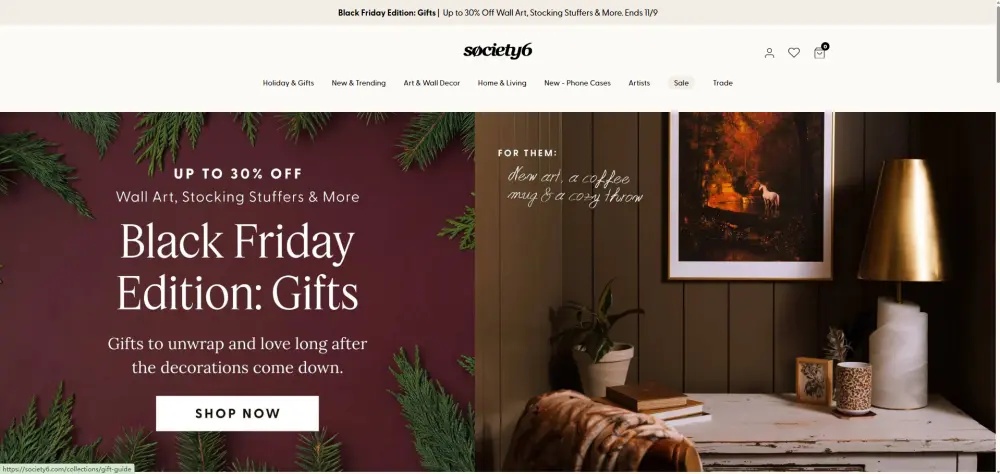
Society6 is an artist-focused marketplace that specializes in turning original artwork into home decor, wall art, and lifestyle products.
Its product selection includes art prints, framed prints, posters, pillows, tapestries, and other decorative items. This makes it particularly appealing to illustrators, photographers, and independent artists whose work fits home styling and interior design trends.
Pros
- A curated marketplace for independent artists.
- Strong focus on wall art and home decor.
- Production, shipping, and customer service are handled by the platform.
- Access to shoppers looking for original artwork and decorative products.
- No need to build or manage an independent ecommerce store.
Cons
- The application process is selective, and not every artist is accepted.
- Product categories and sales opportunities are more focused than those on general POD platforms.
- Artists have limited control over pricing and customer relationships.
- Earnings percentages are relatively modest.
Pricing and fees
Society6 does not charge a traditional monthly subscription for artists. Its current earnings model uses standardized markups rather than allowing artists to freely set their own markup percentages. The markup is generally 10% for selected products, including pillows and wall art, and 5% for other products. Artist earnings are calculated based on the product's base price after discounts, multiplied by the applicable markup.
Best for: Illustrators, photographers, and artists who specialize in wall art, home decor, and lifestyle designs.
11. Redbubble: Best for Artists Looking for Marketplace Traffic
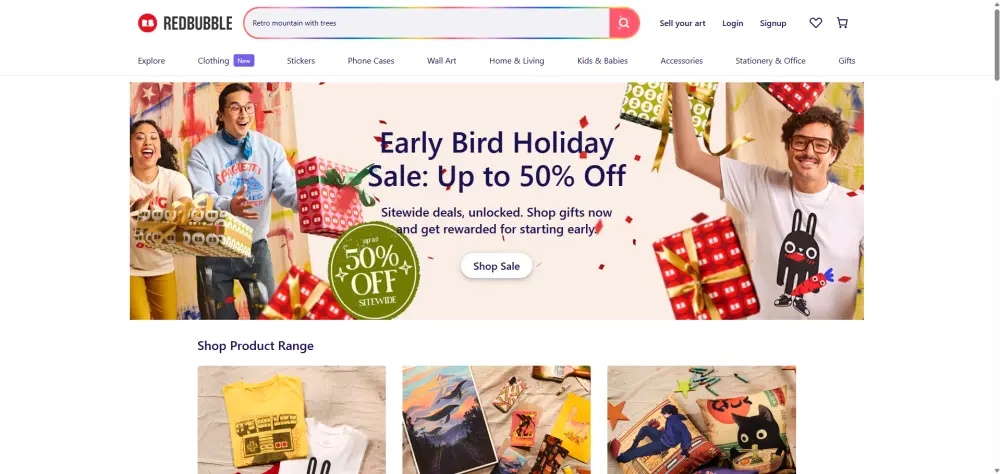
Redbubble is one of the most recognizable POD marketplaces for independent artists. It allows creators to upload designs and sell them on products such as T-shirts, stickers, mugs, phone cases, posters, and tote bags.
Redbubble takes care of production and shipping, while artists focus on uploading designs and attracting customers.
Pros
- An established marketplace with an international customer base.
- A wide range of products for different design styles.
- Simple product uploading and store setup.
- No need to manage inventory or fulfillment.
- Artists can control their product markups within the platform's rules.
Cons
- Account tiers affect how much artists earn.
- Platform fees can significantly reduce income for some sellers.
- Limited control over branding and customer information.
- Competition can make it difficult for new designs to stand out.
Pricing and fees
Opening a Redbubble account is free, but its account-tier system affects artist earnings. Standard artists pay a 50% platform fee on monthly earnings, while Premium artists pay 20%. Pro artists pay no platform fee. Standard and Premium fees are capped at $150 per payment period, and eligible additional markup fees may apply when markups exceed 20%.
These fees are deducted from earnings rather than charged upfront.
Best for: Independent artists who want to reach an existing marketplace audience without building or promoting a standalone online store.
12. TeePublic: Best for Graphic T-Shirt Designers
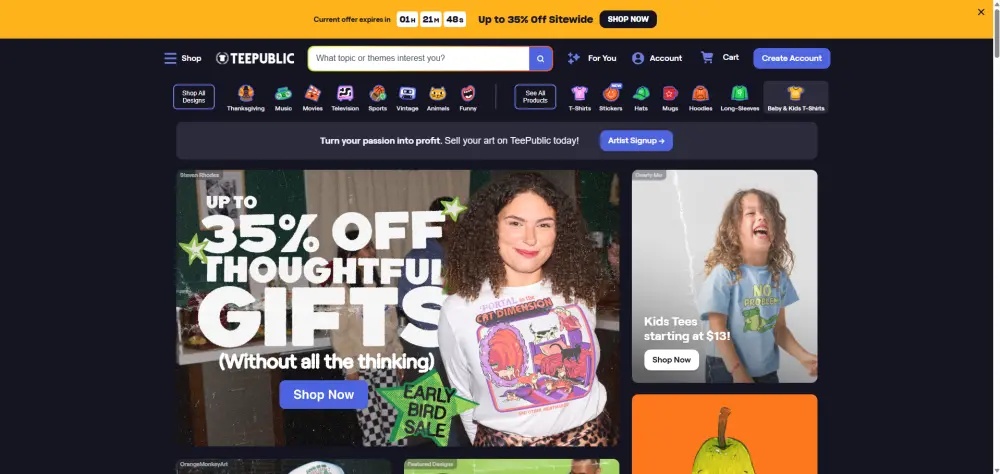
TeePublic is a POD marketplace that focuses on graphic designs, illustrations, and creative merchandise. Its catalog includes T-shirts, hoodies, stickers, phone cases, and other products that appeal to customers looking for distinctive artwork.
It is particularly suitable for designers who create humorous graphics, pop-culture-inspired artwork, and niche illustrations.
Pros
- An established marketplace for independent designers.
- Easy design uploads and product creation.
- A strong focus on graphic T-shirts and related merchandise.
- No need to handle manufacturing, inventory, or delivery.
- A relatively straightforward way to test designs with marketplace shoppers.
Cons
- Artist earnings depend on account category and product type.
- Sellers have limited control over the overall shopping experience.
- Marketplace competition can be high.
- There is no independent customer database or storefront infrastructure comparable to a full ecommerce platform.
Pricing and fees
TeePublic does not require a traditional monthly subscription for artists. Instead, it charges a service fee on each sale, with earnings varying by account category and product type. Artisan accounts receive higher earnings than Apprentice accounts on most products. Account classification also affects visibility in TeePublic's on-site search.
Best for: Graphic designers and illustrators who want to monetize original artwork through T-shirts, stickers, and other creative merchandise.
13. CafePress: Best for Niche Designs and Personalized Gifts
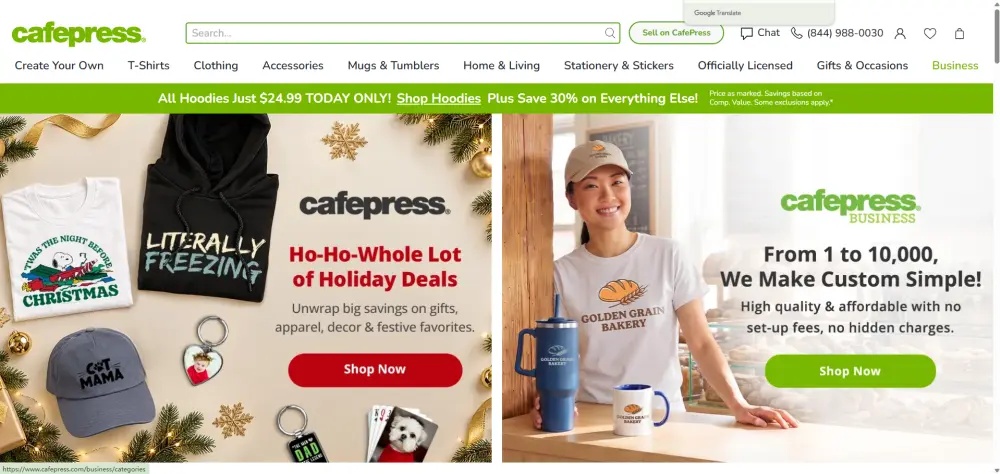
CafePress is a custom merchandise website where customers can find products featuring artwork, slogans, and personalized designs.
Its product categories include apparel, mugs, accessories, home decor, and gifts. The platform has historically offered creator shops and marketplace-based selling opportunities, making it a familiar name among websites similar to Zazzle.
CafePress is particularly relevant for designs targeting specific interests, hobbies, communities, and gift-giving occasions.
Pros
- A product range covering clothing, drinkware, accessories, and gifts.
- A familiar custom merchandise shopping experience.
- Suitable for niche themes and personalized product ideas.
- No need to manage physical production for eligible marketplace purchases.
Cons
- Less flexibility than an independent ecommerce store.
- Limited control over customer relationships and brand development.
- Its current creator onboarding and seller terms should be checked carefully before investing time in building a store.
Pricing and fees
CafePress does not currently provide a sufficiently clear, up-to-date public creator price card for confirming a standard commission rate across all seller arrangements. Any prospective Shopkeeper should verify current account eligibility, commission rules, and payout terms directly with CafePress rather than relying on older third-party pricing guides.
Best for: Creators exploring niche custom merchandise and gift products, provided the current seller program and terms are suitable for their business.
14. VistaPrint: Best for Business Promotional Products
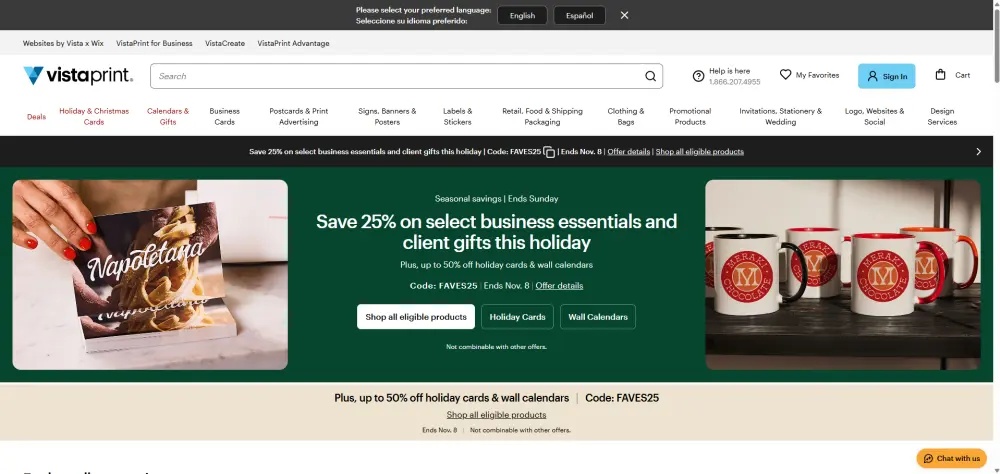
VistaPrint is a well-known custom printing service designed primarily for small businesses, entrepreneurs, and organizations.
Its product catalog includes business cards, marketing materials, signage, promotional merchandise, apparel, and personalized gifts. Compared with Zazzle, VistaPrint puts more emphasis on business printing and promotional products than on an artist-driven marketplace.
Pros
- A broad selection of business printing and promotional products.
- Customization options for logos, text, and business branding.
- Useful tools for creating coordinated marketing materials.
- Selected products available with no minimum order quantity.
- Suitable for business events, promotional campaigns, and branded merchandise.
Cons
- Not designed as a traditional POD fulfillment partner for independent ecommerce stores.
- Less suitable for artists who want to build a marketplace-based design business.
- Product selection, pricing, and printing options vary across categories.
Pricing and fees
VistaPrint uses product-based pricing. Costs depend on the item, customization options, quantity, and shipping method. Some promotional products are available without minimum order quantities, while bulk orders may offer lower per-unit pricing.
Best for: Small businesses, entrepreneurs, and organizations that need customized promotional materials, branded merchandise, or business printing products.
15. Custom Ink: Best for Custom Team Apparel and Bulk Orders
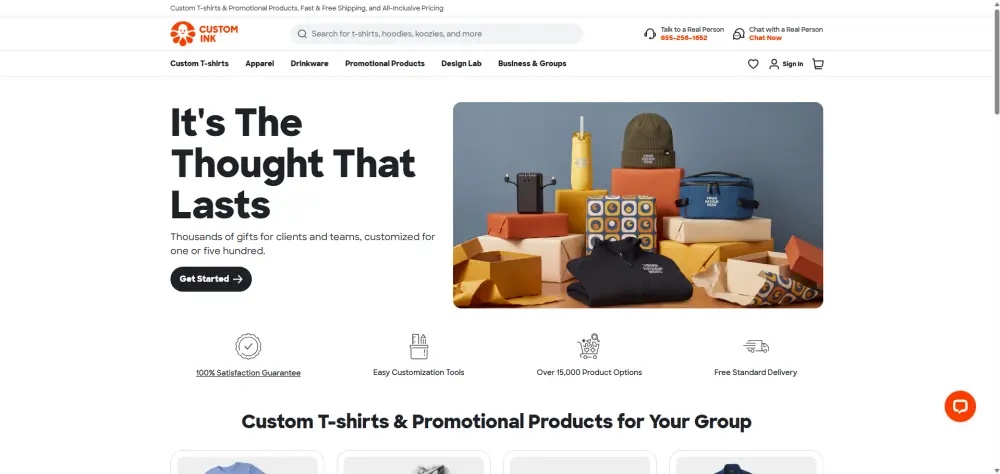
Custom Ink specializes in customized apparel and promotional merchandise for groups, teams, schools, companies, and events.
Its product catalog includes T-shirts, hoodies, hats, sportswear, bags, and other customizable items. The platform also provides design assistance, making it convenient for customers who need coordinated products but don't have professional design experience.
Pros
- A strong selection of custom apparel and group merchandise.
- Online design tools and assistance from design specialists.
- No minimum quantity for selected products.
- Support for different printing and customization methods.
- Convenient for team orders, events, and company merchandise.
Cons
- More focused on individual projects and group orders than continuous POD ecommerce fulfillment.
- Pricing depends heavily on the product, printing method, and order quantity.
- Some printing methods, including screen printing and embroidery, have minimum order requirements.
Pricing and fees
Custom Ink uses a quote-based pricing model. The final cost depends mainly on the product, the number of ink colors, and the order quantity. Selected products can be ordered individually, while other decoration methods require minimum quantities. Standard domestic shipping and setup fees are included in eligible quotes.
Best for: Schools, sports teams, businesses, event organizers, and other groups that need customized clothing or promotional products.
Sell Custom Products with PeaPrint
Finding the right POD supplier is an important step toward building a successful custom product business. If you want to sell through your own ecommerce store while keeping product costs manageable, PeaPrint is worth considering.
PeaPrint connects independent sellers with a wide selection of customizable products, including apparel, home decor, pet supplies, bags, and accessories. Its supply-chain-based pricing is particularly useful for sellers looking to explore affordable custom apparel and all-over print products.
Getting started is straightforward:
- Sign Up for Free: Create your PeaPrint account without a monthly platform subscription.
- Choose and Design Products: Browse the catalog, select products that fit your niche, and upload your artwork using the design tools.
- Connect Your Store: Integrate your Shopify, Etsy, WooCommerce, or Amazon store and publish your products.
- Start Selling: Focus on marketing and growing your business while PeaPrint handles the production and fulfillment of incoming orders.
FAQs
What Is the Best Alternative to Zazzle?
The best Zazzle alternative depends on your business model. Printful and Printify are strong choices for independent ecommerce sellers, while Redbubble and Society6 are suitable for artists who want to sell through established marketplaces. PeaPrint is worth considering for sellers looking for competitive product costs and a broad range of AOP and custom apparel products.
What Website Is Most Similar to Zazzle?
Redbubble, CafePress, and Society6 are among the websites with business models most similar to Zazzle. They focus on customizable merchandise and designs created by independent artists, although their product categories, creator programs, and earnings structures differ.
Are There Any Free Alternatives to Zazzle?
Yes. Printful, Printify, Gelato, PeaPrint, and Gooten offer free entry options. You can also start selling designs on marketplaces such as Redbubble and TeePublic without paying a traditional monthly subscription. However, product fulfillment costs, shipping, platform fees, or sales commissions may still apply.