How to Monitor Etsy POD Competitors Without Copying a Single Design
If you're selling print on demand on Etsy, you've probably done this at least once: found a shop that's killing it, stared at their listings, and wondered "how do they do it?"
That instinct is right. The execution? Often wrong.
Most sellers make one of two mistakes. Either they ignore competitors entirely and operate in a vacuum, or they copy designs directly and risk getting their shop shut down.
There's a better way. This guide shows you exactly how to monitor Etsy POD competitors strategically — learning their market timing, product architecture, and pricing patterns — without copying a single design.
Why You Should Monitor Competitors (and Why It's Not Copying)
Let's get one thing straight from the start: monitoring is not copying. Think of it like studying a successful restaurant's menu layout, not stealing their recipes.
What You're Actually Learning
When you monitor the right competitors, you're not looking for designs to rip off. You're looking for patterns:
- Market timing — When do they launch new products? How far ahead of seasons do they list?
- Product architecture — How do they structure their product lines? Do they bundle? Do they offer variations?
- Pricing strategy — Where do they position themselves? Are they premium or volume-driven?
- Promotional rhythm — How often do they run sales? What gets discounted and when?
- Customer engagement — What are buyers saying in reviews? What do they love? What do they complain about?
The Real Goal: Find Your Differentiation Point
The best competitors aren't the ones you copy. They're the ones you outmaneuver.
By understanding what everyone else is doing, you can spot the gaps. Maybe everyone is selling black gothic floral hoodies, but nobody's offering them in burgundy. Maybe every shop in your niche uses the same mockup style, and you can stand out with a different aesthetic.
That's the point of competitor research: find the white space, then fill it.
Which Shops You Should Actually Monitor
This is where most sellers go wrong. They track the biggest POD shops on Etsy — the ones with tens of thousands of sales. That's a mistake.
The Wrong Target: Top-Selling POD Giants
Shops with massive sales volumes are noise, not signal. Their data is polluted by years of accumulated momentum, brand recognition, and email lists you don't have. Watching them tells you nothing about what's currently working for a shop your size.
Skip them. You're not competing with them anyway.
The Right Target: Trend Leaders, Not Volume Leaders
The shops you want to watch are emerging trend leaders — smaller shops that are moving fast, testing new ideas, and gaining traction in specific niches.
These shops are valuable because:
- They're agile — they test, fail, and iterate quickly
- They're focused — they usually dominate one aesthetic or category
- They're winning on product and timing — not just brand momentum
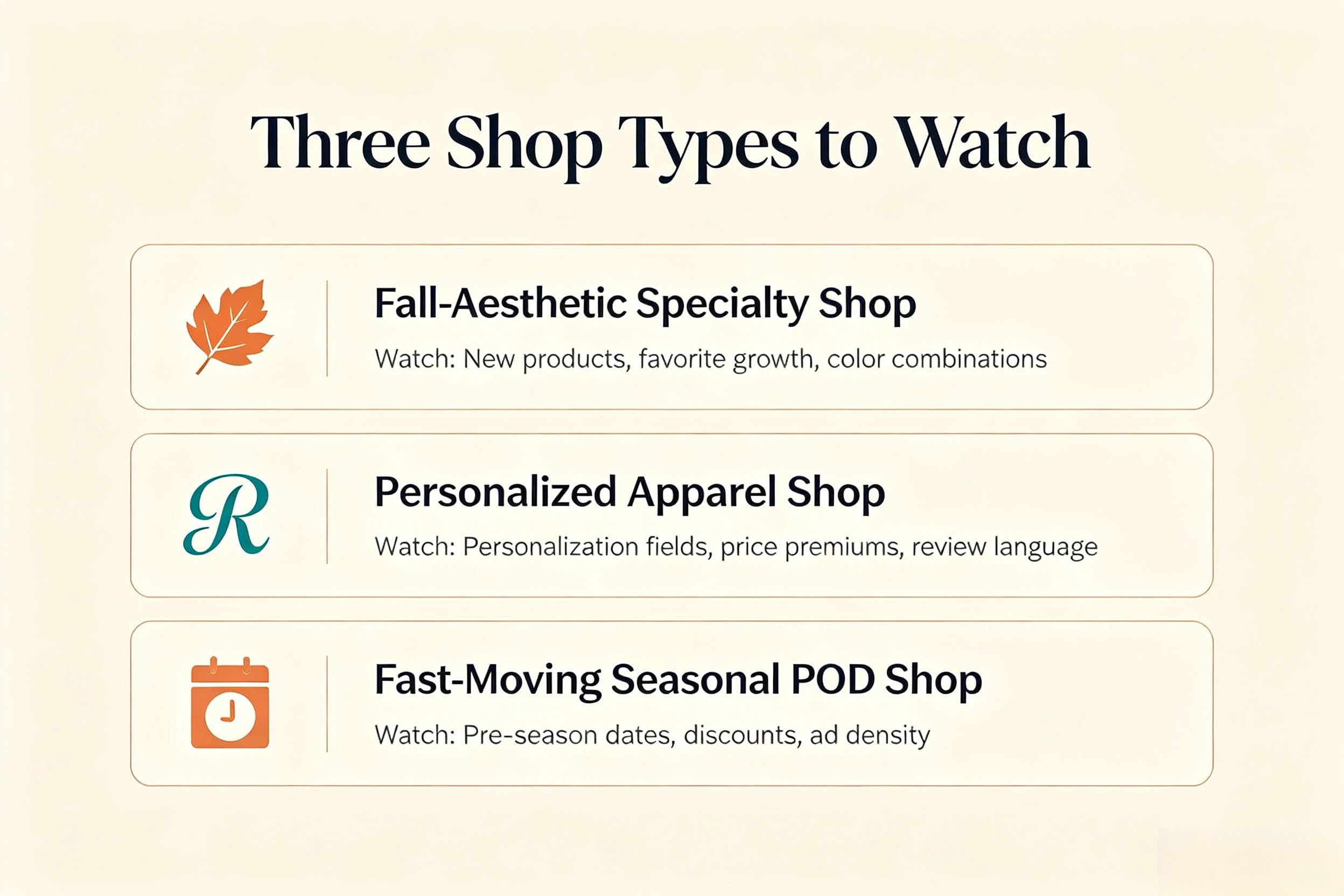
Three Shop Types to Watch
| Shop Type | What to Watch | What to Learn |
| Fall-Aesthetic Specialty Shop | New products in the last 30 days, favorite growth, color combinations | Launch cadence, collection structure, lifestyle mockup quality |
| Personalized Apparel Shop | Personalization fields, price premiums, lead times, review language | Customization workflow, SKU structure, how they handle variations |
| Fast-Moving Seasonal POD Shop | Pre-season listing dates, discounts, ad density | Lead time, test size, elimination speed |
What to Track and How to Track It
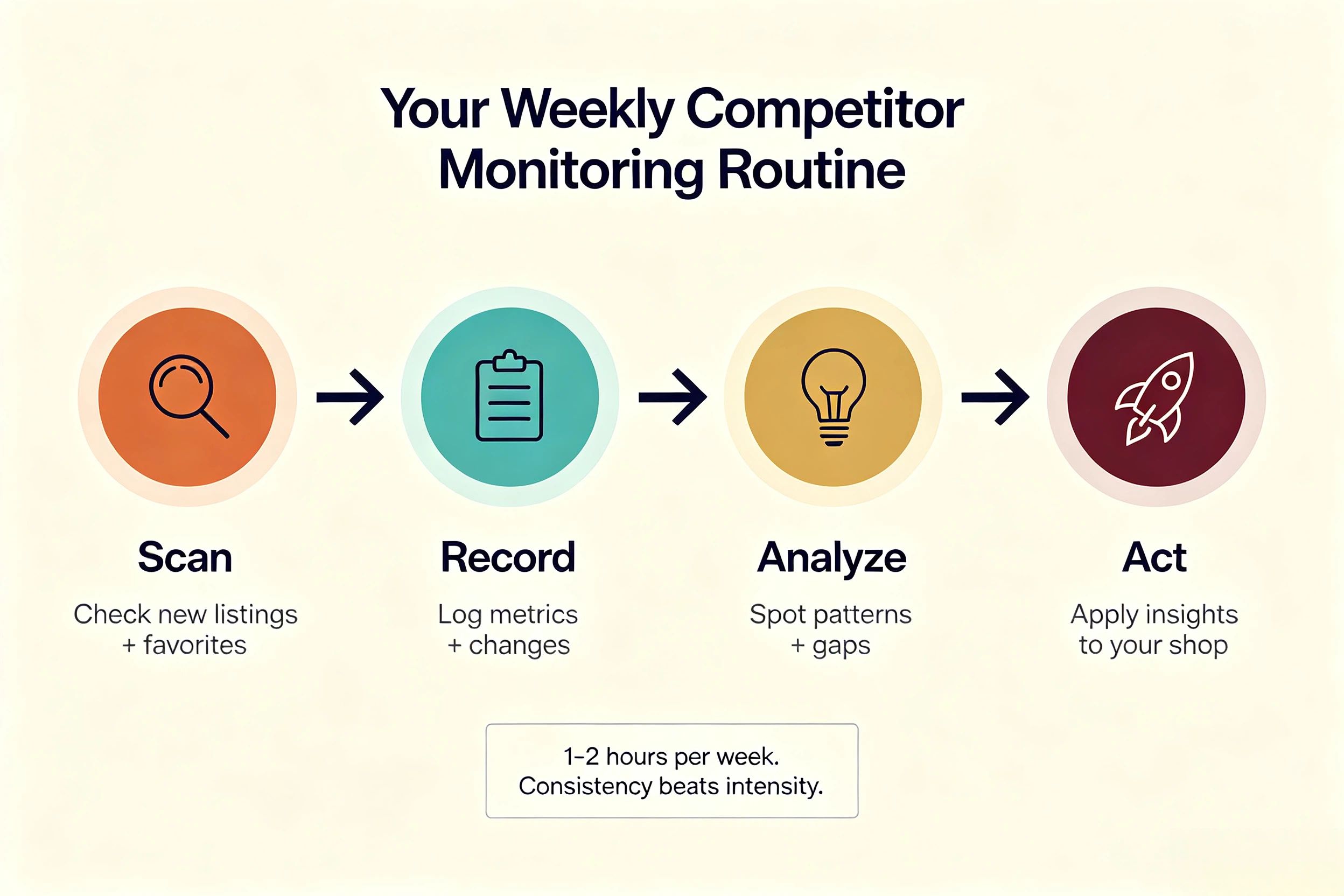
The Weekly Monitoring Routine
Set aside 1 to 2 hours per week for competitor research. Consistency matters more than volume — a weekly 60-minute session beats a monthly 4-hour deep dive.
What to record each week:
| Metric | Why It Matters |
| New SKUs in the last 30 days | Shows what they're testing and where they see opportunity |
| Core price bands | Reveals their positioning and margin assumptions |
| Bestseller age | Tells you if they're riding a trend or building evergreen products |
| Review growth rate | The best indicator of actual sales velocity |
| Promotion frequency | Shows how aggressively they're driving traffic |
Tools for the Job
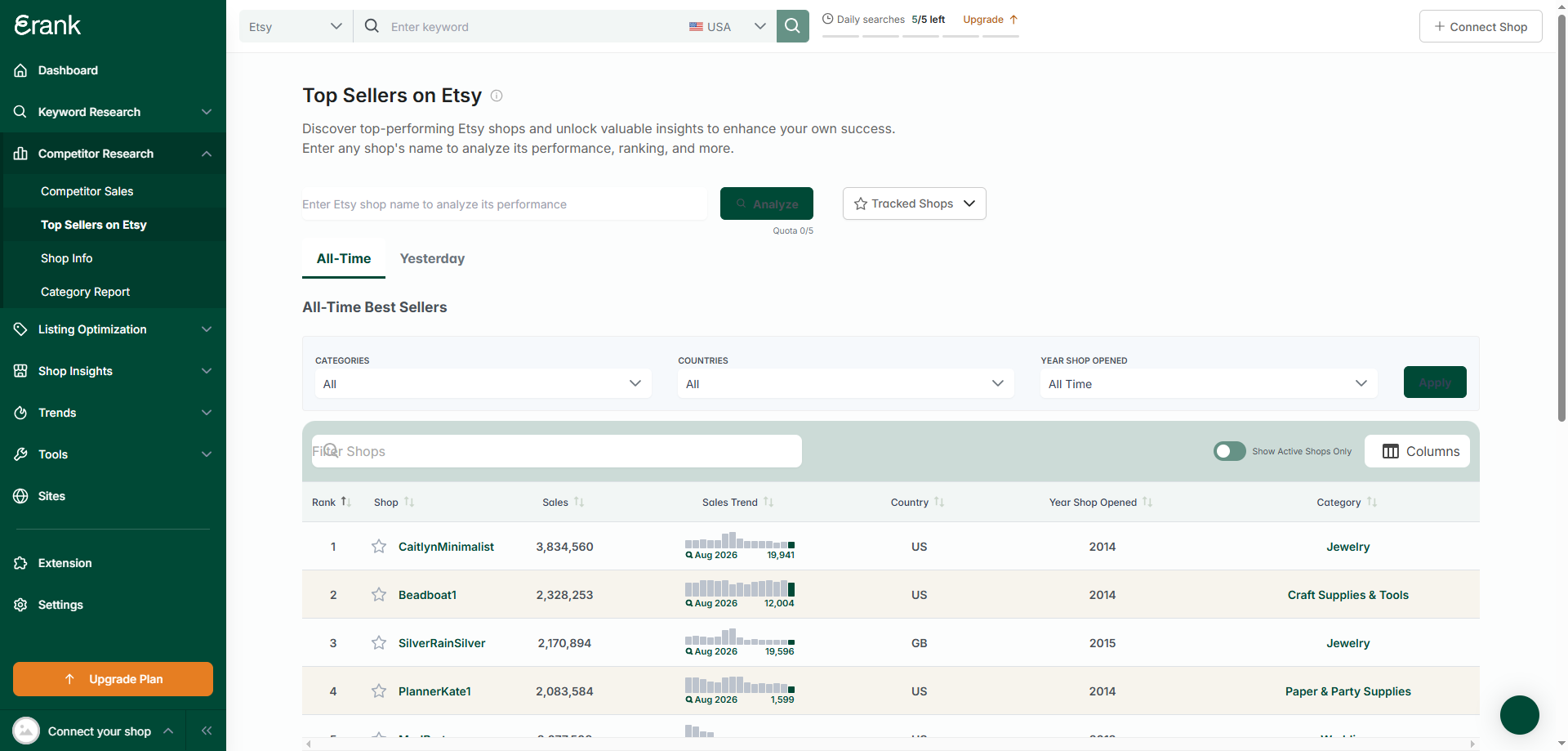
eRank Competitor Research is the go-to tool for Etsy competitor analysis. Here's how to use it:
- In eRank's main menu, select "Competitor Research" and then "Top Sellers on Etsy"
- Type each shop name into the search field and click "Analyze" to access Shop Info
- Use Competitor Sales to track estimated daily, weekly, and monthly sales
- Manage your tracked shops in the "Tracked Shops" section
Other useful tools:
- eRank Extension — Unlocks hidden stats about Etsy listings, shopper behavior, and competitors as you browse
- Apify Etsy Shop & Seller Scraper — Pulls every shop in a POD niche for bulk research
- Etsy Shop Sales & Listing Competitor Monitor — Tracks listing launches, price moves, and shop growth signals
How Many Shops to Track
3 to 5 shops per product line, and no more than 15 total. Any more than that and you'll drown in data without actionable insights.
The goal isn't to know everything about every shop. It's to know the right things about the right shops.
What You Can Learn vs. What You Cannot Copy
This is the boundary line. Cross it, and you go from "smart competitor research" to "copyright infringement waiting to happen."
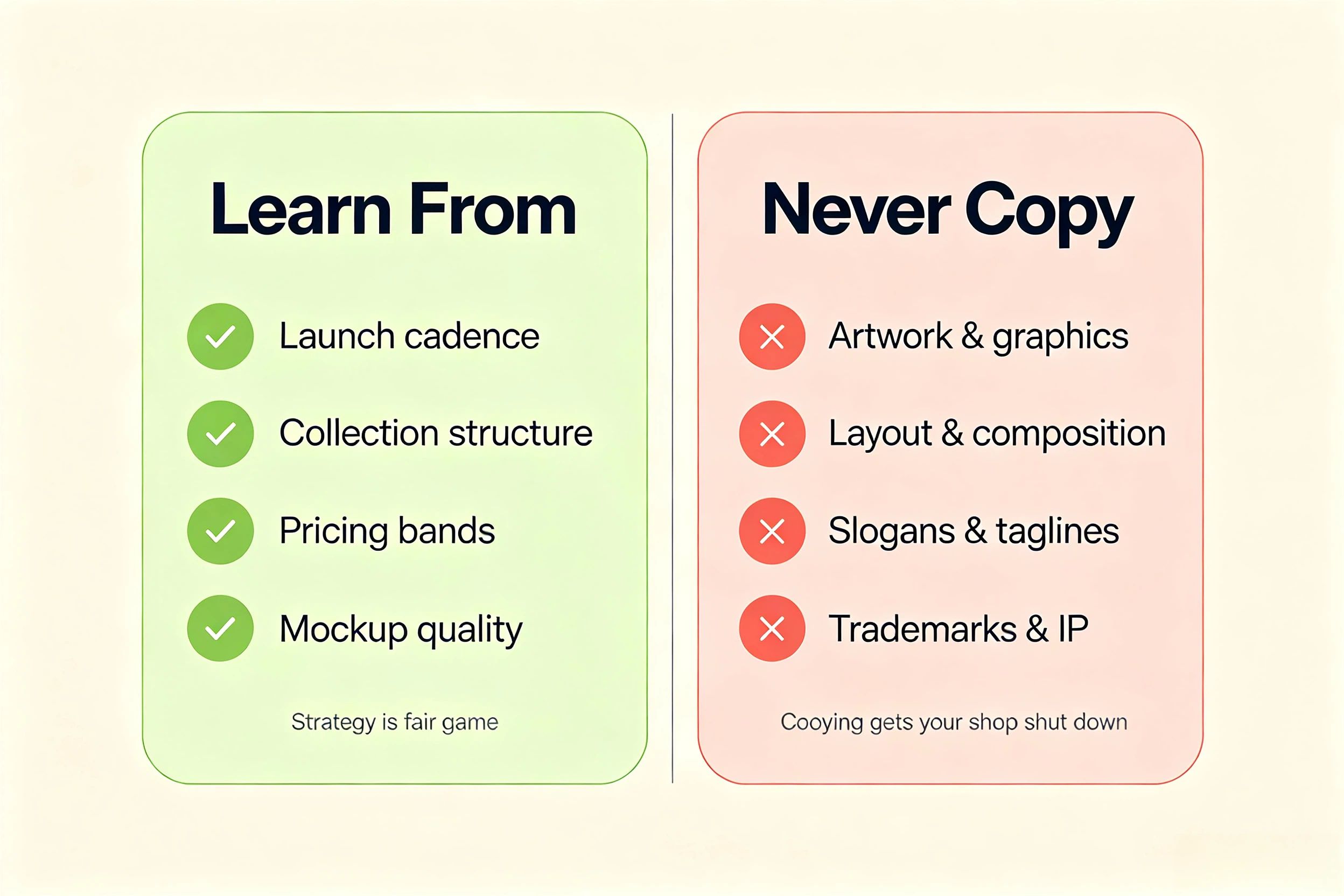
✅ Fair Game to Learn From
| What to Learn | Why It's Safe |
| Launch cadence | Timing isn't protectable — when they list tells you market rhythm |
| Collection structure | How they group products is strategy, not IP |
| Mockup style and quality | The level of professionalism is learnable; the specific images aren't |
| Customization workflow | How they handle personalization is operational, not creative |
| Pricing bands | Price points are market signals, not proprietary |
| Tag and keyword patterns | SEO strategy is observable and shareable |
❌ Off-Limits (Do Not Copy)
| What Not to Copy | Why It's a Problem |
| Original artwork and graphics | Direct copyright infringement — Etsy will takedown your listing |
| Layout and composition | Even if you change colors, copying layout is still a violation |
| Slogans and taglines | These can be trademarked |
| Name-layout designs | How they position names on personalized products is their signature |
| Trademarks and logos | Obvious, but worth stating — don't use anyone else's brand assets |
| Popular IP characters | Movies, games, anime, sports leagues, celebrities — all off-limits |
The Golden Rule
Learn the pattern. Apply it to your own creative work.
If a competitor launches a new collection every Tuesday, learn from that rhythm. Then launch your own collections on a schedule that works for you. If they use lifestyle mockups with warm lighting, learn that style works. Then shoot your own mockups with your own products.
Never open Photoshop and recreate their design with different colors. That's not learning. That's copying with extra steps.
Frequently Asked Questions
Is monitoring competitors legal? Won't I get in trouble?
Monitoring is completely legal and standard business practice. Every successful retailer watches their competition. The line is crossed only when you copy protected material — artwork, photography, trademarks, or product descriptions. Watching what they do and when they do it is perfectly fine.
What tools should I use to track Etsy competitors?
eRank is the most widely used Etsy SEO tool for a reason. The free plan gives you basic competitor tracking; the Pro plan ($29.99/month) gives you up to 50 competitors. For more technical tracking, Apify offers scrapers that can monitor specific shops or listings over time. The eRank Extension is also excellent for quick competitor checks as you browse Etsy.
How much time should I spend on competitor research each week?
1 to 2 hours per week. Set aside a fixed time — say, Friday mornings — and stick to it. Consistency beats intensity here. A weekly 60-minute session over three months gives you 12 hours of trend data. That's far more valuable than one all-nighter.
How many shops should I track?
3 to 5 per product line, and no more than 15 total. Any more than that and you'll have too much data to act on. Focus on quality over quantity — the shops you track should be relevant to your niche, not just big.
A competitor just launched something new. Should I copy it immediately?
No. Here's a better process:
- Wait 7 days — Is the product still getting traction, or was it a flash in the pan?
- Check reviews — Are buyers actually buying it, or just favoriting it?
- Ask "why" — What problem does it solve? What gap does it fill?
- Adapt, don't copy — How can you offer something similar but better or different?
The sellers who win long-term aren't the ones who copy fastest. They're the ones who copy smartest — learning the why behind the success and applying it to their own original work.
Ready to Start Monitoring?
The best time to start competitor research was six months ago. The second best time is now.
Start monitoring competitors today — build your watchlist, set up your weekly tracking routine, and start spotting the patterns that lead to consistent sales.
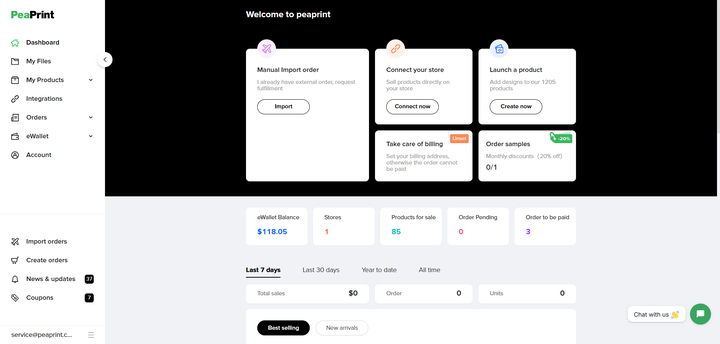
View PeaPrint's shop integration tutorial to learn how to connect your store and start selling the products your research tells you are in demand.